
REVIEW · DARWIN HARBOUR & CROCODILE CRUISES
Darwin Heritage Walk
Darwin tells stories on every corner. This Heritage Walk helps you read the city like a book, with old and new side-by-side and a local guide turning facades, ruins, and memorial areas into real life. You get a guided sense of why Darwin looks the way it does, from early settlement echoes to the shocks that reshaped the modern city.
I especially liked the small-group feel, with time for photos and questions, and the pacing that works even when it is hot or muggy. One drawback to consider, the walk can feel more like listening and story-sharing than sightseeing the whole time, and the most intense parts may hit later rather than right at the start.
In This Review
- Key highlights you will actually care about
- Getting oriented on the way to the first big story
- Star Village: the pre-Cyclone Tracy survivor in plain sight
- Brown’s Mart Theatre: over a century of Darwin social life
- Old Town Hall ruins: seeing how the pioneer story left traces
- The Administrator of the Northern Territory: restored buildings, working today
- Parliament House and Darwin Harbour: self-government in the middle of a view
- Bicentennial Park: the quieter pause with hidden clues
- Price and value: what $42.32 buys you in real terms
- The guide factor: stories that turn facades into meaning
- Weather, comfort, and how to pack like a pro in Darwin
- Who this walk suits best, and who might want to adjust expectations
- Should you book the Darwin Heritage Walk?
- FAQ
- How long is the Darwin Heritage Walk?
- Where do I meet, and where does the tour end?
- What is included in the price?
- Is food or drinks included?
- Are children allowed?
- What happens if the weather is bad?
Key highlights you will actually care about
- A tight route in central Darwin CBD so you see a lot without burning half a day on transport
- Pre-Cyclone Tracy survivals like Star Village, still standing as proof of what was there before
- Darwin’s defining challenges including the bombing of Darwin and Cyclone Tracy, put in plain context
- Government, theatres, and civic spaces that explain how the city functioned, socially and politically
- Harbour-facing stops that show how geography and view lines shaped the town’s identity
- Photo pauses and shade-friendly pacing that make the two hours feel more comfortable
Getting oriented on the way to the first big story
The experience runs in central Darwin, with a morning start at 8:30 am. You meet at John McDouall Stuart, at the corner of The Mall and Knuckey Street, then the walk finishes around the Esplanade and Knuckey Street, opposite Lyons Cottage.
This tour is built for moderately active people. You will be walking and standing for the full stretch, and the time adds up, but it is not a grind. Because the route is compact and you are moving from one landmark to the next, you get a strong sense of Darwin CBD without needing to plan anything beyond showing up and wearing decent shoes.
If you are the type who likes to understand context before you wander on your own, this is a smart opener. Darwin is a city where the weather and history both press on the present, and the walk helps you notice that instead of just passing through.
Sunset water and saltwater crocodiles, other options
- Litchfield National Park and Jumping Crocodile Cruise★ 5.0 · 2,119 reviews
- Adelaide River Cruises – Jumping Crocodile Experience★ 5.0 · 997 reviews
- Sunset 3-Hour Cruise from Darwin with Dinner and Sparkling Wine★ 5.0 · 980 reviews
- From Darwin: Litchfield Park Tour & Jumping Crocodile Cruise★ 4.9 · 829 reviews
Star Village: the pre-Cyclone Tracy survivor in plain sight
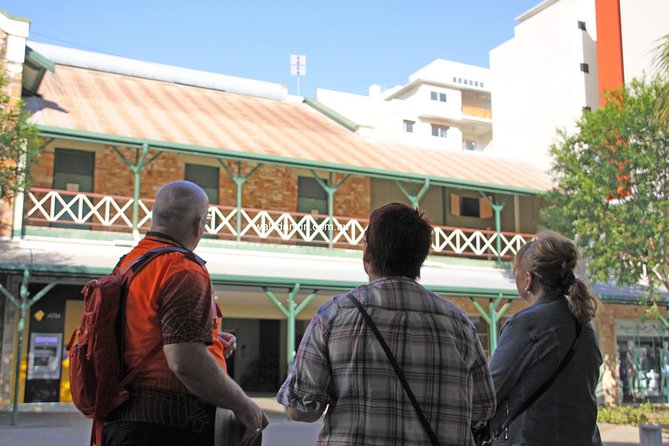
Star Village is a standout first stop for one simple reason: it is one of the few original buildings from pre-Cyclone Tracy. It used to be an open-air cinema, and today it is converted into a retail hub.
What makes this stop worthwhile is that you are not just looking at a pretty storefront. You are being shown the historic features that remain, so you can tell the difference between what Darwin has rebuilt and what it has managed to keep. Even if you are not a history buff, that old-to-new contrast clicks immediately in your brain.
Expect about 10 minutes here, mainly focused on the exterior and the story behind what you are seeing. You will probably take a photo, then look again, because the guide’s narration gives shape to details you might otherwise miss.
Brown’s Mart Theatre: over a century of Darwin social life
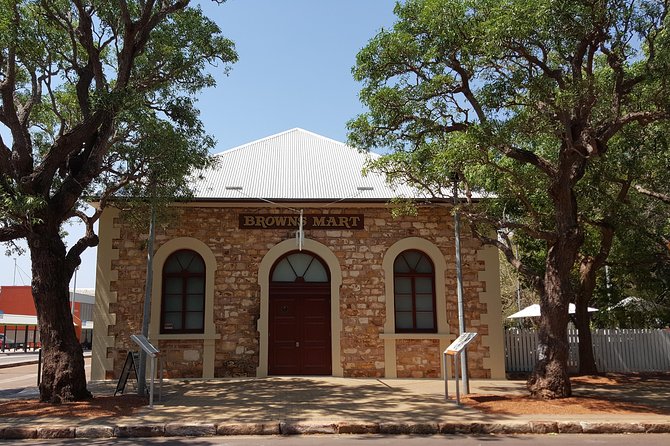
Next up is Brown’s Mart Theatre, a building tied to Darwin’s social culture for over 100 years. This is another stop that centers on the exterior, but it still feels more than “look at the building, move on.”
The value here is the human angle. Darwin’s heritage is not only about government offices and memorials. It is also about where people gathered, laughed, argued, performed, and kept a sense of community going through tough periods.
You will spend about 10 minutes here, with the guide sharing a few stories as you peruse the site. If you like learning why a place mattered to everyday life, this one delivers.
Old Town Hall ruins: seeing how the pioneer story left traces
The route then takes you to The Old Town Hall, now in ruins. The site is described as the Old Palmerston Town Hall, and it is framed as a reminder of the pioneers who passed through here.
Why ruins are powerful on a walk like this: they show you what did not fully survive, and they help you understand why later Darwin chose certain locations and building styles. It is not just nostalgia. It is a map of survival and replacement.
Expect about 10 minutes at this stop. You are not going inside anything here, but the point is to see the visible remnants and let the guide stitch them into the bigger Darwin picture.


The Administrator of the Northern Territory: restored buildings, working today
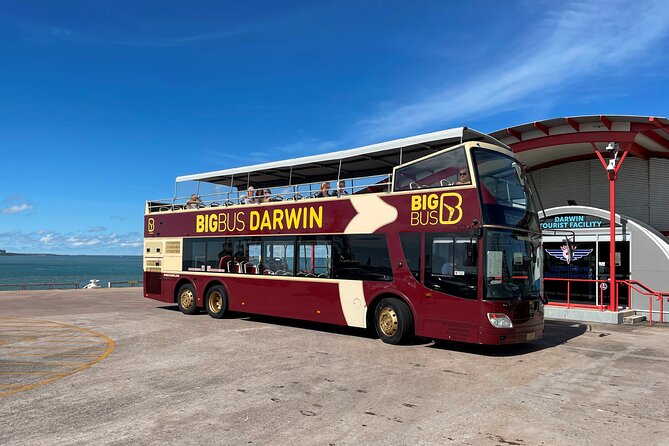
After the ruins, you get a different mood at the Administrator of the Northern Territory stop. These buildings and gardens are described as beautifully restored, and today they are used as offices for the Administrator of the Northern Territory.
This is where the walk starts to feel like more than a “heritage greatest-hits” tour. You are seeing how Darwin’s identity has stayed operational. Heritage is not only what is broken or preserved as a museum piece. Sometimes it is what still hosts the day-to-day functions of the city.
Plan for about 10 minutes here. The gardens matter too, because they give you a calmer pocket of space in the CBD, and it helps you slow down for what you are learning.
Parliament House and Darwin Harbour: self-government in the middle of a view
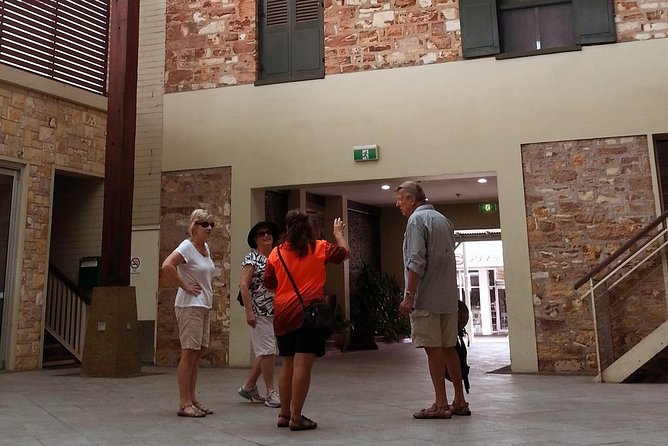
Then you reach Parliament House, a grand building that presides over Darwin Harbour. This stop is designed to connect architecture with governance, so you learn more about Darwin as a self-governing modern city.
Harbour towns often feel “built outward,” and Darwin is no exception. The walk nudges you to see how the harbour is not just scenery. It is part of why key institutions sit where they do, and why stories about the city’s development matter.
You will likely spend about 10 minutes here. It is also one of those moments where you can step back, take in the geometry, and understand why the harbour-facing locations keep showing up throughout the route.
Bicentennial Park: the quieter pause with hidden clues

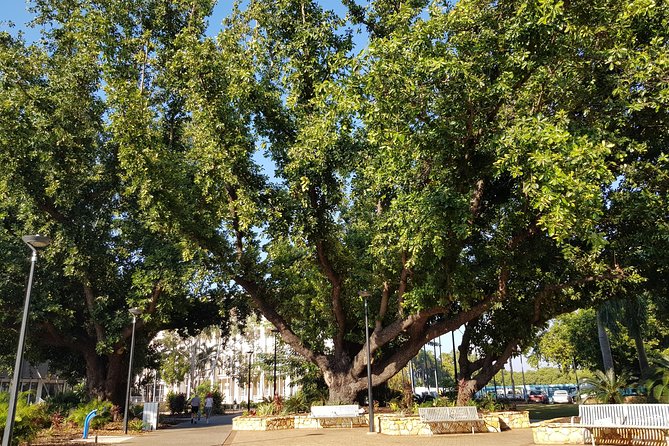
The final featured stop is Bicentennial Park, overlooking Darwin Harbour. It is described as a green space for leisure and recreation, and the guide points out hidden treasures that remind people of early Darwin.
This is a smart way to end. After civic buildings, theatres, and ruins, the park offers a release valve. You get a chance to breathe, take photos with a view, and reset before you head back into the city on your own.
Expect about 15 minutes at Bicentennial Park. Even if the tour moves at a steady pace, this last segment tends to feel more relaxed, because you are standing in a place meant for lingering.
Price and value: what $42.32 buys you in real terms
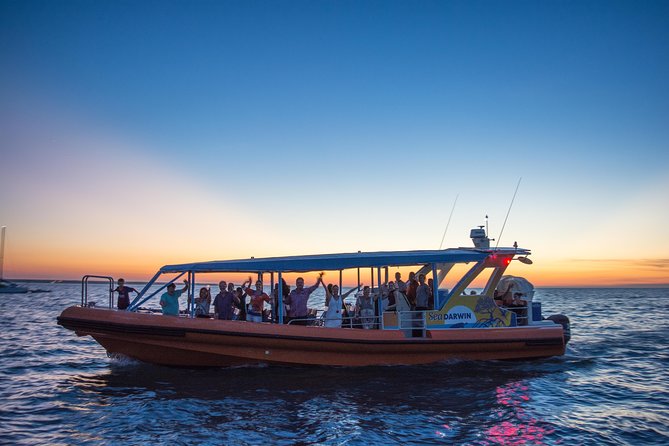
At $42.32 per person, this tour sits in the category of “small cost, high return” if you want orientation fast. Here is why it feels good value, based on what the experience actually includes.
You get a local guide plus spoken commentary, and you cover a concentrated set of heritage sites in central Darwin. Entry is described as free for the highlighted stops, so your money goes toward the storytelling and local context, not ticket fees.
You also get a small maximum group size of 6 travelers. That matters. When a guide is talking, you benefit from being close enough to hear clearly, and you are more likely to get answers when you ask questions. Several guide-led moments are described as patient and photo-friendly, including stopping for shade when needed.
One note on planning: this is a 2 to 2.5 hour walk. If your day is packed with other stops, this is still enough time to get value, but you should not treat it like a quick stroll. Build it into your morning, and then use the rest of the day to explore Darwin with better context.
The guide factor: stories that turn facades into meaning
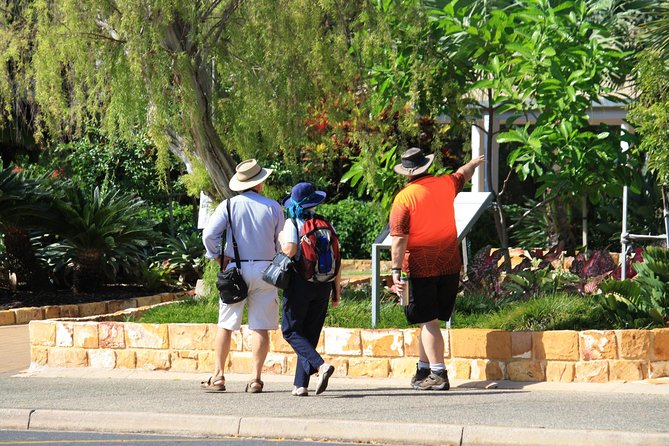
A walking tour lives or dies on the person leading it. The strongest parts of this experience center on a guide who is passionate about Darwin and willing to answer questions. Names such as John and Robin come up again and again in the guidance style described for this walk.
What you are looking for in a good heritage guide is simple: they explain why a building matters, and they connect it to people. In this tour, that includes the way Darwin has faced major events, including the bombing of Darwin and Cyclone Tracy, and how that resilience shaped what you see today.
If you like learning in a story format, you will probably find the walk flows well. If you prefer quiet, self-guided wandering only, you may find yourself wanting more time just looking at buildings without narration.
Weather, comfort, and how to pack like a pro in Darwin
This operates in all weather conditions, so you need to dress for Darwin, not for an ideal brochure day. Bring what the tour asks for: camera, sunscreen, hat, and drinking water. Good enclosed non-slip walking shoes are strongly recommended.
The best practical tip I can give you is to plan for shade and heat. Darwin can feel relentless, and the walk includes standing time while the guide talks. Build in comfort: wear light layers, keep water accessible, and use the guide’s picture stops as chances to cool down.
Also, remember that food and drinks are not included. If you are doing this at 8:30 am and then walking elsewhere after, grab breakfast first. You will enjoy Darwin more when your energy stays steady.
Who this walk suits best, and who might want to adjust expectations
This is best for people who want a guided introduction to Darwin’s CBD heritage and resilience. It is also a good fit if you like the idea of old and new side-by-side, and you want a local viewpoint rather than trying to piece everything together from maps.
It is suitable for adults and families in the sense that children must be accompanied by an adult, and it allows service animals. The group is limited to 6 travelers, so it is intimate compared with big bus tours.
If you care deeply about Aboriginal history and how the story is framed, bring your questions with you. One comment expressed disappointment at how much was said about the Larrakia people, beyond an introduction to their calendar, and asked for more detail about early life and first contact. That feedback is a useful reminder: if that history matters to you, ask the guide directly while you are on the walk.
Should you book the Darwin Heritage Walk?
I think it is a strong choice if you want to understand Darwin fast, without doing museum-hopping all day. For $42.32, you get a local guide, a compact route, and story-driven stops that connect buildings to events like Cyclone Tracy and the bombing of Darwin. The small group size also gives you more room to ask questions and slow down for photos.
I would skip it or adjust expectations if you hate listening tours and you mainly want to hop from view to view. This walk is built on narration, and a few people felt it could feel slow at the start. If you are okay with that and you are curious about how Darwin became Darwin, you will likely leave with a sharper, more personal sense of the city.
FAQ
How long is the Darwin Heritage Walk?
It runs for about 2 hours to 2 hours 30 minutes.
Where do I meet, and where does the tour end?
You start at John McDouall Stuart, corner The Mall and Knuckey St, Darwin City. The tour ends at the intersection of The Esplanade and Knuckey Street, opposite Lyons Cottage.
What is included in the price?
The tour includes a local guide and spoken commentary.
Is food or drinks included?
No. Food and drinks are not included.
Are children allowed?
Yes, but children must be accompanied by an adult.
What happens if the weather is bad?
The tour operates in all weather conditions, but if it is canceled due to poor weather, you will be offered a different date or a full refund.
Harbour Sunsets and Saltwater Crocs




Added lately from Darwin
- Darwin: Guided Jet Ski Tour
★ 5.0 · 55 reviews - Adelaide River Jumping Croc Cruise
★ 4.5 · 56 reviews - From Darwin: 3-Day Kakadu and Litchfield 4WD Camping Tour
★ 4.8 · 57 reviews - Darwin Shore Excursion: Hop-on Hop-off Bus Tour
★ 4.5 · 61 reviews - 3 Day Kakadu & Litchfield 4WD Expedition
★ 4.5 · 61 reviews - Darwin: Adelaide River Queen Original Jumping Crocodile Cruise
★ 5.0 · 63 reviews
Darwin Harbour & Crocodile Cruises, compared.
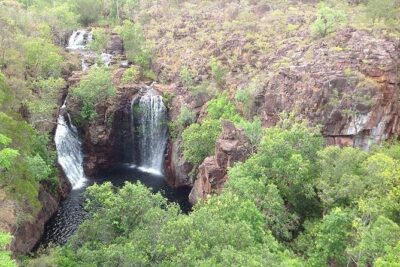 ★ 5.0Litchfield National Park and Jumping Crocodile CruiseFrom $1722,119 reviews
 ★ 5.0Adelaide River Cruises – Jumping Crocodile ExperienceFrom $43997 reviews
 ★ 5.0Sunset 3-Hour Cruise from Darwin with Dinner and Sparkling WineFrom $132980 reviews
 ★ 4.9From Darwin: Litchfield Park Tour & Jumping Crocodile CruiseFrom $162829 reviews
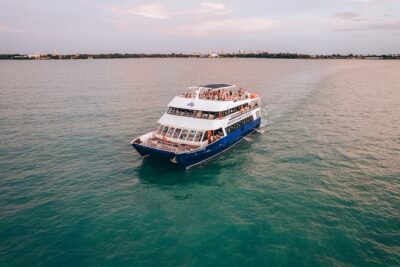 ★ 4.5Charles Darwin Dinner CruiseFrom $111820 reviews
 ★ 5.0Kakadu Day Tour from Darwin with Offroad DreamingFrom $243776 reviews
 ★ 5.0Cape Adieu Darwin Sunset Dinner CruiseFrom $121750 reviews
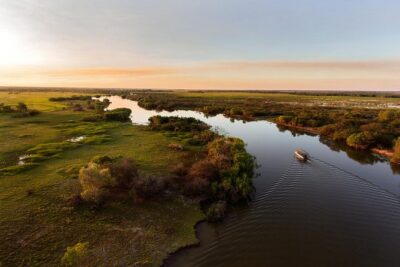 ★ 5.01 Day Corroboree Billabong Wetland Experience including 2.5 hour cruise + lunchFrom $168501 reviews
Browse the lists this tour appears in