
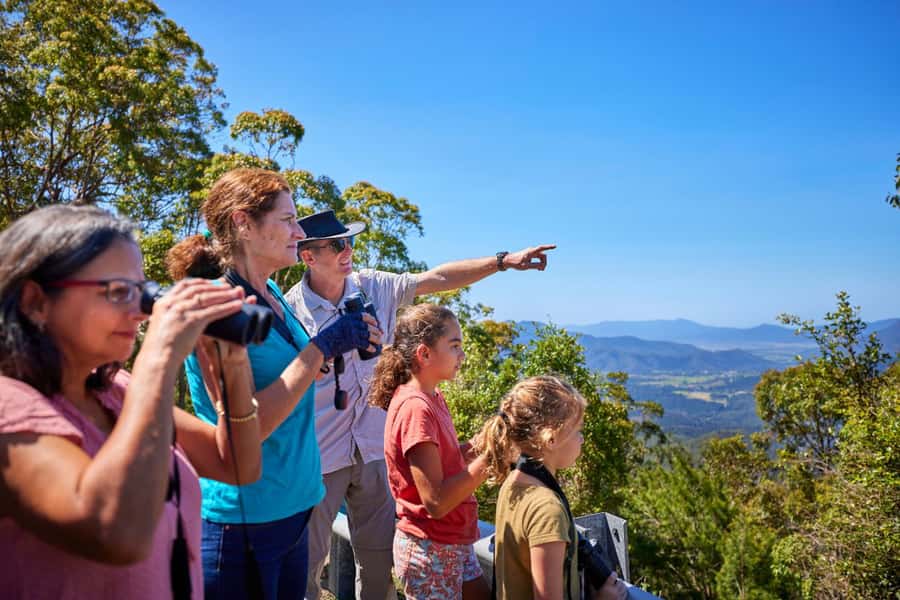
REVIEW · CAIRNS TOURS & DAY TRIPS
From Cairns: Rainforest & Nocturnal Wildlife Tour
If you want the rainforest at its most active, this is the way to see it. You start in the Atherton Tablelands by day, then turn the corner into the night to hunt for marsupials, reptiles, birds, and glow-up insects you usually miss. The day-to-night rhythm is what makes it feel special, not just another bus ride.
I especially like the small group size, max 11, because it makes spotlighting walks feel controlled instead of chaotic. I also love that you get a full setup before darkness, with stops like a 600-year-old Cathedral Fig and a proper Lake Barrine afternoon tea, so you understand the habitat before you’re scanning the canopy for moving shapes.
One possible drawback is that this is a walking tour in the rainforest, and the return is late, around 10:00 PM for Cairns City drop-off and about 10:30 PM for Northern Beaches. If you’re sensitive to night driving or you know you tire quickly on uneven ground, plan accordingly with good shoes and a calm pace.
In This Review
- Key points
- Getting from Cairns to the Tablelands, then into darkness
- Wallabies in Cairns limits, then the Cathedral Fig Tree
- Lake Barrine afternoon tea, then a rainforest walk in daylight
- Yungaburra platypus viewing and why the odds matter
- Dinner in Yungaburra, then your eyes switch to night wildlife
- Spotlighting in the rainforest: what you might realistically find
- Walking comfort and what the small group changes
- Price and value: where the $155 makes sense
- Who should book, and who might want a different plan
- Should you book this Cairns night rainforest tour?
- FAQ
- How long is the Rainforest and Nocturnal Wildlife Tour from Cairns?
- What animals can I expect to see during the day and at night?
- What are the chances of seeing a platypus?
- Is pickup included, and how do I know my pickup time?
- What should I bring for this tour?
- Is wet weather gear provided?
- Is this tour free to cancel?
Key points
- Small group max 11 means you get more eyes on the ground, not just more bodies on the bus.
- World Heritage rainforest by day and night gives context, so the night sightings mean more.
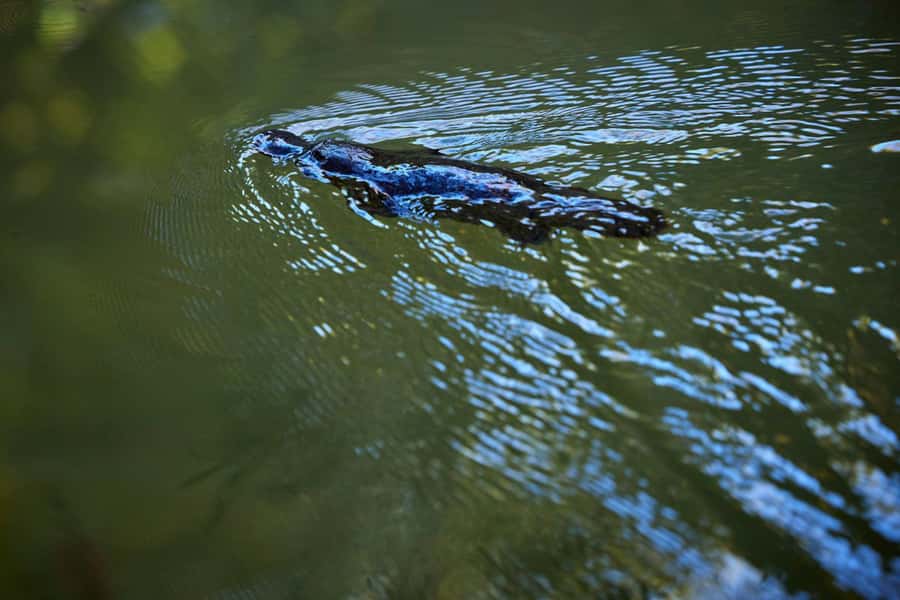
- Platypus viewing in Yungaburra (about 90% chance) is a major reason people book this.
- Spotlighting walk targets truly nocturnal animals like ringtail possums, geckos, gliders, owls, and more.
- Wet weather gear and binoculars keep you comfortable and help you actually see what you’re looking for.
- Dinner in Yungaburra turns the day into a full experience, not a quick snack between drives.
Getting from Cairns to the Tablelands, then into darkness
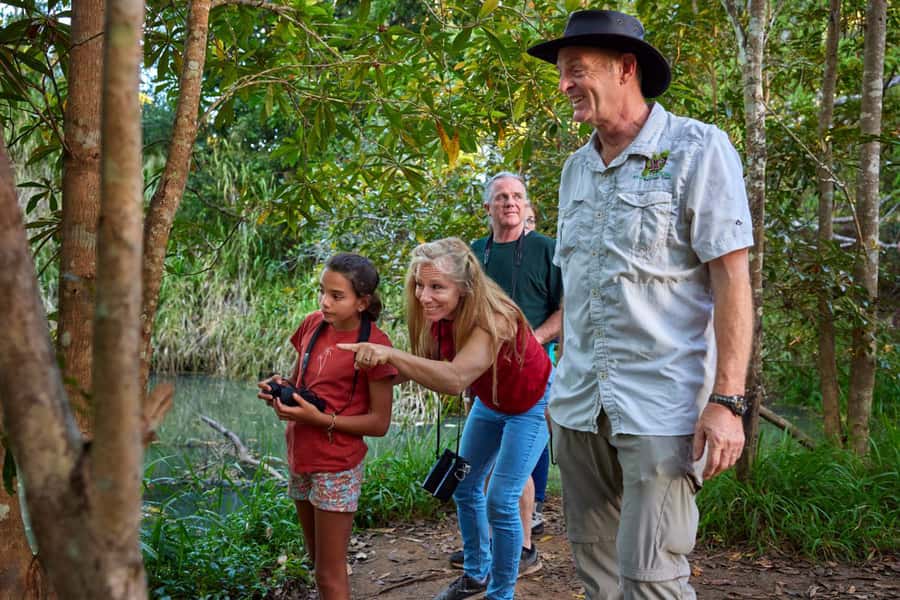
This tour is built around one simple idea: wildlife watching is easier when you understand where you are. You leave Cairns or the Northern Beaches and head south toward the Atherton Tablelands, but the day is not just transportation. You’ll stop for short wildlife and scenery moments that teach you what the rainforest looks like in daylight and why animals choose certain places at certain times.
The timing matters too. You’re out for about 8 hours, and the big shift happens after dinner when the spotlighting walk begins. That structure keeps the night part from feeling random, and it helps you stay patient during the slower stretches, because the tour keeps feeding you cues.
Pickup is from central Cairns hotels or Northern Beaches accommodations. On the morning of the tour, you need to call the operator to confirm your pickup time, and you should be ready about 5 minutes early, looking for a small white bus with a big red and green W on the side.
Spare day in Cairns, other departures
- From Cairns: Great Barrier Reef Cruise by Premium Catamaran★ 4.9 · 3,567 reviews
- From Cairns: Self-Guided Kuranda Trip with Train and Skyrail★ 4.6 · 3,392 reviews
- Cairns: Daintree Rainforest and Mossman Gorge Tour★ 4.6 · 2,485 reviews
- Cairns: Outer Edges of The Great Barrier Reef Scenic Flight★ 4.9 · 2,376 reviews
Wallabies in Cairns limits, then the Cathedral Fig Tree
Early in the day, you’ll get a taste of local wildlife without even leaving town. The first stop is designed for quick viewing of agile wallabies that live within the city limits. It’s a great way to get your senses awake, especially if you’re arriving from warm beaches and suddenly want to focus on movement, tracks, and the small stuff you might ignore later.
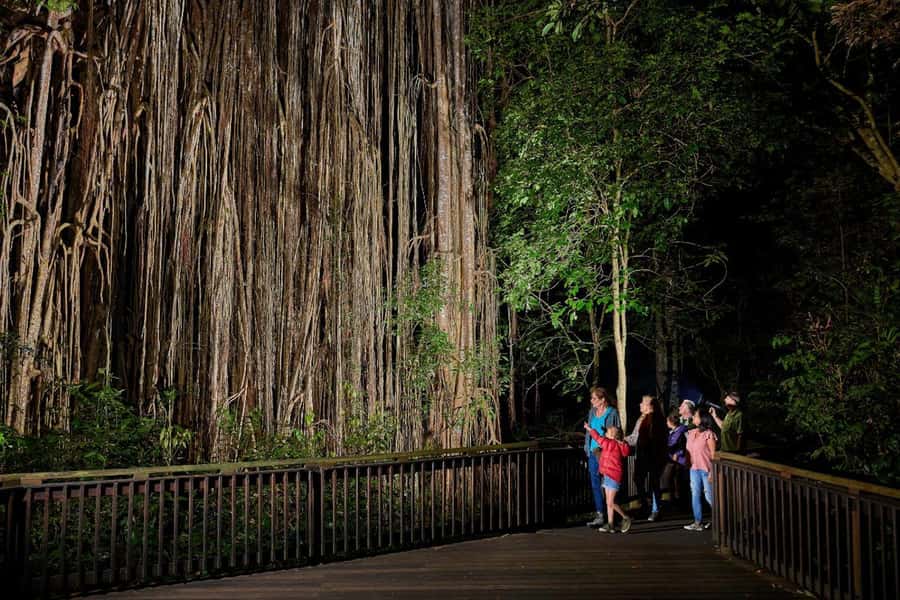
Next comes the Cathedral Fig Tree, a strangler fig with a root system that’s described as giant. Even if you’re not the type who gets emotional about trees, this kind of stop is practical. You start noticing how rainforest plants compete for light and how roots and branches create the “rooms” animals use for shelter.
One smart tip: treat these early stops like training. Keep your camera ready, but also pause and look without filming. When you’re later scanning at night with a spotlight, you’ll be glad you learned how to spot shapes in the dark by comparison to what you saw at noon.
Lake Barrine afternoon tea, then a rainforest walk in daylight
After the Tablelands drive, you’ll enjoy afternoon tea at Lake Barrine. This part is more than a break with snacks. The lake area gives you a different slice of the region, and it resets you for the walk through rainforest. It also helps you pace yourself, because after tea the day turns into steady guiding, short walking segments, and regular wildlife scanning.
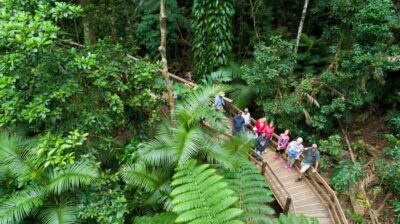
Then you walk through the rainforest while it’s still light enough to see detail: leaves, branch structure, and the kinds of spots where animals might pause, feed, or move through understory cover. If you’re aiming to spot things like Boyd’s forest dragon or rainforest birds, daylight is your advantage. You can observe the habitat first, then shift your expectations once the sun goes down.
Lake Eacham also gets a quick stop later. That short pause helps break up the day and keeps the scenery varied, which matters on an 8-hour outing. You’ll still be in the same region, but you won’t feel locked into one long stretch of looking through the window.
Yungaburra platypus viewing and why the odds matter
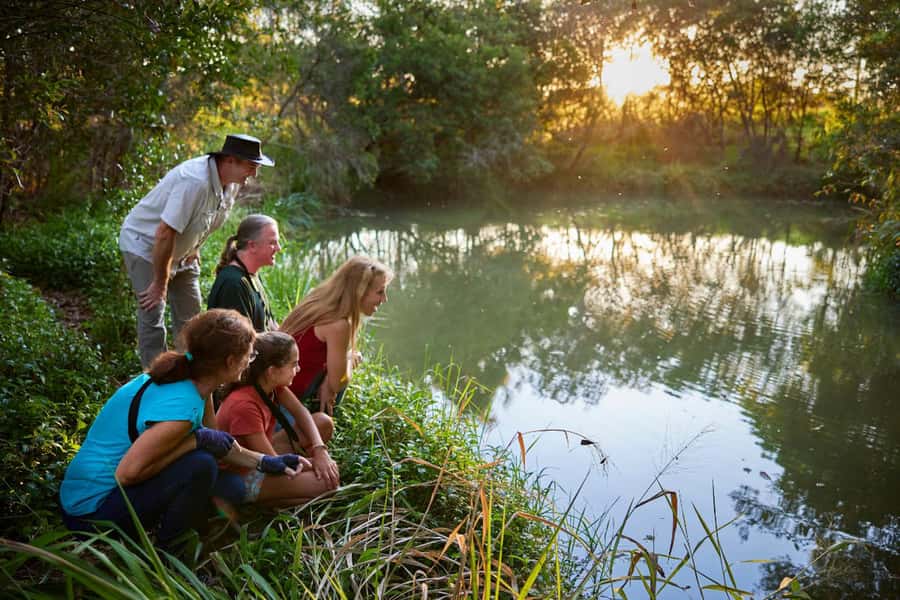
One of the biggest draws is the platypus viewing area in Yungaburra. The tour targets a viewing stop with about a 90% chance of seeing the platypus. That number matters, not because you can guarantee wildlife, but because it tells you the operator plans the timing and location for realistic sighting chances.
What I like about this setup is how it respects the platypus as an animal with its own schedule. You’re not chasing it with gimmicks. You’re shown where to look and given time at the right kind of water habitat, which is the closest thing you get to a responsible wildlife strategy.
In past groups, people have also credited guides like Paul and Peter for spotting skill. You’ll see the kind of attention to detail that helps you notice movement at the edge of water, or a subtle dive that you could miss if you’re only half-paying attention.
If platypus are your top priority, this is the day portion you should watch most carefully. Slow down, use the binoculars, and keep your attention on waterline changes rather than only scanning for obvious movement. The tour gives you the tools, binoculars are included, so don’t rely only on the naked eye.


Dinner in Yungaburra, then your eyes switch to night wildlife
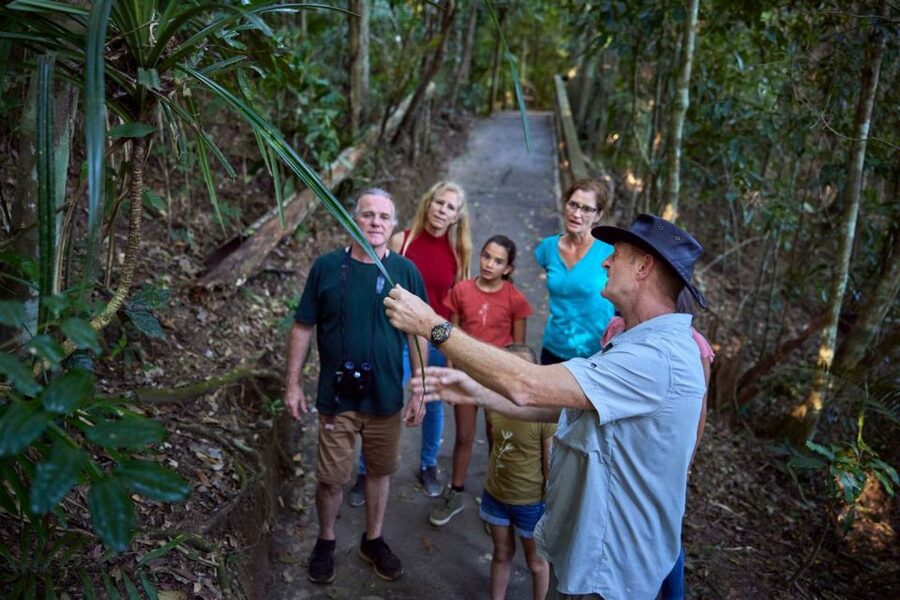
Dinner is served in Yungaburra at a restaurant in the township area, and the tour includes tea, coffee, or hot chocolate with dinner. This is a useful break point. After hours of driving and walking, you need warmth, food, and a chance to recharge before you move into colder, darker conditions.
I also like that it’s not just dinner as a stop. It’s part of the experience transition. You go from open daylight viewing to a spotlight walk, and you want your energy for that last phase, because patience is what turns a scan into an actual sighting.
From the feedback on this tour style, the guide storytelling is a big part of why people enjoy the night shift, including star talk and animal interpretation. If you’re into learning as you go, this is one of those tours where the guide is actively helping you understand what you’re seeing, not just handing out headcounts.
Spotlighting in the rainforest: what you might realistically find
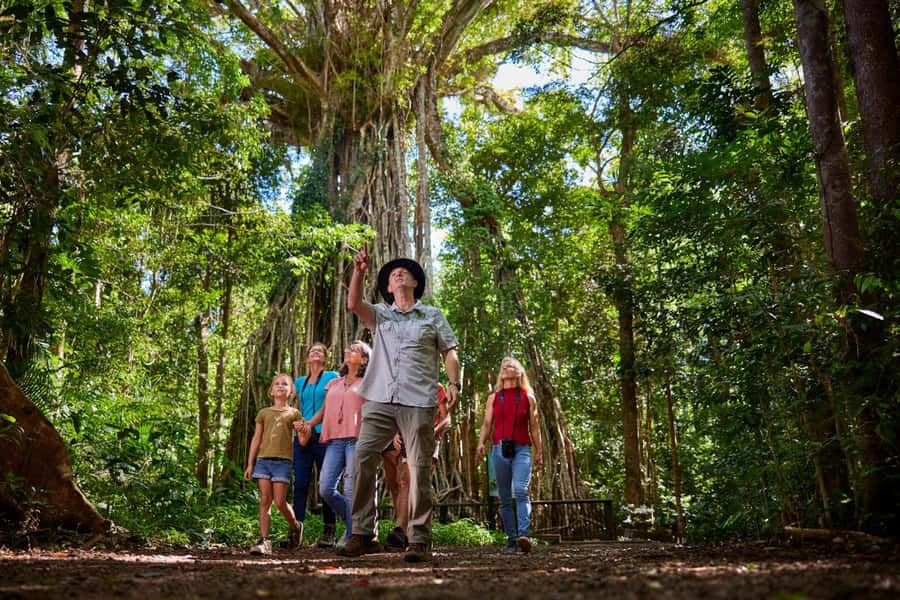
This is the heart of the tour: the rainforest walk at night with spotlighting. Once you head into the dark, the rainforest stops being a visual place and becomes a sound and movement place. You’ll use the spotlight to search, but the guide’s job is to translate the flashes of life into real species and real behavior.
The tour specifically mentions targets you may see, including:
- Lumholtz’s tree-kangaroo
- northern leaf-tailed gecko
- ringtail possums and other possums
- gliders
- frogs
- owls
You may also see flying foxes, rainforest birds, butterflies, and other night-active wildlife during the day-to-dusk lead-in. In other words, the tour isn’t only a night event. It’s designed so you notice patterns as light changes.
Here’s a practical way to approach the spotlight portion. Keep your expectations wide. If you’re only looking for one animal, you’ll miss the learning. Pay attention to how the guide positions you, how they read the terrain, and how they explain why certain spots are likely to show activity. That’s the difference between seeing a random animal-shaped blur and actually understanding what you’re looking at.
Binoculars are included, and wet weather gear is available if needed, which matters because rainforest nights can come with damp air and sudden showers. Bring a small backpack for your things and keep your essentials accessible, water, camera, and any personal layers you want.
Walking comfort and what the small group changes

This is a walking tour. Comfortable shoes aren’t optional if you want to enjoy it, especially in rainforest terrain where paths can be uneven. You’ll wear cool, comfortable clothing, and the operator provides wet weather gear if required.
The small group size, max 11, changes the feel of the walk. It’s easier for the guide to manage spacing and keep everyone in good sightlines, especially when spotlighting. In a larger group, you often lose the best angles and wind up waiting for someone else to move. Here, the structure is tighter, so you spend more time actually looking.
One detail I appreciate: luggage or large bags are not allowed. That keeps the walk simpler and reduces clutter at stops and in the vehicle. If you’re traveling light, this tour fits smoothly. If you’re carrying a suitcase, you’ll want to rethink packing for the day.
Price and value: where the $155 makes sense
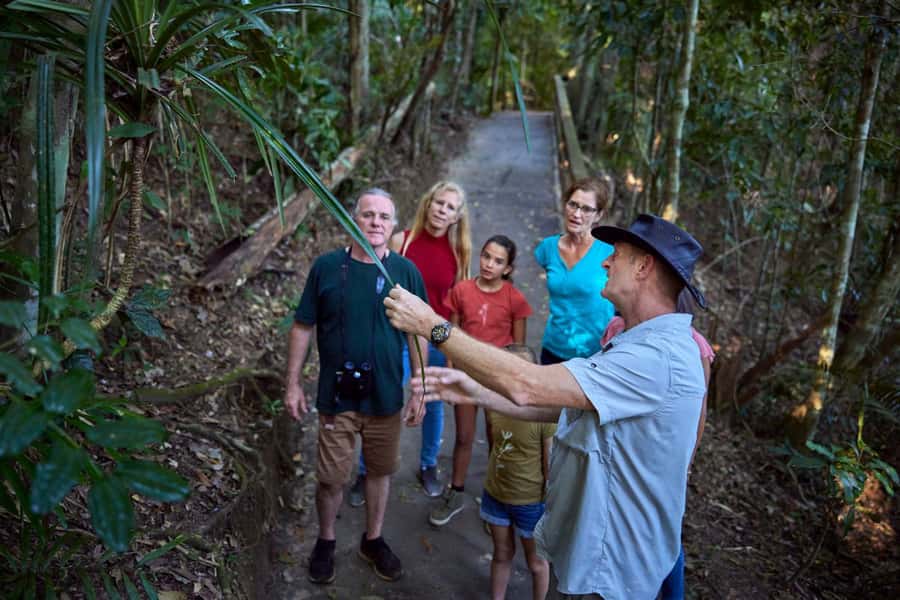
At $155 per person for an 8-hour, small-group rainforest experience, you’re paying for three things that are hard to replicate on your own.
First, you’re paying for time with trained guidance in an animal-rich region. The tour aims at both day and nocturnal wildlife viewing, and it includes binoculars, which signals that the viewing is part of the service, not an afterthought.
Second, you’re paying for the day-night structure. Many rainforest outings stop when the sun sets. Here, the whole point is that the rainforest comes alive at night, with a planned shift from daylight scanning to spotlighting.
Third, the day is already built around food and comfort: afternoon tea and dinner are included, plus hot drinks with dinner. That’s not just convenience. It reduces the chance you’ll rush meals and lose energy right before the most important part, the night walk.
Is it expensive for people who only care about one animal? Maybe. But if you want the full experience, including Lake Barrine, Cathedral Fig Tree, platypus viewing, and a proper nocturnal walk, the pricing reads fair. The rating is strong too, with an average of 4.7 based on 144 reviews, which usually means the core promise is holding up.
Who should book, and who might want a different plan

This tour is a good match if you:
- want to see rainforest wildlife when it’s active, not just when it’s convenient
- like guided spotting and interpreting animal behavior
- don’t mind walking on a nighttime outing and staying out until late
It’s also ideal if you’re visiting Cairns and want to experience more of the Atherton Tablelands than just a quick waterfall stop.
It’s not suitable for wheelchair users. If you have mobility limitations, this tour may be difficult because it is a walking experience in rainforest terrain, and the schedule has you out late.
If you’re deciding between doing this and doing something more relaxed, be honest about your energy. Some people mention the night walk can be tiring. That’s not a dealbreaker, but it is a real consideration.
Should you book this Cairns night rainforest tour?
I’d book it if your main goal is nocturnal rainforest wildlife and you want a guided day-to-night flow that includes platypus viewing, a standout rainforest habitat change, and an evening spotlight walk. The combination of small group size, binoculars, and included meals makes it feel like a full program, not just a transport-to-the-woods deal.
Skip it if you want minimal walking, need wheelchair accessibility, or you’re likely to feel miserable on winding mountain drives late at night. In that case, you’ll probably enjoy a daytime-focused alternative more.
If you’re flexible, bring sturdy shoes, keep your camera ready, and remember that the best results come from slowing down. Night wildlife rewards the people who watch closely, not the people who rush the dark.
FAQ
How long is the Rainforest and Nocturnal Wildlife Tour from Cairns?
The tour lasts 8 hours, with return to Cairns around 10:00 PM for Cairns City drop-off and around 10:30 PM for Northern Beaches drop-off.
What animals can I expect to see during the day and at night?
The tour includes daytime and dusk viewing and highlights nocturnal wildlife. Day and dusk possibilities include platypus viewing in Yungaburra, musky rat-kangaroos, Boyd’s forest dragons, rainforest birds, butterflies, and flying foxes. Night spotlighting targets animals such as Lumholtz’s tree-kangaroo, northern leaf-tailed gecko, ringtail possums, gliders, frogs, owls, and more.
What are the chances of seeing a platypus?
The platypus viewing area in Yungaburra is described as offering about a 90% chance of seeing a platypus.
Is pickup included, and how do I know my pickup time?
Yes, hotel pick-up and drop-off are included. You need to call 0429083338 on the morning of your tour to get the pickup time for your accommodation location, and you should be there 5 minutes early looking for a small white bus with a big red and green W on the side.
What should I bring for this tour?
Bring comfortable walking shoes, a water bottle, a small backpack for your items, and your camera. Cool and comfortable clothing is recommended.
Is wet weather gear provided?
Yes. The tour provider provides wet weather gear if required.
Is this tour free to cancel?
The tour offers free cancellation up to 24 hours in advance for a full refund. It also offers a reserve now and pay later option.
Spare Days in Cairns



Added lately from Cairns
- Cairns: Guided Jetski Tour 30 or 60 min
★ 4.9 · 61 reviews - Cairns: Atherton Tablelands Full-Day Adventure
★ 4.8 · 62 reviews - Cairns Koalas and Creatures Entry Ticket with Koala Photo
★ 4.4 · 64 reviews - From Cairns: 2 Islands 1 day – Fitzroy & Green Islands
★ 4.2 · 77 reviews - Cairns: Full Day Great Barrier Reef Pontoon Experience
★ 4.4 · 79 reviews - Cairns: Paronella Park Ticket
★ 4.8 · 85 reviews
Cairns Tours & Day Trips, compared.
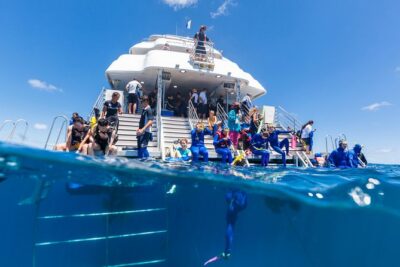 ★ 4.5Great Barrier Reef Snorkeling and Diving Cruise from CairnsFrom $1903,714 reviews
 ★ 4.9From Cairns: Great Barrier Reef Cruise by Premium CatamaranFrom $1903,567 reviews
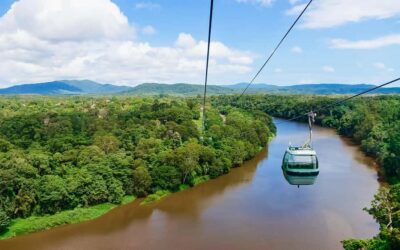 ★ 4.6From Cairns: Self-Guided Kuranda Trip with Train and SkyrailFrom $1273,392 reviews
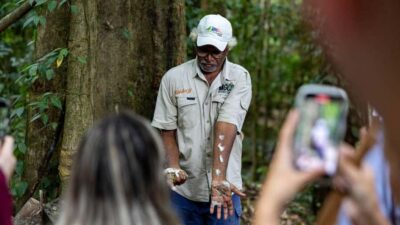 ★ 4.6Cairns: Daintree Rainforest and Mossman Gorge TourFrom $1452,485 reviews
 ★ 4.9Cairns: Outer Edges of The Great Barrier Reef Scenic FlightFrom $1512,376 reviews
 ★ 4.6Cairns: Fitzroy Island Full-Day Trip with Optional ExtrasFrom $671,668 reviews
 ★ 5.0Barron Gorge White Water Rafting from Cairns or Port DouglasFrom $911,596 reviews
 ★ 4.5From Cairns: Full-Day Green Island CruiseFrom $771,584 reviews
Browse the lists this tour appears in