

REVIEW · MELBOURNE CITY TOURS
Melbourne Park Tennis Sporting Experience
For tennis fans, this is the rare city tour with actual court time. You start at Federation Square, learn how Melbourne became the sports capital, then step into the Melbourne Park world of the Australian Open courts and their famous blue surrounds. I love how the tour mixes play with stories, from the Yarra River to the Olympic Precinct, and ends at the 100,000-seat MCG.
One catch to plan around: in December and January, Australian Open activity affects court access, so tennis time is handled differently depending on the month.
In This Review
- Two Wins Right Away
- Key Points That Make This Tour Worth Your Time
- Federation Square to Melbourne Park, Where Sport Becomes a City Theme
- The Blue Courts Question: When You Can Hit, and When You Cannot
- Melbourne Park Tennis Centre, Rod Laver and Margaret Court in Focus
- The Yarra River and Birrarung Mar Stretch, More Than Just a Nice Walk
- Olympic Precinct Loop, Six Club HQs and Three Football Worlds
- MCG Finale at the Cricket Cathedral, Big Seating Energy
- Price and Value: What $84 Really Covers
- What to Bring, What to Wear, and How to Make It Easy
- Guide Matters: The People Behind the Best Moments
- Who This Tour Is For (and Who Should Pick Something Else)
- Should You Book This Melbourne Park and MCG Experience?
- FAQ
- Where do I meet for the tour?
- What is included in the $84 per person price?
- Can I play tennis in December or January?
- Do I need extra tickets for stadium tours?
- What should I bring?
- Is the tour wheelchair accessible, and what language is the guide?
- What if I need to cancel?
Two Wins Right Away
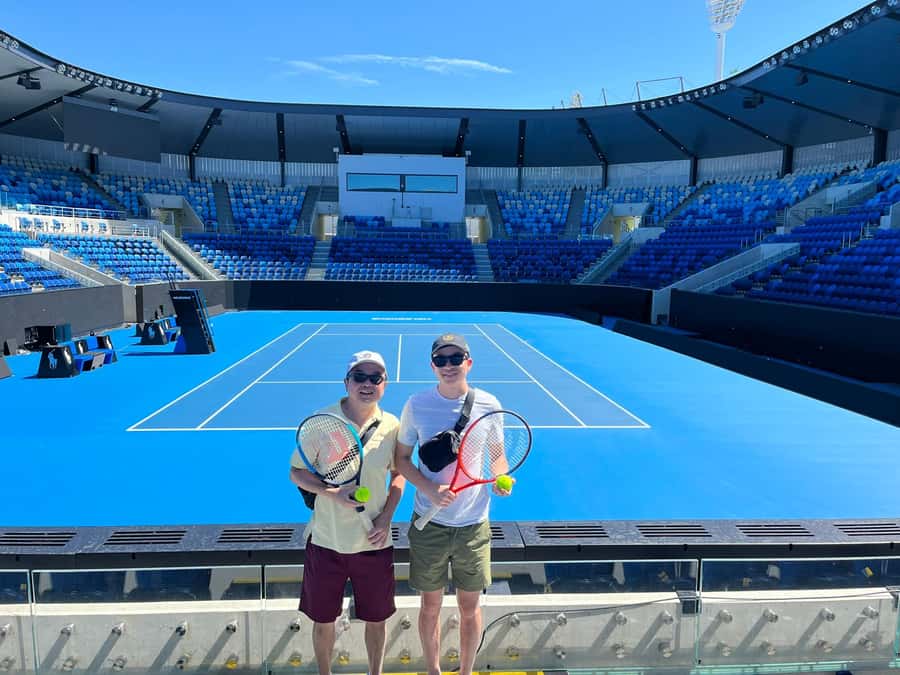
First, I like that the tennis portion is not just photo stops. You get racquets and balls supplied, and you’ll be hitting on real Melbourne Park courts when access allows. Second, the walk through the Olympic and sporting precinct connects the dots between tennis, rugby, soccer, Australian Rules, and cricket, so you leave with a fuller view of Melbourne as a sports city, not just a tennis highlight reel.
Key Points That Make This Tour Worth Your Time
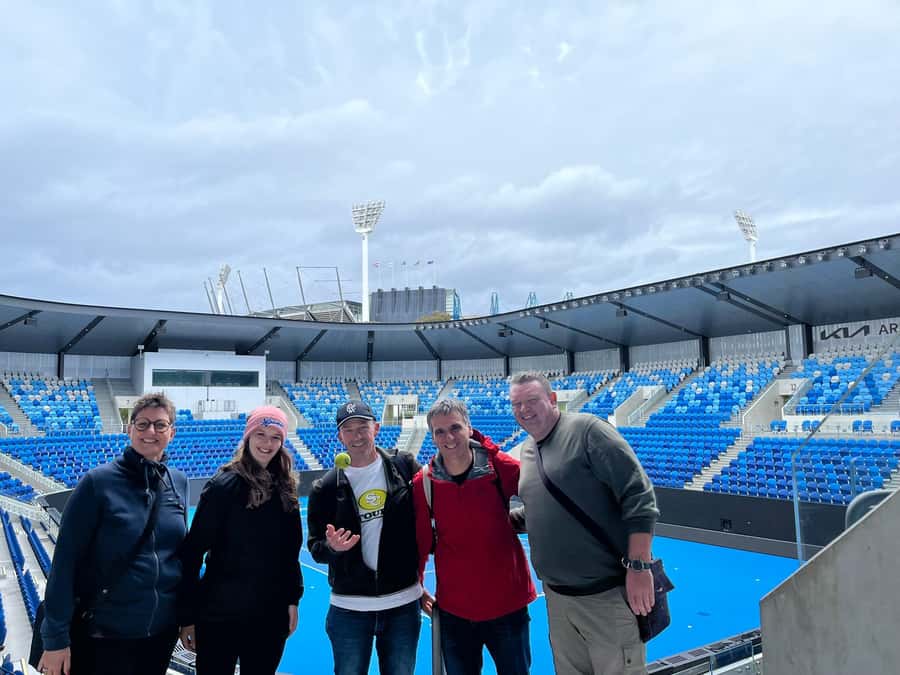
- Federation Square start keeps it easy to join, and you’ll spot your guide by a tennis ball
- Melbourne Park courts included when court access is available, with racquets and balls provided
- Yarra River and Birrarung Marr walk includes Aboriginal sports and games context
- Olympic Precinct football codes cover rugby, soccer, and Australian Rules as part of one route
- MCG finale delivers the big-cricket feeling right at the end, with room to take it in
- January includes Australian Open tickets, while December shifts the format and court access
Melbourne written up laneway by laneway
- From Melbourne: Great Ocean Road, 12 Apostles, Wildlife Tour★ 4.7 · 6,020 reviews
- Penguin Parade, & Wildlife Encounters Eco Tour from Melbourne★ 5.0 · 3,774 reviews
- Melbourne: Yarra Valley Wine, Gin, Whisky and Chocolate Tour★ 5.0 · 3,667 reviews
- Melbourne Great Ocean Rd Reverse Tour London Bridge Wildlife★ 4.7 · 2,252 reviews
Federation Square to Melbourne Park, Where Sport Becomes a City Theme
I love how this tour starts where most visitors already are: Federation Square. You meet between Transport Bar and Princes Bridge, then head out on foot with a guide who brings the energy of someone who genuinely loves Melbourne sport. If you are the type who likes a plan but also wants spontaneity, you will probably enjoy this format. It is structured, but it still feels like a guided walk with stops that matter.
The route is also part of the value. You go down toward the Yarra River and Birrarung Mar, picking up context on Aboriginal sports and games along the way. That early context matters because it frames the rest of the experience. When you later hear about Aussie Rules and why Melbourne obsesses the way it does, you are not just collecting trivia. You are seeing how sport, place, and identity connect.
The Blue Courts Question: When You Can Hit, and When You Cannot
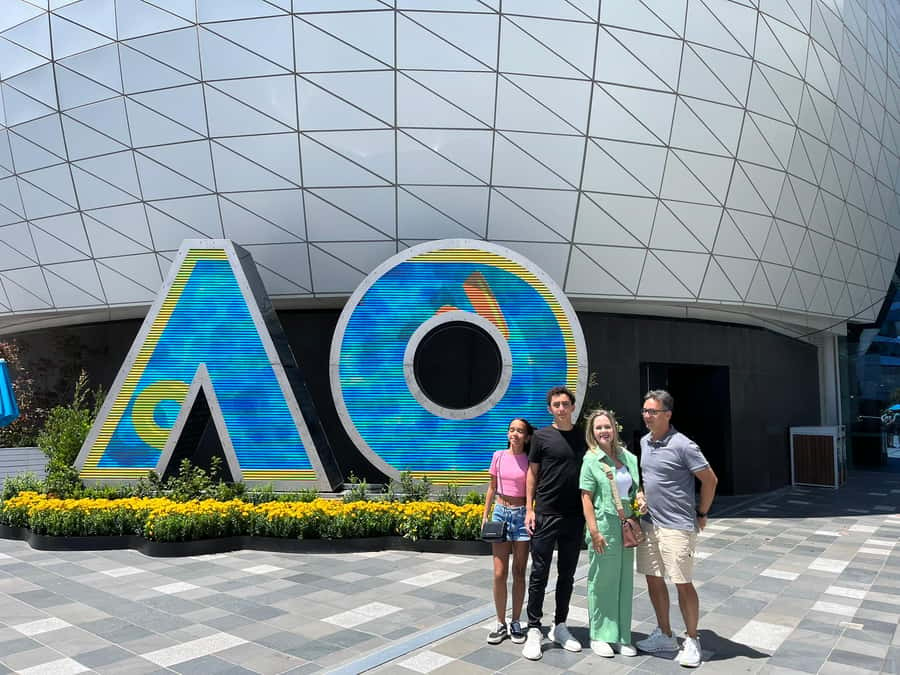
The headline is simple: the tour includes a chance to play on one of Melbourne Park’s famous blue courts, or a tennis experience closely tied to what is happening there. In practice, what you get depends on the season.
During December, court access is not available because the Australian Open begins its construction phase. In that case, the tour still focuses on the grounds and the sporting culture, but the tennis component is not operating the same way. Expect a shorter walking experience, listed as about 2 to 2.5 hours.
During January, things shift again. Court access and play are supported differently, and you also get Australian Open tickets included. The tour notes that bookings in January include tournament tickets. That inclusion is a big deal for value because it connects your Melbourne Park visit to the real event atmosphere.
If you are planning around tennis as the main event, pick your month carefully. If your trip is fixed to December, lean into the tour for the stories and the grounds visit, not for a full on-court match. If you are in January, you get both the tournament access and the chance to play, which is what makes this feel like a true sporting milestone.
Melbourne Park Tennis Centre, Rod Laver and Margaret Court in Focus
Once you reach the Melbourne Park Tennis Centre, the tour’s tone shifts from city walking to venue immersion. You tour the grounds connected to Rod Laver Arena and Margaret Court Arena, and your guide offers insights that are the difference between watching a documentary and standing in the real place.
A recurring detail from the guide style: these tours are led by passionate locals who connect tennis to people and moments. Names that have led past groups include Ben, Catherine, Greg, Michael, Cathy, and Kath. The guides are consistently described as energetic, humorous at times, and tuned into the history and the human side of Australian sport. That matters because Melbourne Park can feel like a big complex if you do not have context. With a guide, you start seeing how the site evolved and why it is so important to local tennis culture.
Another practical point: you should plan for photos and time at key tennis areas. Even when the tennis action is limited by season, the tour is built around understanding what you are looking at, and that makes the photos far more satisfying later.

The Yarra River and Birrarung Mar Stretch, More Than Just a Nice Walk
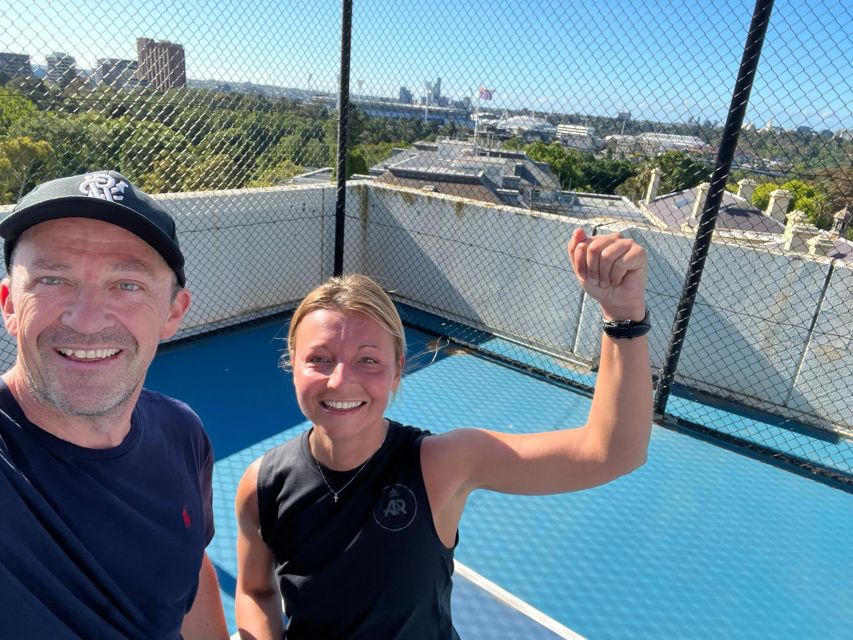
This is the part that often surprises people in a good way. You are not just moving between stadiums. You are learning along the way. The walk down the Yarra River and Birrarung Mar includes information about Aboriginal sports and games, plus stories about Melbourne’s major events and venues.
Why it adds value: it slows the tour down enough that you can understand Melbourne as a place, not just a collection of famous buildings. Sport is part of Melbourne’s identity, but the tour connects that identity to the land and the people who have shaped it. If you enjoy cultural context without turning the day into a museum, this portion hits a nice balance.
It also sets you up mentally for the next step. Once you arrive at the Olympic Sporting Precinct and start hearing about multiple footy codes, you are ready to see how sport works like language. Everyone speaks it differently, and in Melbourne they really talk.
Olympic Precinct Loop, Six Club HQs and Three Football Worlds
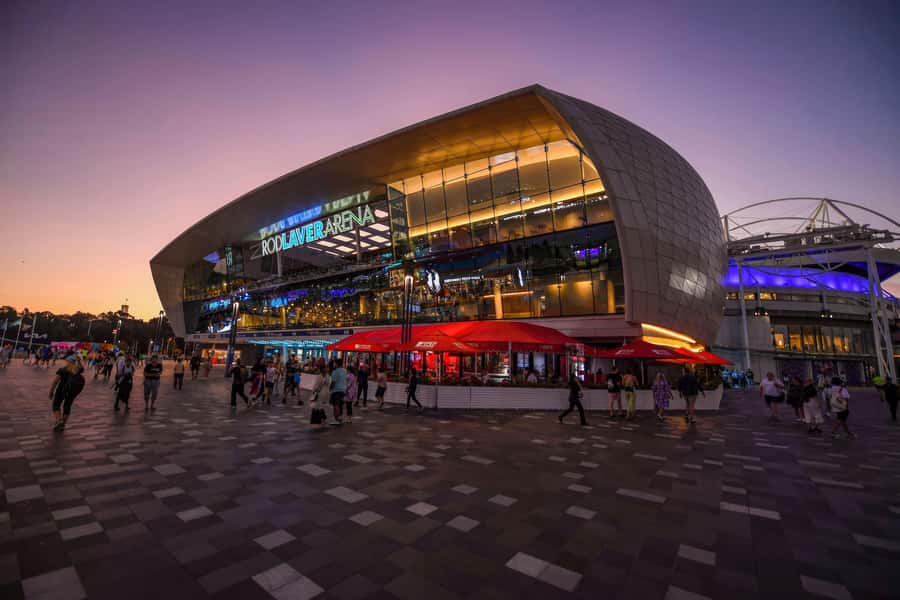
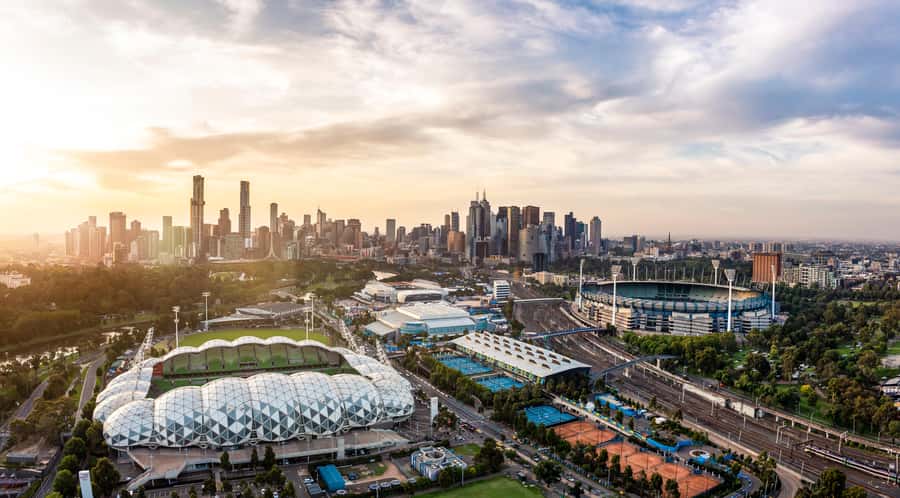
After the tennis stop, you keep walking through the Olympic Precinct. Here’s what makes this section feel like more than a basic transit route: you pass the headquarters of six of Melbourne’s top football teams and get coverage of rugby codes, soccer, and Australian Rules.
You also learn about Australia’s indigenous football game. The tour describes it as something truly indigenous, and that framing helps. It is not treated like a side note. It is part of the sporting picture the guide builds as you walk.
If you are a fan who only knows one sport deeply, you may still enjoy this section. It provides enough grounding to understand why certain clubs matter and how the city’s sports ecosystem fits together. And if you are visiting with mixed interests, this is where the tour becomes more inclusive. Tennis fans get their place, but other sports fans can latch onto rugby, soccer, and Aussie Rules without feeling left behind.
MCG Finale at the Cricket Cathedral, Big Seating Energy
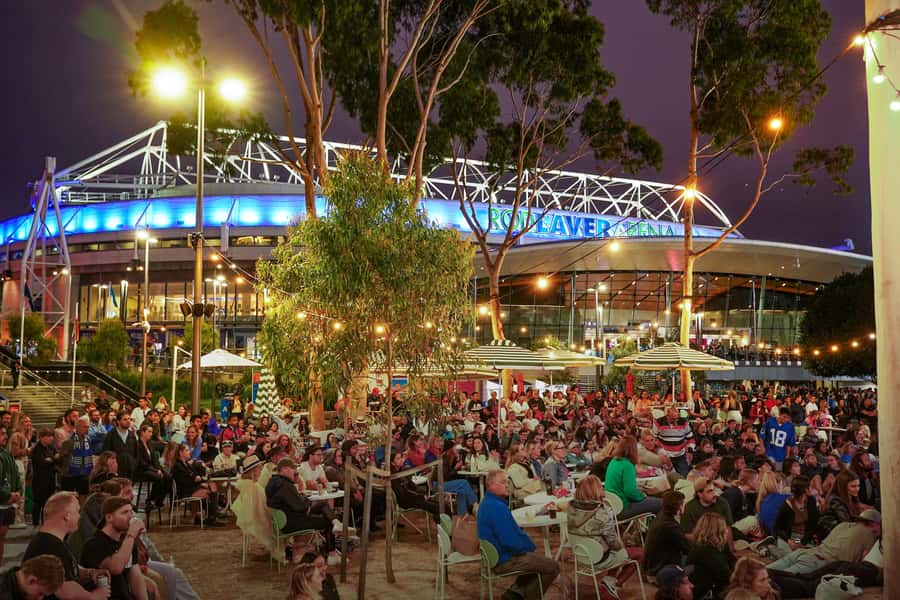
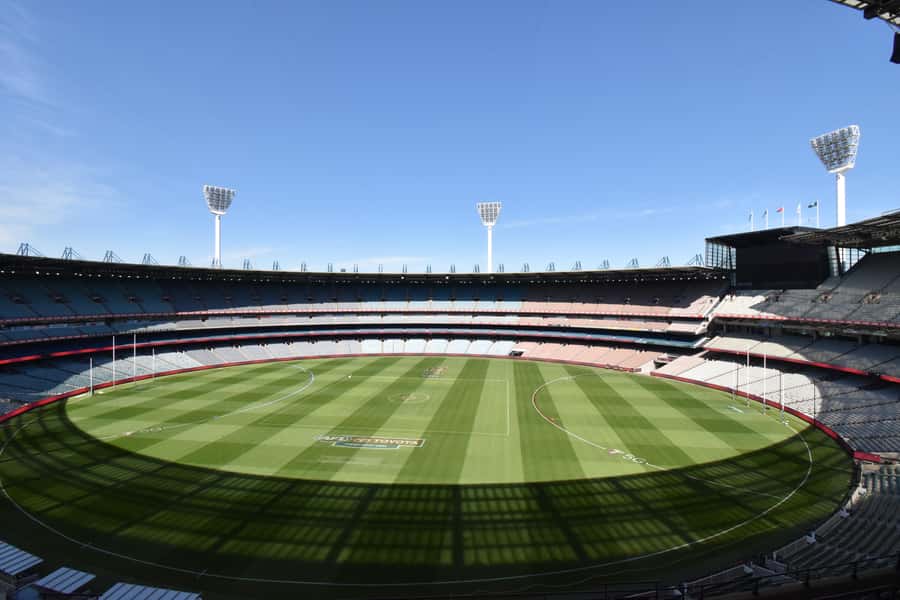
The day ends at the Melbourne Cricket Ground, the 100,000-seat stadium and a major landmark for Test cricket. This finale is smart for tour pacing. By the time you reach the MCG, you have built momentum with tennis and multiple football codes. Then cricket lands with full gravity.
Even if you are not a hardcore cricket follower, the MCG is one of those places where the scale does the selling. The tour is described as ending with a visit to the awe-inspiring stadium, so you get the feeling of the venue before the day is over.
One limitation you should be aware of: the tour includes access as a walk-through experience, but internal stadium tours require additional tickets. So if you are hoping to go deep into the stadium interior, plan for an add-on. Still, the MCG stop itself is a strong finish, especially for people who want a Melbourne sports capstone.
Price and Value: What $84 Really Covers
At $84 per person and about 3 hours, this tour can feel like a bargain or like a specialized splurge, depending on when you book. Here’s how I’d think about the value.
Included items are the key:
- Tour guide
- Court hire when access allows (with listed seasonal exclusions)
- Racquets and balls supplied
- Australian Open tickets included in January
That last point is the biggest value switch. In January, you are not just paying for a walk and some venue viewing. You are also buying into the tournament experience through included tickets, which can change the math quite a lot.
In December, the price and format adjust. Court access is not available, and the tour length is listed as shorter. The tour notes that prices are discounted during December and January due to the Australian Open construction and event impacts. So you are not paying full tennis-court value when tennis access is restricted.
The practical takeaway: if you want the true tennis-court highlight, aim for a month where court hire and access align with the day’s schedule, and confirm details when the operator sends updates ahead of your booked experience.
What to Bring, What to Wear, and How to Make It Easy
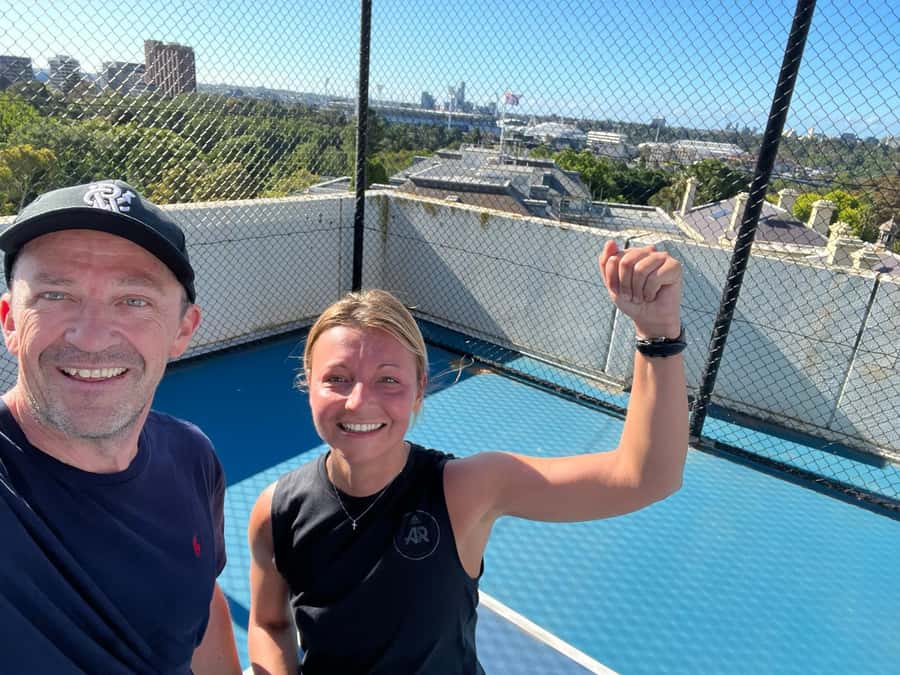
This is one of those days where comfort wins. Wear sports shoes. You will be walking from Federation Square through sporting precincts, plus you might be playing tennis depending on the month and court access.
Also, watch for updates. The activity notes request that you share a WhatsApp number so your guide can share their live location and provide necessary updates on the booking. That is useful in practice because it reduces the friction of meeting up, especially if you arrive near busy roads and public transport points.
Bring a phone for photos, obviously, but also bring a water habit if you tend to get thirsty. The tour is short enough to manage, but it is still an active walking day.
Guide Matters: The People Behind the Best Moments
This experience is guided, and the reviews point to strong consistency in guide personality. You’ll see names like Ben, Catherine, Greg, Michael, Cathy, and Kath leading groups, and the common thread is how they handle storytelling and pacing.
What stands out in the guide style:
- They keep the day engaging, often with humor.
- They explain tennis history and the Australian Open evolution in ways that feel connected to real place, not just dates.
- They adapt to the group energy. Some groups end up spending extra time in tennis areas if weather or access changes, and guides make sure everyone understands the plan.
If you are a tennis super fan, that guide passion is a big part of the payoff. One review specifically praised how a guide handled Australian tennis contributions and the tennis center evolution. That is exactly the sort of detail that makes the courts feel meaningful instead of just scenic.
Who This Tour Is For (and Who Should Pick Something Else)
This tour is a great fit if you fall into any of these buckets:
- You care about tennis, especially Australian Open culture and Melbourne Park history
- You like a sports tour that covers more than one sport, without getting lost
- You want an itinerary that balances walking, venue viewing, and at least some on-court time when possible
- You are visiting Melbourne as a duo, family group, or a small circle of friends who share a sports interest
It might be less ideal if:
- Tennis is your only interest and your dates are fixed to December, when court access is not available
- You expect a full stadium interior tour as part of the base price (internal tours need additional tickets)
- You want a purely passive sightseeing day with minimal walking
For most people, though, this is a strong day because it treats sport as part of the city’s DNA, not just a venue checklist.
Should You Book This Melbourne Park and MCG Experience?
I think you should book if you want a compact, high-impact sports day in Melbourne with a real chance to play on the blue courts when the calendar allows. It is especially strong in January, because you get Australian Open tickets included, which turns the visit into something closer to the event experience itself.
If your trip is in December, I would still consider it, but for the grounds tour, the Aboriginal sports context along the Yarra and Birrarung Mar, the Olympic Precinct football codes, and the MCG finale. In that month, treat tennis play as uncertain based on the listed court access limits, and focus on what the tour is clearly designed to deliver year-round, venue access plus sporting context.
FAQ
Where do I meet for the tour?
You meet at Federation Square, between Transport Bar and Princes Bridge. The guide will be easy to spot, since they are described as playing with a tennis ball.
What is included in the $84 per person price?
The included items are a tour guide, court hire when access allows, racquets and balls supplied, and Australian Open tickets during January.
Can I play tennis in December or January?
Court access during December is not available because the Australian Open begins its construction phase. In January, bookings include tickets to the tournament, and the tour notes exclusions related to playing tennis during December and January, so confirm the scheduled experience you receive ahead of time.
Do I need extra tickets for stadium tours?
Internal stadium tours are not included, and additional tickets are required for those.
What should I bring?
Wear sports shoes. If you plan to play tennis, comfortable sports footwear is essential.
Is the tour wheelchair accessible, and what language is the guide?
Yes, the tour is wheelchair accessible. The live tour guide language is English.
What if I need to cancel?
The tour offers free cancellation up to 24 hours in advance for a full refund.
Melbourne, Block by Block


Added lately from Melbourne
- Melbourne: Progressive Dinner Tour – Chinatown, Laneways & Drink
★ 5.0 · 53 reviews - Melbourne: Sunrise Hot Air Balloon Experience
★ 4.5 · 53 reviews - Melbourne: Melbourne Gardens Explorer Minibus Tour
★ 4.7 · 53 reviews - Yarra River: 1.5-Hour Scenic Sunset Public Cruise
★ 4.3 · 57 reviews - Melbourne Premium Balloon Flight
★ 5.0 · 57 reviews - Mornington Peninsula Wine Day Tour
★ 5.0 · 58 reviews
Melbourne City Tours, compared.
 ★ 5.0Great Ocean Road Small-Group Eco Tour from MelbourneFrom $1066,607 reviews
 ★ 4.7From Melbourne: Great Ocean Road, 12 Apostles, Wildlife TourFrom $946,020 reviews
 ★ 5.0Penguin Parade, & Wildlife Encounters Eco Tour from MelbourneFrom $1183,774 reviews
 ★ 5.0Melbourne: Yarra Valley Wine, Gin, Whisky and Chocolate TourFrom $933,667 reviews
 ★ 4.7Melbourne Great Ocean Rd Reverse Tour London Bridge WildlifeFrom $462,252 reviews
 ★ 4.5From Melbourne: Penguin Parade, Koalas & KangaroosFrom $1121,932 reviews
 ★ 4.5Melbourne: Great Ocean Road Extended–Top Stops&London BridgeFrom $421,920 reviews
 ★ 4.1Melbourne: 2-Hour City Highlights River CruiseFrom $491,804 reviews
Browse the lists this tour appears in