
REVIEW · DARWIN HARBOUR & CROCODILE CRUISES
1-Hour Thunderball WWII Adventure Jet Skiing in Darwin
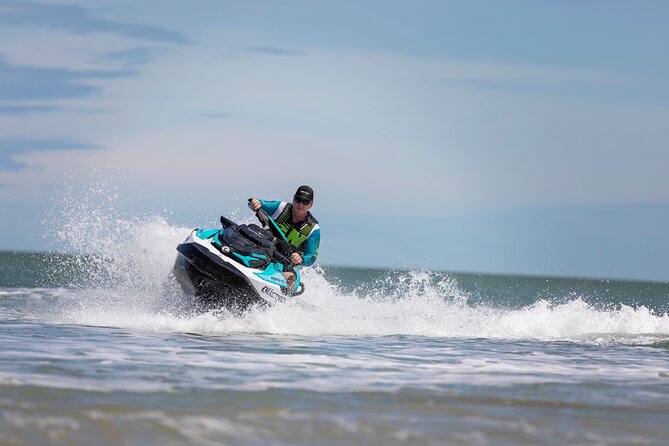
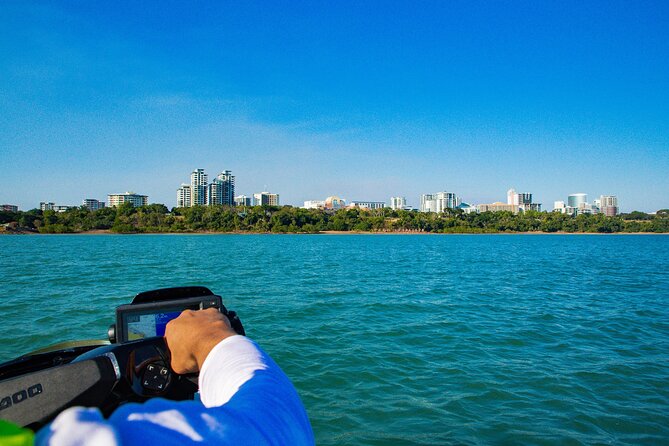
Darwin Harbour looks calm, until you skim it on a jet ski. This 1-hour Thunderball WWII adventure takes you shipwreck-spotting with guides who explain what happened on the seabed, plus Darwin’s WWII role and the shake-up from Cyclone Tracey in 1974. You get panoramic views of Darwin and the coastline while learning why these waters matter.
I like the mix of speed and context. You are not just riding for fun, you are riding with purpose, looking for wrecks and hearing the background behind them. Another strong point is the guide experience, and one guest specifically called out a personal history lesson from Amanda, including coaching during the ride.
The main thing to consider is that this is weather-dependent and you need a moderate physical fitness level, since you’ll be on the water and moving with the jet ski.
In This Review
- Key points you will actually care about
- Darwin Harbour on a Jet Ski, with the Shipwrecks in Focus
- Price, Time, and the Value Question
- Getting There: Stokes Hill Wharf and the 9:00 am Start
- What the Jet Ski Tour Covers, Over and Around the Seabed
- Port of Darwin 1942, Japanese Bombing, and the Story Behind the Wrecks
- Cyclone Tracey 1974: How a Disaster Rewired the Seabed
- Shipwreck Spotting: What You’re Doing While You Ride
- Panoramic Darwin Views, Plus the “How Did They Find That?” Factor
- Small Group Energy and a Personal Touch from Guides
- Weather and Fitness: When This Tour Works Best
- Should You Book the Thunderball WWII Jet Ski Adventure in Darwin?
- FAQ
- How long is the jet ski tour?
- What is the starting location in Darwin?
- What time does the tour start?
- How much does it cost?
- Is the ticket digital?
- What kind of fitness level do I need?
- How many people are in a group?
- Does it run in any weather?
- What happens if I cancel?
Key points you will actually care about
- A shipwreck hunt in Darwin Harbour with professional guidance, not just sightseeing
- WWII Port Darwin 1942 bombing context connected to what you might spot below
- Cyclone Tracey 1974 impact explained, including how seabed debris was affected
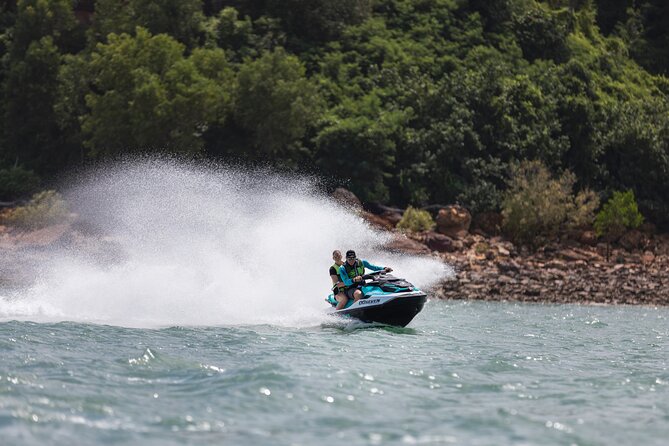
- Small group size up to 16 for a more hands-on feel
- Panoramic coastal views from the water, for photos and a fresh perspective
- Good-weather required, so your day can shift if conditions are poor
Darwin Harbour on a Jet Ski, with the Shipwrecks in Focus
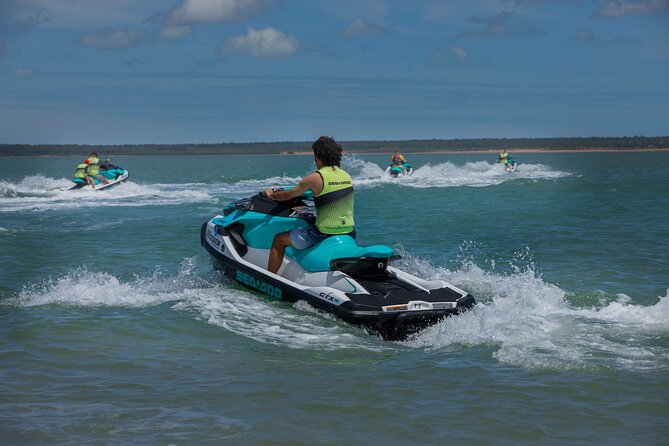
I love tours that make you look twice at a place you thought you already understood. Darwin Harbour is one of those spots. From land, it can look like calm water and pretty coastline. From a jet ski, you move fast across it and start paying attention to details, like where the sea turns darker or where the guide points your attention toward the seabed.
This tour is built around the idea that Darwin’s shipwrecks are part of Australia’s biggest heritage stories under the water. The idea is not to treat the seabed like a spooky theme park. It’s more practical than that. You are learning what sank there, why it sank, and why those remains matter, then using that knowledge while you ride.
And because you are on a jet ski, you get views you do not normally get in Darwin. You’re not stuck behind a window, and you’re not just drifting on a boat route. It is a more active way to see the harbour and coastline. That matters when you want the day to feel like more than another checklist activity.
Sunset water and saltwater crocodiles, other options
- Litchfield National Park and Jumping Crocodile Cruise★ 5.0 · 2,119 reviews
- Adelaide River Cruises – Jumping Crocodile Experience★ 5.0 · 997 reviews
- Sunset 3-Hour Cruise from Darwin with Dinner and Sparkling Wine★ 5.0 · 980 reviews
- From Darwin: Litchfield Park Tour & Jumping Crocodile Cruise★ 4.9 · 829 reviews
Price, Time, and the Value Question
At about €112.18 per person for a 1-hour ride, this is not the cheapest thing in Darwin. But the value is pretty clear if you match your expectations to the format.
You are paying for three things at once:
- A guided experience focused on specific WWII and maritime topics
- A jet ski activity for the thrill and the unique vantage point
- A short duration that keeps the tour punchy, usually not a half-day commitment
Since the tour runs about 1 hour and returns to the same meeting point, you are buying a concentrated burst of adventure plus education. For people who feel overwhelmed by long tours, that time structure can be a plus.
Also, the maximum group size is 16. That does not mean you’ll get one-on-one time for the whole hour, but it does help keep things from feeling like a crowded cattle chute. With shipwreck-spotting, you want people to hear the instructions and be able to look when the guide points things out.
One note for planning: confirmation happens at booking, and the schedule you see is tied to a 9:00 am start at Stokes Hill Wharf. If you like your mornings flexible, build in buffer time so you do not feel rushed.
Getting There: Stokes Hill Wharf and the 9:00 am Start
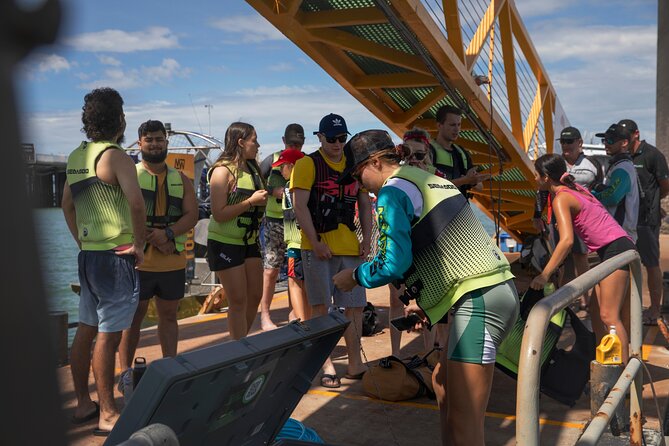
The tour starts at 00Seven Jet Ski Adventures Dock 1, Stokes Hill Wharf, in Darwin City. If you’re staying in the central area, this is a straightforward location to reach. The listing also notes it is near public transportation, so you have options if you do not want to park.
You should plan to arrive early enough to check in calmly. With water activities, even small delays can ripple into the day. The good part is simple: the experience ends back at the meeting point, so you are not left guessing how you’ll get back after you’re wet, windblown, and happy.
This is a small-group activity, so the whole timing feels more organized than big-boat tours. When you get a quick 1-hour window, arriving on time is part of making it worth your money.
What the Jet Ski Tour Covers, Over and Around the Seabed
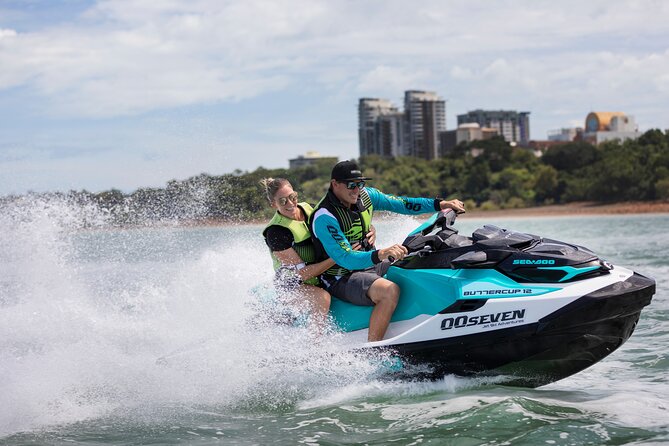
Here’s the heart of the experience: you go around Darwin Harbour with guides who focus your attention on shipwreck sites you would likely never find on your own.
The tour description frames Darwin’s shipwrecks as an ocean-grave reality, with twisted metal below the surface. That wording matters because it changes how you look at what you might see. Instead of treating wrecks as generic “cool stuff,” you’re encouraged to think about events, people, and the violence of war and disasters.
In a practical sense, what you can expect is a rhythm like this:
- You head out over Darwin Harbour from the dock.
- Your guides explain what to look for and what history connects to those waters.
- You ride past or near wreck-related locations, with attention shifting between the scenery and the seabed story.
- You return to the starting dock at the end of the tour.
Details like the exact sequence of stops are not listed, but the structure is clear: it’s a guided ride designed for shipwreck spotting plus history talk. The guides give you the context behind what happened in 1942 and what happened again in 1974 with Cyclone Tracey.
And yes, the views are part of it. This is Darwin Harbour. Even when you’re listening to history, you’re still moving through open water with coastline in sight. That mix keeps the tour from turning into a lecture, and it keeps the thrill from turning into mindless speed.
Port of Darwin 1942, Japanese Bombing, and the Story Behind the Wrecks
One of the biggest highlights is the WWII education tied directly to the water. You’ll learn about the Japanese bombing of the Port of Darwin in 1942, and you’ll connect that event to the sunken warships that were bombed by Japanese planes during WWII.
That connection matters. If you only hear about the bombing on land, it stays abstract. Out on the harbour, the stories start to feel physical. You are still learning facts, but the setting turns those facts into something you can picture.
Guides are the key here. The tour description emphasizes that professional guides provide the lowdown and the history, and one guest specifically thanked Amanda for a personal lesson, plus an explanation during the ride past Sarwin. That tells me the guiding style can be both instruction-based and personal, not one-size-fits-all.
So for your own expectations, think of it like this: you’re not doing a museum visit. You’re doing a moving history lesson where the scenery and the seabed story are linked. If you like history but hate standing still, this format fits well.
Cyclone Tracey 1974: How a Disaster Rewired the Seabed
Cyclone Tracey in 1974 is the other major historical anchor. The tour describes how fishing trawlers are scattered on the seabed of Port Darwin, buried by the ferocious waters created by the cyclone.
This part can feel surprisingly relevant, because it shows that the harbour is not only shaped by war. It’s shaped by nature, and disasters can rearrange what remains on the seabed. The tour gives you the reason that matters when you are out there riding with your eyes open.
When you learn about a cyclone like Tracey in a land setting, it can feel like a timeline fact. Here, it becomes part of why the harbour floor looks the way it does, and why wreck-related remains may be hard to spot without a guide’s direction.
If you are the type who likes stories with cause and effect, this is a strong pairing. WWII explains what sank. Cyclone Tracey explains how the harbour kept changing after that.
Shipwreck Spotting: What You’re Doing While You Ride
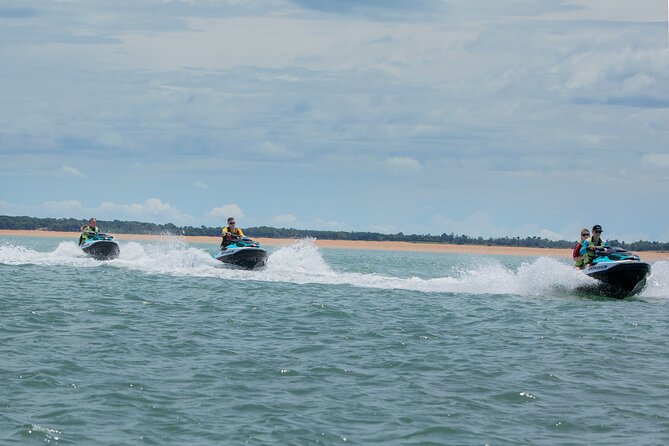
“Spot shipwrecks” sounds simple on paper. On the water, it means you need to stay alert and listen, because the guide’s pointers are the difference between seeing nothing and seeing something worth understanding.
The tour positioning is clear: shipwreck sites you’d never find without the jet ski guides. That tells you your job is not to be a marine archaeologist for an hour. Your job is to follow the guidance, keep your eyes peeled, and connect what you notice to the history you’re hearing.
Also, you’re looking for shipwrecked warships on the seabed. The tour describes the harbour as a heritage site with ocean graves and twisted metal below the surface. That wording suggests the guide will frame what you might see in a respectful, story-driven way, not like a scavenger hunt.
For best results, keep your expectations flexible. You might feel like spotting is easy in a calm harbour. You might feel like it’s harder on rougher water or with conditions that limit visibility. The tour doesn’t promise that you’ll see every wreck clearly. It promises a guided experience with context, and the riding itself is the platform for that.
If you like learning to interpret a place, this is the right kind of activity. If you want guaranteed visuals of specific wrecks from a distance, you might need to temper expectations, since the experience depends on real-world water conditions.
Panoramic Darwin Views, Plus the “How Did They Find That?” Factor
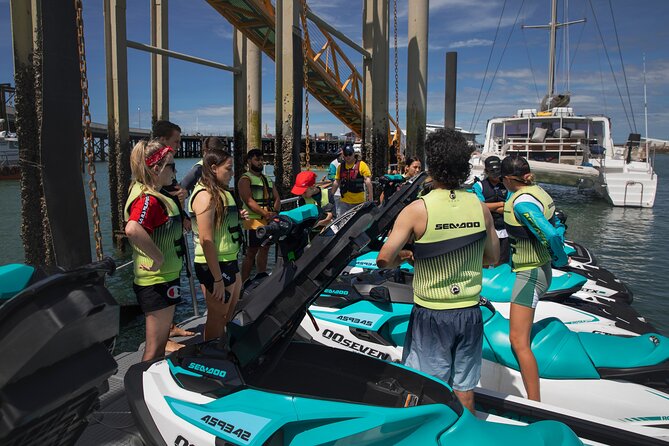
The ride around Darwin Harbour gives you the fun part that people remember later: the wide views. You’re in open water with Darwin and the coastline in sight. That’s not just for photos. It changes your sense of scale.
You also get the “how did they even find this?” feeling. When guides take you toward wreck-related areas, you start to understand why having local expertise matters. The shipwreck sites are underwater, and without help, you’d be guessing at best.
That is the real value behind the jet ski format. It’s not only about speed. It’s about access and the chance to move between points within a short window, guided by people who know where the stories connect.
If you like scenery but also care about meaning, this is a rare combo. You get the coastline views, and you get a reason the harbour deserves attention.
Small Group Energy and a Personal Touch from Guides
One detail from the feedback that stands out is the praise for personal instruction. A guest specifically mentioned a personal lesson from Amanda, and thanked her for the history talk during the ride past Sarwin.
That matters because many tours throw people into a group and hope the information sticks. Here, the experience is capped at 16 travelers, which makes it easier for guides to give real coaching and keep communication clear.
That personal feel can help in two ways:
- You understand what you’re looking at, instead of just riding past it.
- You get more out of the education portion, because you can ask questions or get tailored explanation.
Even in a short 1-hour tour, good guiding changes the whole experience. With this one, the structure is built for attention and timing, so the guide’s approach is not just a nice extra.
Weather and Fitness: When This Tour Works Best
This activity requires good weather. That is not a throwaway line. On a jet ski, weather affects comfort, safety, and visibility. If conditions are poor, the tour is canceled and you are offered a different date or a full refund.
So treat weather like part of the planning, not an afterthought. If your Darwin trip has one perfectly scheduled day and you absolutely cannot change it, you may want to be careful booking a water tour on that day only.
Fitness-wise, the requirement is moderate physical fitness. That usually means you should be comfortable handling movement on the water and being active for the ride. If you have mobility issues or you’re worried about staying balanced while underway, consider that before you book.
The good news is that the tour is only 1 hour. Shorter duration can make a moderate fitness requirement easier to manage.
Should You Book the Thunderball WWII Jet Ski Adventure in Darwin?
I think you should book this tour if you want an active, short adventure that also teaches. It’s a strong fit if you like WWII stories but you get tired of only reading plaques. You want history tied to place, with the seabed and harbour setting doing some of the storytelling.
Book it especially if you care about getting guided attention. The shipwreck theme works best with professional guides who know where to direct your eyes and what to explain.
Skip it or rethink timing if you:
- Hate weather uncertainty and cannot swap dates if conditions are poor
- Are not comfortable with moderate physical activity on the water
- Want a long, multi-stop deep dive session, because this is designed to be an hour long and focused
If your goal is to do something distinct in Darwin, combine speed with real context, and leave with the feeling that you saw a side of the harbour you would not find alone, this one is a smart choice.
FAQ
How long is the jet ski tour?
The experience runs for about 1 hour.
What is the starting location in Darwin?
It starts at 00Seven Jet Ski Adventures Dock 1, Stokes Hill Wharf, Darwin City NT 0800, Australia.
What time does the tour start?
Start time is listed as 9:00 am.
How much does it cost?
The price is €112.18 per person.
Is the ticket digital?
Yes, it uses a mobile ticket.
What kind of fitness level do I need?
The activity calls for a moderate physical fitness level.
How many people are in a group?
The maximum group size is 16 travelers.
Does it run in any weather?
It requires good weather. If it is canceled due to poor weather, you’ll be offered a different date or a full refund.
What happens if I cancel?
Free cancellation is available. You can cancel up to 24 hours in advance for a full refund, with cut-off based on local time.
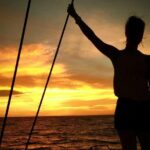
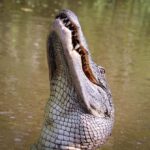
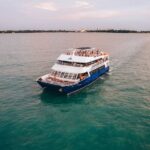
Harbour Sunsets and Saltwater Crocs
Added lately from Darwin
- Arnhem Land Yingana Injalak Hill Full Day Tour from Darwin
★ 5.0 · 69 reviews - 3-Day Kakadu & Litchfield 4WD Camping Adventure from Darwin
★ 5.0 · 69 reviews - 1-Hour Thunderball WWII Adventure Jet Skiing in Darwin
★ 5.0 · 70 reviews - LookAbout Darwin Wetlands Wildlife Premium Tour Max 6 Guests
★ 4.9 · 72 reviews - Jumping Crocodile Cruise with lunch
★ 4.5 · 76 reviews - Darwin: 1-Hour Bombing of Darwin Cruise
★ 4.5 · 76 reviews
Darwin Harbour & Crocodile Cruises, compared.
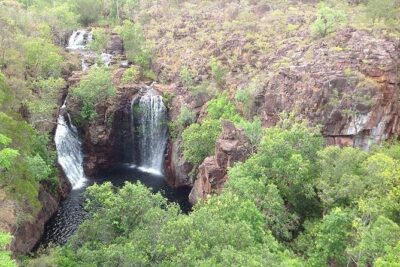 ★ 5.0Litchfield National Park and Jumping Crocodile CruiseFrom $1722,119 reviews
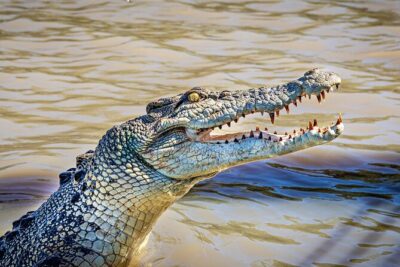 ★ 5.0Adelaide River Cruises – Jumping Crocodile ExperienceFrom $43997 reviews
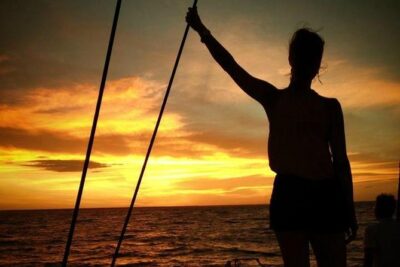 ★ 5.0Sunset 3-Hour Cruise from Darwin with Dinner and Sparkling WineFrom $132980 reviews
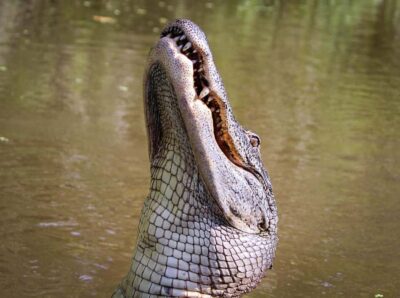 ★ 4.9From Darwin: Litchfield Park Tour & Jumping Crocodile CruiseFrom $162829 reviews
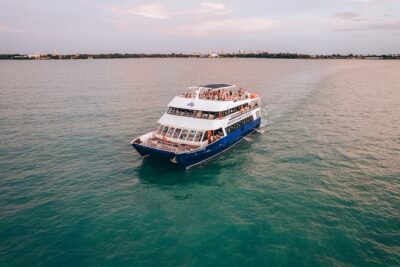 ★ 4.5Charles Darwin Dinner CruiseFrom $111820 reviews
 ★ 5.0Kakadu Day Tour from Darwin with Offroad DreamingFrom $243776 reviews
 ★ 5.0Cape Adieu Darwin Sunset Dinner CruiseFrom $121750 reviews
 ★ 5.01 Day Corroboree Billabong Wetland Experience including 2.5 hour cruise + lunchFrom $168501 reviews
Browse the lists this tour appears in