
REVIEW · ADELAIDE CITY & COAST TOURS
Cultural Caper Adelaide Walking Tour
Adelaide history fits in your stride. This North Terrace walk is an easy-paced way to see major civic and cultural sites, and the stories shared by Graeme (a long-time Adelaide local) turn big buildings into real people and real moments. I love the short, manageable length that works even if you have limited time. I also love the mix of places, from the Migration Museum and State Library to the War Memorial. One drawback to weigh: this is not a slow sit-down tour, so if you want lots of time inside each site, you may feel a bit rushed.
You start at Parliament House and finish outside the Art Gallery of South Australia, with a mobile ticket and a clear route along North Terrace. I think the value is strong because the tour includes a local guide and the admission at each stop is free, but you do need comfortable shoes since it is still a walking tour.
In This Review
- Key things that make this tour a smart Adelaide start
- Entering Adelaide’s North Terrace, one landmark at a time
- Price and value: why $36.93 can feel like a win
- Meet Graeme, and why his photos and humor matter
- The pacing: short stops that still add up to meaning
- Migration Museum: former Destitute Asylum stories you cannot ignore
- Parliament House of South Australia: women’s vote, told in plain terms
- State Library of South Australia: stepping into a 1884 landmark
- National War Memorial: symbolic reliefs and the honour list
- The University of Adelaide and Old Government House: power, architecture, and time
- Art Gallery of South Australia: why benefactors mattered
- The North Terrace landmarks you may spot between stops
- What to watch out for on the day
- Who should book this Adelaide walking tour
- Should you book the Cultural Caper Adelaide Walking Tour?
Key things that make this tour a smart Adelaide start
- Graeme’s storytelling: local, factual, and backed up with historical photos that add context fast.
- North Terrace in two hours: you cover a lot in a small area without a long slog.
- Free entry at every stop: you get the guide plus admission included for the listed venues.
- Real moments, not just statues: women’s suffrage, Great War remembrance, and migration stories.
- Easy pace for mixed ages: designed to work for most visitors, with a moderate walk.
Entering Adelaide’s North Terrace, one landmark at a time
This tour is built around a single corridor of the city, North Terrace, so your brain does not have to keep re-mapping Adelaide every five minutes. The focus stays on public life and culture, so you see how Adelaide organized itself through government, education, arts, and remembrance.
The route is about a mile-long overall, and the timing is tight in a good way. It runs for about two hours, which makes it ideal on your first day. You get orientation, then you can spend the rest of your trip choosing what to revisit on your own.
The group stays small, with a cap of 15 per booking and a maximum of 20 travelers overall. That matters. Smaller groups mean more chances to ask questions and get straight answers, and Graeme is the type of guide who welcomes conversation rather than running a lecture you cannot touch.
City days, jetty towns and what fills the gaps
- Adelaide: Barossa Premium Wine Tasting tour & Winery Lunch★ 4.8 · 1,452 reviews
- Adelaide: River Torrens Popeye Sightseeing Cruise★ 4.6 · 949 reviews
- From Adelaide: Barossa to Hahndorf Wine Tasting and Lunch★ 4.6 · 877 reviews
- Adelaide Oval Stadium Guided Tour★ 4.8 · 760 reviews
Price and value: why $36.93 can feel like a win
At $36.93 per person, the ticket price is not the headline here. The better deal is what comes with it. You pay for a local guide, and the listed stops have free admission for the tour time.
That is a big help in a city where entry fees can pile up quickly. Here, you are not paying extra again and again just to step into the buildings you came to see. Add that to the fact the tour includes both moving through the streets and short visits inside key sites, and you end up with a practical bundle for first-time visitors.
It is also popular. The experience is booked on average about 41 days in advance, so if you have fixed plans, book ahead rather than gambling on last-minute availability.
Meet Graeme, and why his photos and humor matter
Your guide on this tour is Graeme, and his style is part of why the reviews are so consistently high. He is friendly, he shares a deep level of historical detail, and he uses gentle humor so the information lands without feeling heavy.
One detail I really like: he brings historical photos. Those pictures help you connect what you see today with what stood there before. When you are walking through an area that includes government buildings, university architecture, and memorials, having a visual anchor makes the stories stick.
He also encourages questions and discussion. So if you hit a topic like women’s voting rights in South Australia, or what the War Memorial symbolism means, you can ask and get a clear, grounded explanation right there on the sidewalk.
The pacing: short stops that still add up to meaning
The timing is simple and spread out. Each listed stop is about 5 to 15 minutes, and then you move along North Terrace to the next one. That means you are not waiting around for long transitions, but you also get enough time at each site to orient yourself and understand why it matters.
A moderate amount of walking is involved, and the tour operates in all weather, so plan on dressing appropriately. The format is designed for comfort: an easy-paced walk suitable for all age groups. Still, do bring your best walking shoes, because even a shorter walking tour feels long if your footwear is wrong.
If you are the type of traveler who likes to linger, you can do that after the tour. The route gives you the map, the background, and a short list of what to return to.


Migration Museum: former Destitute Asylum stories you cannot ignore

The walk begins at Parliament House, then heads toward the Migration Museum for the first stop. This part of the tour focuses on the site’s earlier life as a former Destitute Asylum. The point is not just architecture or location. It is the human stories tied to how vulnerable people were treated.
Expect a more emotional tone here. If you are sensitive to difficult subjects, this stop may hit harder than the others, because the museum context connects migration to hardship and institutional history.
That said, it is an important start. You are training your eyes for the rest of the tour. After you understand how institutions shaped people’s lives, the government and memorial stops later on feel more meaningful, not just impressive.
Admission at this stop is free, and the visit time is about 15 minutes, so you get enough to grasp the theme without the schedule dragging.
Parliament House of South Australia: women’s vote, told in plain terms
Next is Parliament House of South Australia, with a focus on its role in women gaining the vote in South Australia. This is the kind of topic that can feel abstract if you read about it later, but walking past the building and hearing how it connected to political change makes it easier to picture.
The stop is about 10 minutes. That is not a lot of time, but it is enough to understand the big connection and then move on. I like tours that do this. You do not get stuck waiting for one building to be your entire morning.
The best outcome here is orientation. If you had never thought about South Australia’s political milestones, you leave with a clearer sense of why this building matters beyond its look.
State Library of South Australia: stepping into a 1884 landmark

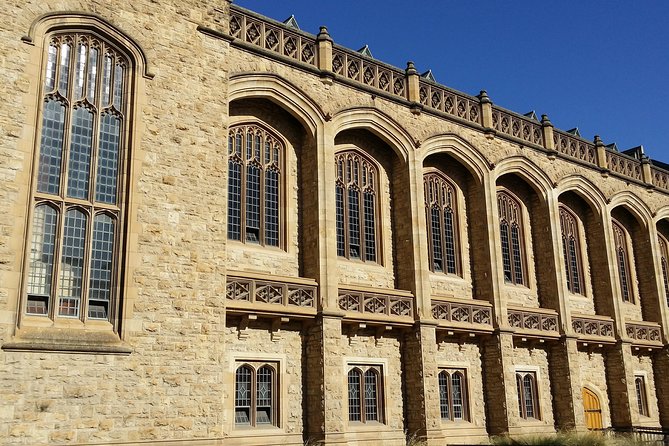
Then you move to the State Library of South Australia. This stop has two layers. First, you learn the role of the library in South Australia. Second, you actually enter the library buildings to explore the space.
You also get a specific detail that helps your brain lock onto the experience: the library dates from 1884 and is described as one of the top 20 beautiful libraries in the world. Even if you never care about rankings, that kind of statement sets expectations. You know you are going into something designed to feel important.
The visit time is about 15 minutes. That works because libraries can be visually rich but easy to wander in circles. A guide helps you focus on what matters: how such an institution supports education, public life, and cultural identity.
If you love old stone, reading rooms, and a bit of quiet authority in public architecture, this is one of the more satisfying stops.
National War Memorial: symbolic reliefs and the honour list

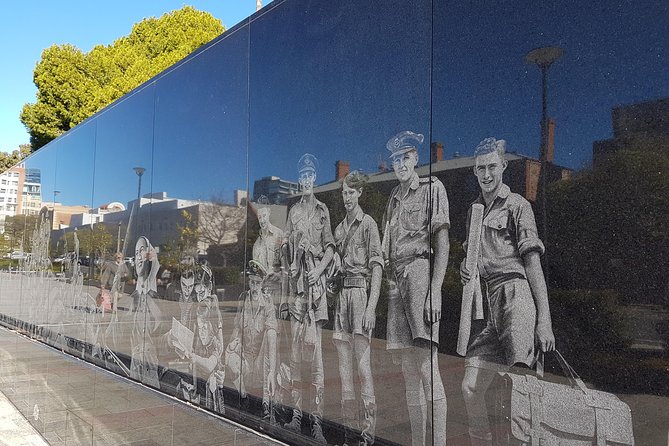
At the National War Memorial, the tour shifts from civic change and education to remembrance. You will see the symbolic reliefs explained, and you also enter the memorial to view the honour list of South Australian soldiers who died during the Great War.
This is about 10 minutes, which sounds brief until you realize what the site does in that time. It gives you a way to read the memorial. Without guidance, it is easy to just see it as a sculpture. With the explanation, the details turn into a message you can understand.
This stop also provides emotional balance for the tour. The Migration Museum sets a serious tone. The War Memorial channels it into commemoration. For many first-time visitors, that contrast makes the whole North Terrace walk feel more human.
The University of Adelaide and Old Government House: power, architecture, and time
After the War Memorial, the route continues with short stops that still carry weight.
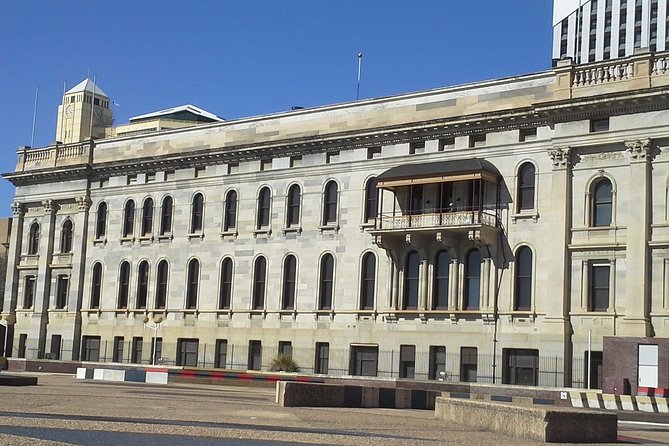
At the University of Adelaide, you look at striking architecture and wander through the grounds. You learn it is one of the oldest universities in Australia. The stop is only about 5 minutes, so think of it as a quick architectural orientation rather than a full campus tour. Still, even that brief pause can change how you see later university buildings around the city.
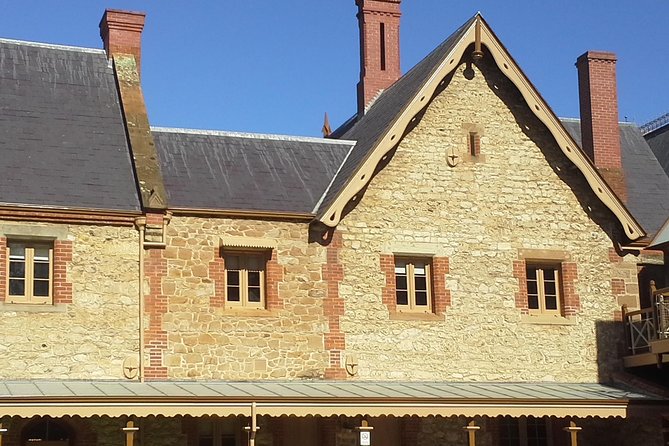
Then you shift to Old Government House and Garden. Here, you view the house and grounds from the outside gate. The guide explains the role of governors, and you learn it is the oldest continuously used Government House in Australia.
I like that this part of the tour does not try to cram everything into one site. It gives you a chain of institutions that shaped the colony and then shaped the modern state. Government, education, and culture all sit next to each other along North Terrace for a reason. Seeing them in sequence helps it click.
Art Gallery of South Australia: why benefactors mattered
The final stop listed is the Art Gallery of South Australia. Even with only about 5 minutes here, you get something practical. You hear why arts matter in the state, and you learn about the importance of benefactors or philanthropists who donated funds to start the institution.
This is a good closing note because it ties culture to civic support. It is easy to think of museums and galleries as automatic. The tour reminds you that they were built because people backed them, often over time.
From here, the tour ends outside the Art Gallery on North Terrace. That is a strong finish, because you can keep going without having to change your transport plan. If you want lunch or a longer art break, you are already at the right spot.
The North Terrace landmarks you may spot between stops
One reason North Terrace works for a walking orientation is that it is a corridor of major civic landmarks. Along the way, you can also notice other historical buildings tied to Adelaide’s story, including an 1838 church, the colonial-era Ayers House, and the Adelaide Casino in a restored 1920s railway station.
You might not have long stops at every single one of these on the schedule, but you get the framing. When you see them yourself later, you will understand why they were worth preserving and what role they played in the city’s development.
What to watch out for on the day
This tour is easy-paced, but it is still a walking experience. Wear comfortable shoes, especially if you plan to explore more after the tour. The route is short, but the city does not stop being a city once you finish.
Also, the time at each stop is limited. If your ideal tour includes long entry times, deep dives into exhibits, or long stays inside every site, you might wish the stops were longer. The format is designed for orientation and highlights, not for hours inside one museum or one memorial.
Finally, the Migration Museum and War Memorial are both likely to feel heavier than the architecture stops. If you prefer a purely light and playful city tour, you might want to pair this with something more upbeat later in the day.
Who should book this Adelaide walking tour
This is a great fit for:
- First-time visitors who want a fast orientation to North Terrace
- Travelers who like history told through real places, not just dates
- People who prefer a small group and interactive Q&A with a local guide
- Anyone who wants a short morning activity that pairs well with the rest of Adelaide sightseeing
You might skip it if:
- You want a long, slow tour with lots of time inside fewer sites
- You are looking for food-focused stops or a full-day itinerary
Should you book the Cultural Caper Adelaide Walking Tour?
I think you should book it if you have limited time in Adelaide and you want your first day to make the city feel understandable. The two-hour length is perfect for catching the main themes: government decisions, women’s suffrage, education, migration stories, and remembrance, all set along North Terrace.
The best reason to choose it is the guide, Graeme. His mix of local perspective, clear facts, humor, and photo-based context turns a straightforward walking route into a meaningful introduction. And the price feels fair because the included sites have free admission.
If you want a simple plan that gets you oriented fast, this tour is a very solid bet.
Adelaide, City and Coast





Added lately from Adelaide
- Adelaide: Central Market Morning Tour
★ 4.8 · 53 reviews - Adelaide: Dolphin Sanctuary Mangroves Kayak Tour
★ 4.2 · 54 reviews - Wild Dolphin Swim Cruise
★ 5.0 · 55 reviews - Hahndorf food and wine E-Bike Tour
★ 5.0 · 55 reviews - Adelaide: Sunset Rooftop Tour at Adelaide Oval
★ 4.7 · 55 reviews - Learn to Surf at Middleton Beach
★ 5.0 · 57 reviews
Adelaide City & Coast Tours, compared.
 ★ 4.8Adelaide: Barossa Premium Wine Tasting tour & Winery LunchFrom $1261,452 reviews
 ★ 5.0Adelaide River Cruises – Jumping Crocodile ExperienceFrom $43997 reviews
 ★ 4.6Adelaide: River Torrens Popeye Sightseeing CruiseFrom $19949 reviews
 ★ 4.6From Adelaide: Barossa to Hahndorf Wine Tasting and LunchFrom $114877 reviews
 ★ 4.8Adelaide Oval Stadium Guided TourFrom $20760 reviews
 ★ 4.5Kangaroo Island in a Day Tour from AdelaideFrom $271722 reviews
 ★ 4.5Torrens River Cruise in AdelaideFrom $19624 reviews
 ★ 4.5Adelaide: Dolphin Sanctuary Eco Kayaking TourFrom $55560 reviews
Browse the lists this tour appears in