
REVIEW · HOBART & MOUNT WELLINGTON
Hobart: Waterfalls, Wilderness & Wildlife – Active Day Tour
Waterfalls, wildlife, and big views in one morning. This full-day Hobart outing takes you to Mt Field National Park and the classic drops of Russell Falls, plus a wildlife stop and a high viewpoint above Hobart. You’re not stuck in the city, and you’re not guessing what’s worth seeing.
I also like that the day is packed with the practical stuff that usually costs time and money later. With national park and wildlife park entry included, I can focus on the walks and the animals, not on ticket lines.
One consideration: you should expect real walking, steps, and at least one steep climb. A past climb was described as a 400-step uphill stretch, so bring shoes you trust and be ready for effort.
In This Review
- Quick takeaways
- A 12-Hour Circuit That Uses Hobart’s Best Nature Nearby
- Where You Start, and Why the Morning Timing Matters
- Mt Field National Park: Giant Trees, Rainforest Mood, and a Big Walking Block
- Russell Falls: Tasmania’s Most Recognizable Waterfall Walk
- Horseshoe Falls: Stair Steps, Tight Turns, and a Steeper Feeling
- Tall Trees Walk: Swamp Gums and the World’s Tallest Flowering Plant
- Bonorong Wildlife Sanctuary: Tasmanian Devils, Wombats, and Echidnas
- Mt Wellington Summit: 30 Minutes Above Hobart
- How the Guides Shape the Day (and Why It Feels Well Timed)
- Fitness Reality Check: What the Steps Mean for You
- What You Eat: Lunch Is Up to You (But They Help)
- Price and Value: What $132.69 Buys You
- Who This Tour Fits Best (and Who Might Want Another Option)
- Should You Book This Hobart Waterfalls, Wilderness, and Wildlife Day Tour?
- FAQ
- How long is the Hobart Waterfalls, Wilderness & Wildlife tour?
- Where do I meet for the tour?
- What time does the tour start?
- Is a mobile ticket provided?
- Are admission fees included?
- Is lunch included in the price?
- What animals can I see at Bonorong Wildlife Sanctuary?
- How much time is there at Russell Falls and Horseshoe Falls?
- What is the maximum group size?
- What happens if weather is poor?
Quick takeaways
- Mt Field National Park first, with a long block of time to enjoy rainforest and moorland without rushing
- Russell Falls plus Horseshoe Falls back to back, with an easy forest walk and then stairs
- Tall Trees Walk (Swamp Gums up to 80 metres), including a shot at the world’s tallest flowering plant
- Bonorong Wildlife Sanctuary time (2.5 hours) for Tasmanian devils, wombats, and echidnas, plus staff-led explanations
- Mt Wellington summit time (30 minutes) for a quick, dramatic view across Southern Tasmania
- Small group limit of 20, which helps the day feel more coordinated than a big bus tour
A 12-Hour Circuit That Uses Hobart’s Best Nature Nearby
This is the kind of day trip you do when you want to see Hobart’s nature credentials fast. In roughly 12 hours, you’ll cover temperate rainforest walks, two famous waterfalls, a wildlife sanctuary, and a summit viewpoint.
What makes this setup feel good is the way it moves from one “type” of nature to the next. Forest to waterfall. Waterfall to giant trees. Then animals. Then a final panoramic payoff from kunanyi/Mt Wellington.
And because it’s a small-group outing with guided walks, you’re not left alone to decode trails and timing. The guiding also seems to matter, with multiple guides mentioned in past experiences, including Hannah, Carl, Paris, and Ben, and a consistent theme of good pacing.
The mountain, the docks and the Saturday market
- Full-Day Guided Bruny Island Tour from Hobart★ 5.0 · 1,331 reviews
- kunanyi/Mt Wellington Explorer Bus- Return Tour (2.5 hours)★ 5.0 · 1,249 reviews
- Hobart: Bruny Island Food, Sightseeing & Lighthouse Day Tour★ 4.8 · 960 reviews
- Hobart: kunanyi/Mt Wellington Explorer Bus Pass★ 4.8 · 848 reviews
Where You Start, and Why the Morning Timing Matters
You meet at 20 Davey St, Hobart at 7:30 am. That early start is not just for show. It gives you a bigger window for the most popular stops when roads and paths are easier to manage.
The tour uses a mobile ticket, which is convenient if you’re already traveling with your phone and prefer not to hunt for printed passes. The group size is kept to a maximum of 20 travelers, which usually means fewer “waiting around” moments during transitions.
One more practical note: this tour is described as requiring good weather. If conditions are poor, you may be offered another date or a refund, so it helps to plan your Hobart days with flexibility.
Mt Field National Park: Giant Trees, Rainforest Mood, and a Big Walking Block
Mount Field National Park is the first major stop, and it gets about 5 hours. That’s a generous amount of time, and it’s the right choice for a park that mixes lush temperate rainforest with moody alpine moorland and cascading water.
This stop is where you feel the “active day” part most clearly. Expect walking on forest tracks and the kind of terrain where your pace depends on what you want to take in: photos, water sounds, and that old-growth feeling you get under tall trees.
A recurring theme from past days is that there are “quite a few steps” in the mix. One person specifically called out a tough climb on the day’s national park route, describing it as a 400-step uphill stretch. You do not need to be a mountain athlete, but you should plan to use real hiking shoes and take breaks without rushing.
If you want to make the best of this block, I’d treat it like your warm-up and “main effort” chunk. Stretch early, drink water, and keep your energy for the later climbs.
Russell Falls: Tasmania’s Most Recognizable Waterfall Walk
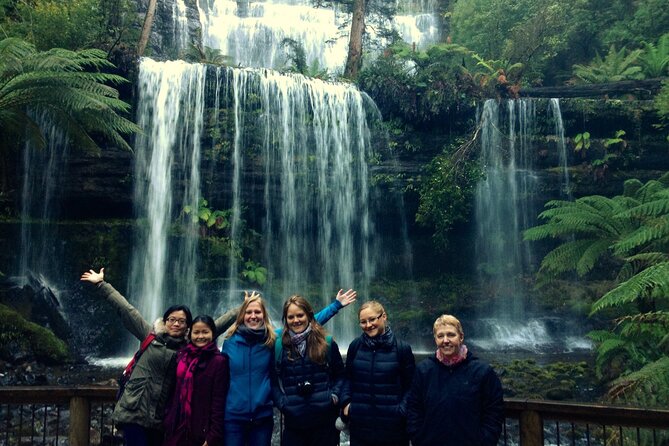
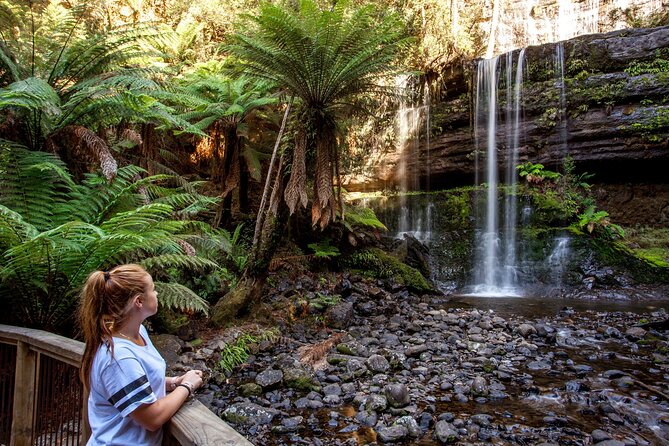
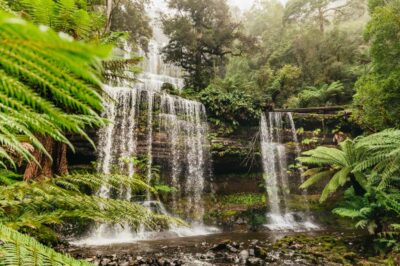
After Mt Field, you head to Russell Falls, where the walk is about 45 minutes. Russell Falls is known for a three-tiered drop, and it’s the kind of waterfall that looks good even when you’re not a waterfall expert.
The walk itself is set up to be enjoyable. You’re moving along a forest track through mixed forest, so it’s not just a walk to see water from one angle. It’s also a chance to enjoy the in-between moments: the shade, the sound, and the changing views as you go.
This is the stop that tends to feel like instant value. You arrive expecting a waterfall, and you get a walk that makes the waterfall part of the experience, not the whole thing.
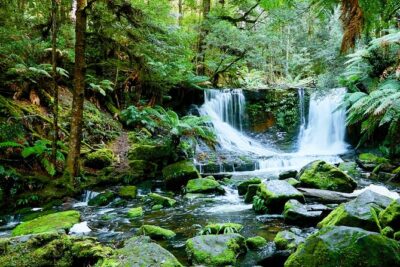
Horseshoe Falls: Stair Steps, Tight Turns, and a Steeper Feeling
Just beyond Russell Falls, you’ll climb to Horseshoe Falls. This segment is shorter, around 30 minutes, but it feels more “in motion,” because it includes stairs.
Some people consider Horseshoe Falls more impressive than Russell Falls, and either way, the forest setting gives it that tucked-in, “you found it” feeling. The bigger takeaway for you is that this portion changes the effort level. It’s not just walking on a flat track.
If stairs aren’t your thing, plan to take it at a steady pace and use the railings where available. It’s also a good moment to slow down if you tend to get puffed quickly, because the next stop is a long wildlife block where you’ll likely want your energy.
Tall Trees Walk: Swamp Gums and the World’s Tallest Flowering Plant
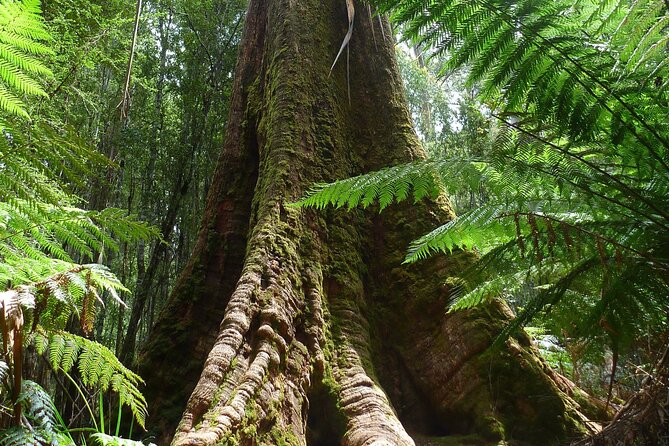
Next up is the Tall Trees Walk on the Three Falls Circuit, with about 1 hour here. This is where you trade waterfall energy for awe at scale.
You’ll be looking up at giant Swamp Gums, which can reach around 80 metres. The tour also highlights that these trees are the world’s tallest flowering plant, a detail that makes the walk more interesting than just “nice trees.”
I like this stop because it resets your eyes. After the sound of water, you’re focusing on vertical space and the slow rhythm of a forest track. You get that feeling of Tasmania doing things on a bigger scale than you’re used to at home.
Practical tip: bring a layer even if it’s warm when you start. Forest shade can cool you down, and the wind near the open areas can feel colder than expected.
Bonorong Wildlife Sanctuary: Tasmanian Devils, Wombats, and Echidnas
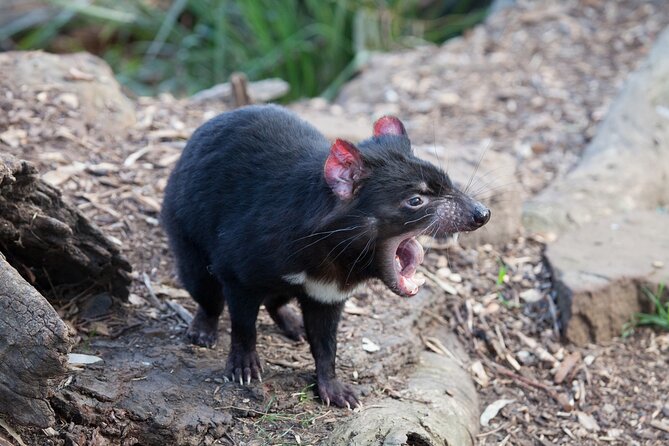
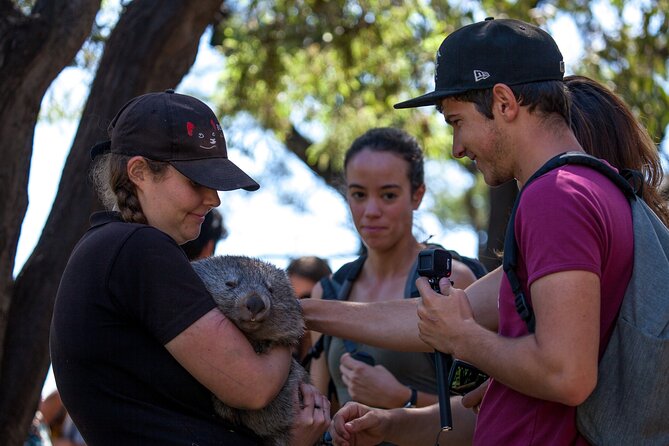
The wildlife stop is Bonorong Wildlife Sanctuary, with about 2 hours 30 minutes. This is a key part of the day, and not just because it breaks up the walking.
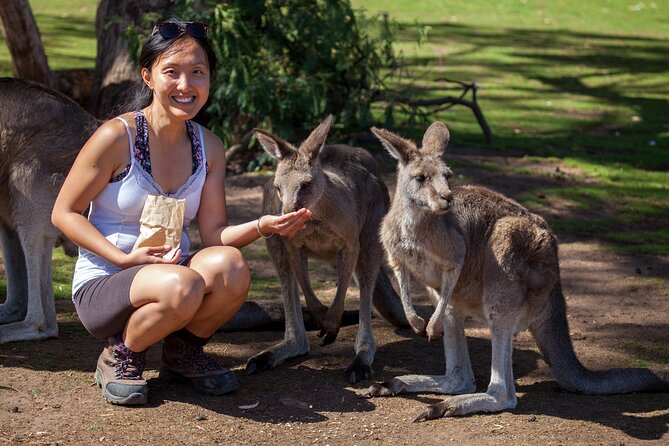
You’re there to see Tasmanian devils, wombats, and echidnas, and the sanctuary runs an informative wildlife tour with expert staff. Past experiences also mention the joy of wildlife interactions and the chance for animal encounters that make it feel real rather than staged.
One honest note from a past day: animals can be shy, and sometimes they hide. That’s not a tour “failure,” it’s wildlife behavior. If you go in expecting that animals might not be visible the entire time, you’ll handle it better and enjoy what you do see.
If you’re visiting specifically for animal time, this is the stop to protect. Eat what you can before you arrive, keep your camera ready, and allow yourself to move at the sanctuary pace instead of rushing between exhibits.
Mt Wellington Summit: 30 Minutes Above Hobart
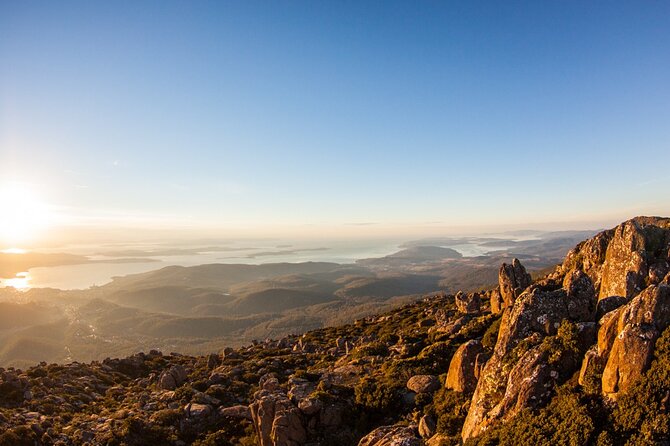
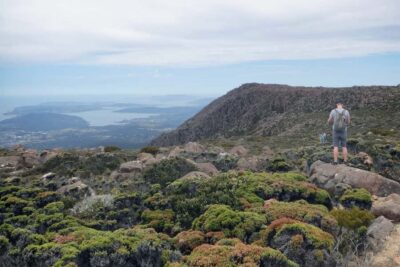
After Bonorong, you drive about 60 minutes to the summit of kunanyi/Mt Wellington, which sits at 1271 metres above sea level. You get around 30 minutes at the top.
Those half-hour summit blocks can feel short, but they’re built for a reason: you want enough time for views and photos without turning it into a long wait. From the summit, you’ll see across Southern Tasmania, and the elevation gives everything a clearer sense of scale than you get on city streets.
This is also a smart end-of-tour location. After waterfalls, trees, and animals, the summit gives you a “big picture” moment and helps the day feel complete.
Tip: bring a windproof layer. Summits can be breezy even when the city feels mild.
How the Guides Shape the Day (and Why It Feels Well Timed)
A big part of why this tour works is the way it’s handled as a schedule, not a list of stops. Multiple past experiences praised the guide for making the best use of time, and for keeping the day organized even with a lot of movement.
You’ll get interpretive walks and facts along the way. That matters, because the difference between seeing a waterfall and understanding why it’s famous can be just a few good moments of explanation.
Also, if you like a guide who talks with confidence about Tasmania, this tour has that energy. People have mentioned guides like Hannah, Carl, Paris, and Ben as strong, and consistently noted for being helpful on the trail and in the day’s transitions.
One possible catch: the day is guided in spoken English, and one past experience mentioned that if English is hard for you, you might feel it. If you’re not comfortable with listening fast-paced explanations, plan to ask questions when you can, and use the visuals to catch up.
Fitness Reality Check: What the Steps Mean for You
This is an active day tour. Not extreme, but not “stand around” either.
From the experiences shared, the toughest parts are the stair sections within the national park walking route. One person described a killer uphill stretch, roughly 400 steps, and also noted how you should save energy for that climb.
Here’s the balanced way to judge it for yourself. If you can handle a long day of walking with some stairs, you’ll likely be fine. If you get sore quickly on steep climbs, you’ll want to go slow, use breaks, and consider whether you’re comfortable with uphill effort after already walking through rainforest and waterfalls.
A useful approach: treat each stop like a workout round. Hydrate, pace yourself, and don’t sprint between photo moments. The tour is timed, so rushing can make the later segments harder.
What You Eat: Lunch Is Up to You (But They Help)
Lunch is not included. Instead, there’s a stop en route in a regional town where you can purchase lunch and snacks at a bakery, then take it along with you.
That’s actually practical. It means you can pick what suits your diet and appetite instead of accepting a fixed packed lunch you might not enjoy.
Bring a refillable water bottle, and if you’re sensitive to hunger, add a small snack for the waterfall-to-wildlife transition. When your day is packed, waiting for lunch can feel longer than you expect.
Price and Value: What $132.69 Buys You
At $132.69 per person, this tour is positioned as a full-day value package. The key isn’t just the final number, it’s what’s included.
You’re covered for national park entrance fees and the wildlife sanctuary entrance fee, plus professional guides and interpretive walks. Those admission costs and guide hours are exactly the stuff that usually adds up when you DIY your own day outside Hobart.
The one trade-off is lunch. You’ll buy food on your own at the bakery stop. If you’re okay with that and you want a guided, pre-timed nature day, the price starts to make sense fast.
Also, small groups matter. With a cap of 20 travelers, it tends to feel more manageable than a large group bus day, especially when everyone needs to move between stops.
Who This Tour Fits Best (and Who Might Want Another Option)
This tour is a strong fit if you want your Hobart time to include more than city sights. You’ll get a real nature day with waterfalls, giant trees, and wildlife education, then a summit view.
It suits you if you enjoy active touring, even if you’re not a hardcore hiker. The walks and stairs are part of the experience, and you’ll have the best day if you’re comfortable with uneven forest paths.
It’s also a good choice if you’re traveling with mixed interests. Nature lovers get the waterfalls and trees, animal lovers get Tasmanian devils, wombats, and echidnas at Bonorong, and view seekers get Mt Wellington.
One note: if you’re very limited by stairs or steep climbs, you might feel the effort more than you want. In that case, you may prefer something gentler with fewer walking segments.
Should You Book This Hobart Waterfalls, Wilderness, and Wildlife Day Tour?
I’d book this tour if you want a single day that hits the big nature highlights around Hobart without the planning headache. Admission fees are included, the group stays small, and the itinerary naturally combines waterfalls, forest scale, wildlife time, and a summit viewpoint.
I’d think twice if you know you struggle with steep stairs and uphill steps. The walking is part of it, and one past experience pointed out a major uphill step count.
If you’re an active traveler who likes guided context and wants your day to feel efficient, this is a solid choice. Just pack for movement, bring a wind layer for the summit, and aim to start the morning feeling calm, not rushed.
FAQ
How long is the Hobart Waterfalls, Wilderness & Wildlife tour?
The tour runs for about 12 hours (approx.).
Where do I meet for the tour?
You start at 20 Davey St, Hobart TAS 7000.
What time does the tour start?
The start time is 7:30 am.
Is a mobile ticket provided?
Yes, the tour uses a mobile ticket.
Are admission fees included?
Yes. National Park entrance fee and the wildlife park entrance fee are included.
Is lunch included in the price?
No. Lunch is not included. The tour stops en route at a regional town where you can purchase lunch and snacks from a bakery.
What animals can I see at Bonorong Wildlife Sanctuary?
At Bonorong, the tour includes the chance to see Tasmanian devils, wombats, and echidnas.
How much time is there at Russell Falls and Horseshoe Falls?
Russell Falls is about 45 minutes, and Horseshoe Falls is about 30 minutes.
What is the maximum group size?
The tour has a maximum of 20 travelers.
What happens if weather is poor?
The tour requires good weather. If it’s canceled due to poor weather, you’ll be offered a different date or a full refund.
Hobart, Under the Mountain

Added lately from Hobart
- From Hobart: Mt Wellington Pinnacle 2 Hour Small Group Tour
★ 4.6 · 20 reviews - 3D Tasmanian Highlights: Hobart, Port Arthur & Bruny Island
★ 4.9 · 20 reviews - Hobart Shore Excursion: Hobart Attractions Bus
★ 5.0 · 21 reviews - Hobart: 4 Day Wild Tasmania Tour
★ 4.9 · 21 reviews - Hobart: Waterfalls, Wilderness & Wildlife – Active Day Tour
★ 5.0 · 22 reviews - Tasmania 5 Day East Coast Tour
★ 5.0 · 22 reviews
Hobart & Mount Wellington, compared.
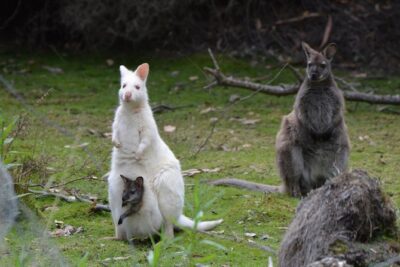 ★ 5.0Full-Day Guided Bruny Island Tour from HobartFrom $1291,331 reviews
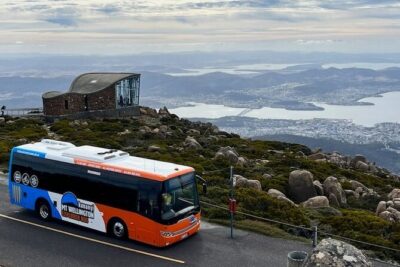 ★ 5.0kunanyi/Mt Wellington Explorer Bus- Return Tour (2.5 hours)From $351,249 reviews
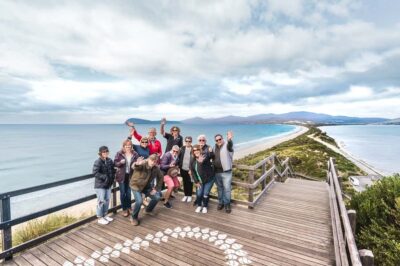 ★ 4.8Hobart: Bruny Island Food, Sightseeing & Lighthouse Day TourFrom $198960 reviews
 ★ 4.8Hobart: kunanyi/Mt Wellington Explorer Bus PassFrom $35848 reviews
 ★ 5.0Bruny Island Traveller – Gourmet Tasting and Sightseeing Day Trip from HobartFrom $197786 reviews
 ★ 4.5Hobart: 24-Hour Hop-on Hop-off Sightseeing Bus TicketFrom $31770 reviews
 ★ 4.7From Hobart: Full-Day Bruny Island Tour with GuideFrom $127755 reviews
 ★ 4.8Hobart: Mt Wellington, Mt Field, Bonorong and Richmond TripFrom $126722 reviews
Browse the lists this tour appears in