
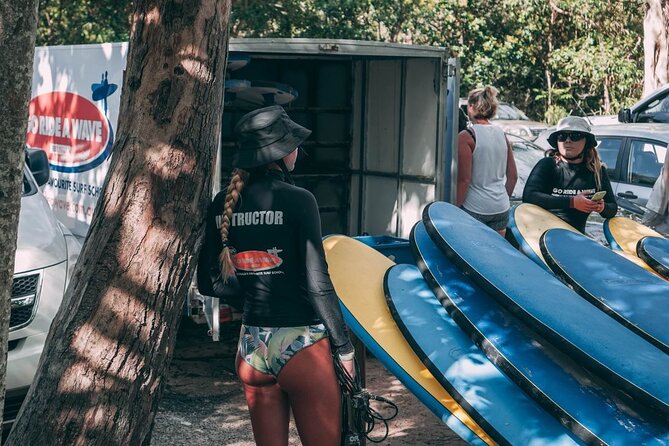
REVIEW · NOOSA & THE SUNSHINE COAST
Learn to Surf at Noosa on the Sunshine Coast
Surfing in Noosa is all about getting hooked fast. You will learn the basics (or sharpen your technique) at Noosa Heads with a setup made for beginners, plus that classic Sunshine Coast ocean scenery.
I especially love the small-group feel and the way the class is structured to get you into the water quickly, not just standing around. Another big plus is equipment included, from a soft beginner board to the rash shirt or wetsuit, so you can focus on catching and standing.
One consideration: on peak holiday days, you might share the beach and water with larger numbers of surfers than you expect, even if your booking is a small group. The good news is the instructors work hard to keep safety and coaching going, but the vibe can feel more crowded.
In This Review
- Key things to know before you go
- Getting Started at Beach Access No 11, Claude Batten Drive
- Rash Shirts, Wetsuits, and Soft Boards That Help You Actually Learn
- The Beach Warm-Up: Safety Talk and Stand-Up Fundamentals
- Catching Waist-Deep Waves, Then Getting Better in Real Time
- Instructor Coaching Style: What People Tend to Praise
- Price and Logistics: Is It Good Value for $60.25?
- Small Groups, Big Energy: How Crowds Can Affect Your Lesson
- Who Should Book This Surf Lesson in Noosa?
- When Weather Changes Your Plans, Noosa Still Delivers
- Should You Book Learn to Surf at Noosa on the Sunshine Coast?
- FAQ
- Where do I meet for the surfing class?
- What should I bring?
- Do I need to bring a wetsuit or rash shirt?
- Will this lesson work if I have never surfed before?
- How long is the surfing lesson?
- How big are the groups?
- What happens if the weather is poor or I need to cancel?
Key things to know before you go
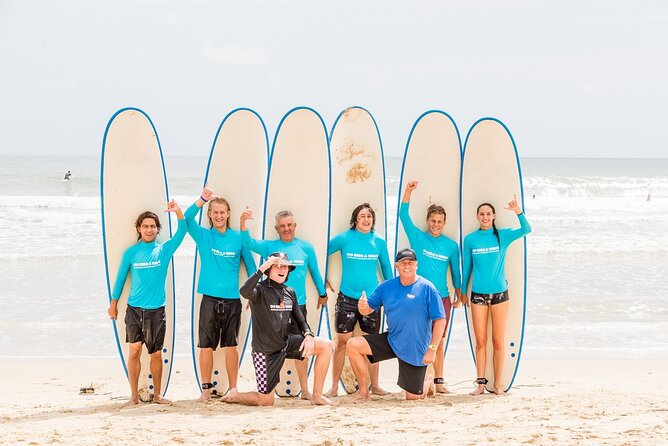
- Meeting at Beach Access No 11 in Claude Batten Drive, with a quick setup and short walk to the sand
- All gear provided, including the right-sized soft beginner board
- Rash shirt or wetsuit included, with winter wetsuits and extra warmth options
- A safety talk plus sand drills, before you try waves in waist-deep water
- Instructor coaching in the water, designed to help you stand up, not just paddle
- Max group size of 7 travelers, with morning or afternoon class choices
Getting Started at Beach Access No 11, Claude Batten Drive
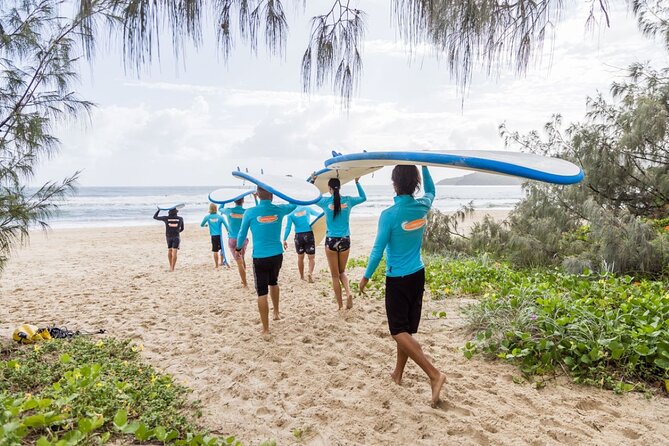
Your lesson starts at a trailer in the car park at Beach Access No 11 on Claude Batten Drive in Noosa Heads. Plan to arrive about 15 minutes early so you have time to check in, get suited up, and get your board sorted without rushing. This matters more than you think, because the best lessons feel calm and organized right from the first instructions.
From there, you walk to the beach and begin with a safety talk and basic surf instruction. For most first-timers, this is the moment where things click: you get a simple game plan for what to do when you are standing, falling, and trying again.
You can choose a morning or afternoon class, which is handy in Noosa where daylight and weather can shape your whole day. The lesson runs about 2 hours, so it fits well into a vacation schedule, whether you are doing a coastal day or just want a focused activity.
Everglades, headland and hinterland, further reading
- Maleny Botanic Gardens Bird Aviary Experience Ticket★ 4.5 · 579 reviews
- Serenity Cruise to Australia’s Everglades★ 4.5 · 408 reviews
- Epic Kayak With Dolphins & Wildlife – 4WD Beach Adventure Noosa★ 5.0 · 366 reviews
- Everglades Explorer – Noosa Everglades Tour★ 4.5 · 338 reviews
Rash Shirts, Wetsuits, and Soft Boards That Help You Actually Learn
One of the smartest things about this surf school is that they take care of the part that usually slows beginners down: gear. You are given a long-sleeved rash/sun shirt, and in winter you get a wetsuit instead. Either way, it helps you stay comfortable in the water long enough to practice, and it reduces the friction and scrapes that can turn your first session into a misery marathon.
Then comes the board. You do not show up to guess at equipment. The team selects the correct size soft beginner surf board for you, which is a big deal because board choice affects stability, paddling, and how quickly you can stand.
This is also a quiet confidence boost. When you are on a board that fits, you spend less time fighting the surfboard and more time learning timing. Surfing is hard, even with the right conditions, but good equipment makes the difference between progress and just getting repeatedly dumped.
The Beach Warm-Up: Safety Talk and Stand-Up Fundamentals
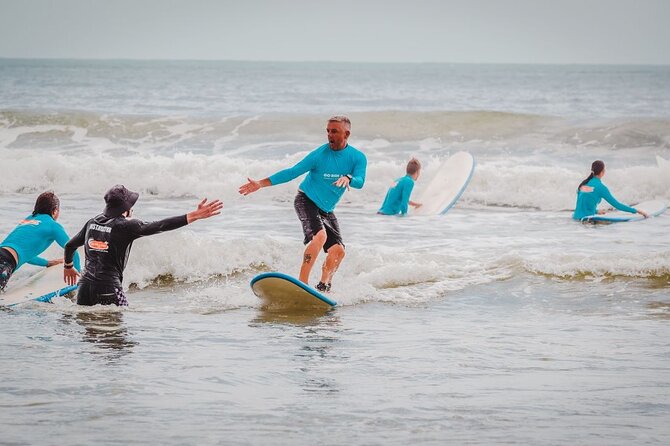
Before you hit the waves, you start on the sand. You get a safety briefing and basic instructions, then you practice the core movement of surfing: how to position your body to go from lying down to popping up.
The teaching rhythm is simple and effective:
1) Start with beach coaching so you understand what you are trying to do.
2) Get into the water for your first attempts in easier conditions.
3) Return to the beach for more specific stand-up guidance.
4) Spend the rest of the lesson surfing, with the instructor assisting in the water.
Why this works: it prevents the classic beginner trap of just paddling out and hoping your body figures it out. You learn the plan, try it right away in waist-deep water, then refine it while the muscle memory is fresh.
And if you want the biggest learning jump, focus on what you are doing during the stand-up phase, not just whether you catch a wave. Many people catch a wave before they can reliably stand. This lesson is built to help you bridge that gap.
Catching Waist-Deep Waves, Then Getting Better in Real Time
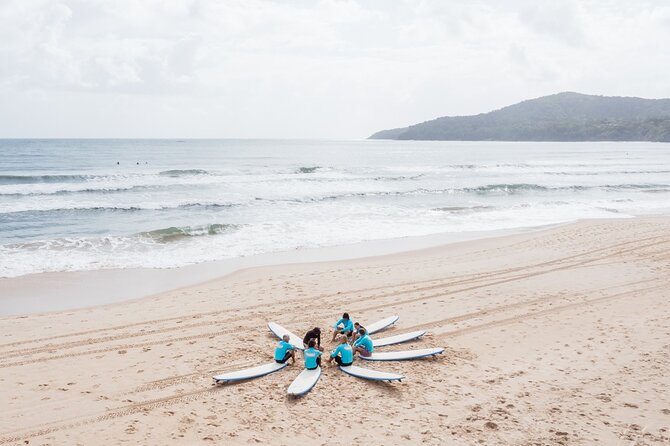
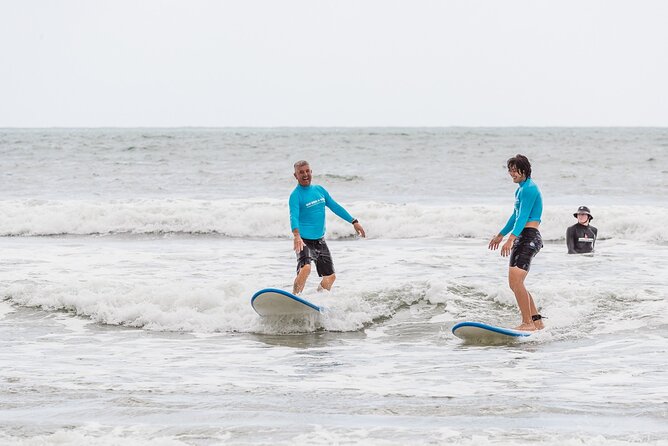
After the initial beach instruction, you head into the water and begin catching your first waves in waist-deep water. For beginners, this is one of the best choices. You can learn how waves feel and move you without being dropped into deep water where fatigue and panic start to pile up.
Once you have that first set of wave experiences, you return to the beach for more detailed instruction on how to stand up. This is where you often get the small tweaks that change everything. Surfing improves in those tiny corrections, like where your feet land, how quickly you shift your weight, and how you look forward as you rise.
Then the rest of the time is spent in the water with the instructor assisting everyone to stand up. That in-water support is the difference between a lesson where you watch someone else surf, and a lesson where you keep trying until your body understands.
If the sea is a bit rough on the day, it can still be a fun challenge. One learner noted they managed to get on the board a few times even when conditions felt choppier, which is a good reminder to bring patience. Getting good at surfing is not one big leap. It is a string of short wins.
Beginner breaks and the schools that work them
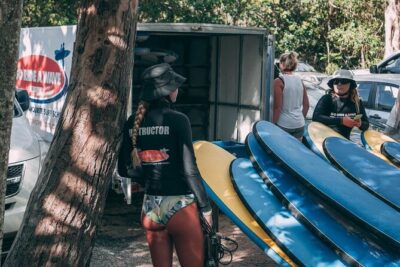
Instructor Coaching Style: What People Tend to Praise
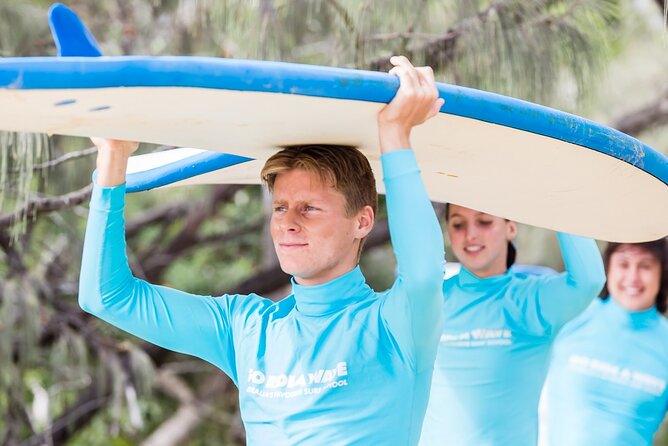
This is a pro-guided class, and the instructor quality shows up in the small details: clear explanations, patient coaching, and getting people up safely. You might be taught by instructors such as Sisi, Rose, Cece, Marit, Scott, or others. The common theme across the names is that the instructors do not just give one quick tip and disappear.
Here is what I like about this coaching approach for beginners:
- They explain, then they watch you try.
- They help you stand, not just paddle.
- They keep the lesson moving, so you get multiple attempts within the 2 hours.
You will also see how coaching style matters with kids and mixed groups. Some families mention the kids loving the day and standing up by the end, which usually means the instructor is managing both safety and morale at the same time.
Do note one potential downside on busier days. One comment described a busy holiday session with 22 surfers and four instructors in a compact area, and the overall feeling was more crowded than ideal. If you are sensitive to crowding, I suggest booking when school holidays are not in full swing, or simply go in knowing the beach space may be shared with more learners.
Price and Logistics: Is It Good Value for $60.25?
At $60.25 per person for about 2 hours, this is priced like a real activity, not a throwaway add-on. The value comes from what you do not have to bring or rent: the guide, the surf equipment, and the rash shirt or wetsuit (or wetsuit in winter). You also get the coaching structure: safety talk, beach instruction, waist-deep wave practice, and in-water assistance.
It is also fair for what you are learning. A surf lesson can be frustrating when you are guessing equipment and technique, and that is why inclusive gear plus structured teaching is worth paying for.
Logistically, it is easy to fit into a day. You get a mobile ticket, and the meeting point is a specific beach access on Claude Batten Drive. You are also near public transportation, which is useful if you do not want to deal with parking.
What is not included is also straightforward: food and drinks are on you. Bring water. If you snack before you go, keep it simple. After two hours of surfing, you will be hungry.
Small Groups, Big Energy: How Crowds Can Affect Your Lesson
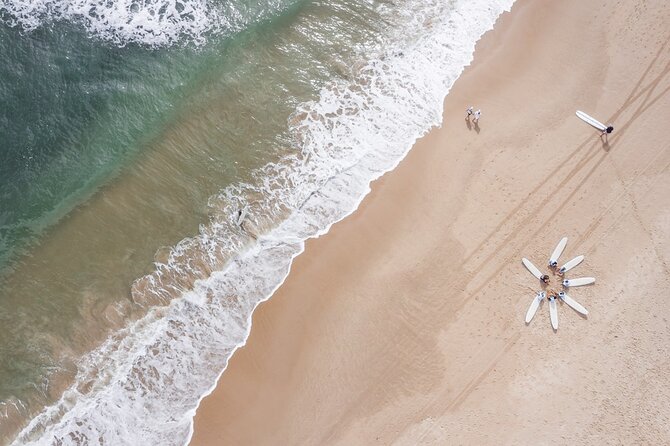
The booking limit is a maximum of 7 travelers, which is exactly the kind of cap that tends to keep classes manageable. In many sessions, you likely get that personal attention where the instructor can check your technique without feeling like a referee at a sports stadium.
Still, context matters. On some busy days, multiple groups can share the same surf zone. One lesson description mentioned a ratio of 1 instructor to 7 students as the target, with a note that on that day it ran at 1:6. That is reassuring from a safety perspective.
But if you want extra one-on-one feedback, you should plan your approach:
- Ask for specific cues about your stand-up timing.
- If you are not getting consistent feedback, raise your hand and request it early, not after the session ends.
- If you are between beginner and intermediate, tell your instructor what you can already do so they can help faster.
The upside is that, even in larger settings, many learners report getting up and standing by the end. If that is your goal, this is the kind of lesson that pushes you toward it.
Who Should Book This Surf Lesson in Noosa?
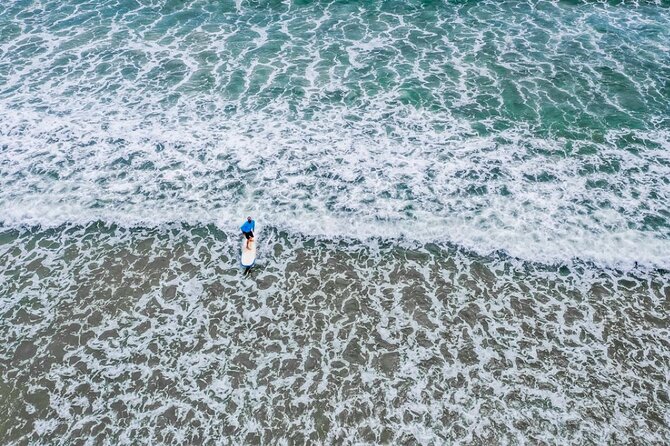
This lesson is a strong fit for almost anyone who wants to learn without complicated planning. It is listed as suitable for all ages and skill levels, including beginners. If you have never surfed before, that is ideal because the board is beginner-focused and the water is waist deep for the first attempts.
It is also good for:
- Families who want kids to try safely and quickly
- Couples or friends who want the same shared challenge
- People who have tried once and want a clean refresher
One word of realism: surfing is harder than it looks. You will fall. A lot. The difference here is that you get repeated chances and clear coaching so you are learning each time.
If you are only in town for a short time, this is a clean way to get an authentic Noosa experience without spending the entire day figuring out gear and technique on your own.
When Weather Changes Your Plans, Noosa Still Delivers
Surfing depends on good weather, and the activity runs with that in mind. If it is canceled due to poor weather, you are offered a different date or a full refund. This is important in Noosa because conditions can shift, and a surf day is not something you want to gamble on without a plan.
Also, do not assume you only surf when it is sunny. A learner mentioned a rainy day, and they stayed warm thanks to the wetsuit provided. So yes, it can be wet and gray outside, and you can still have a solid session.
Should You Book Learn to Surf at Noosa on the Sunshine Coast?
Yes, if your main goal is to catch waves quickly and get coached through the stand-up basics. The combo of professional guidance, equipment provided, and a lesson plan that moves from safety talk to waist-deep wave practice is a great foundation.
I would especially recommend it if:
- You are a beginner and want a structured start
- You want minimal hassle, you show up, you get suited, you surf
- You want a 2-hour activity that fits cleanly into a Noosa day
Consider booking strategically if:
- You are going during school holidays and hate crowds, you may share space with a larger number of surfers
- You need very frequent, individualized corrections, you can still get help, but group dynamics may limit how often your instructor can focus only on you
If you go in with patience and a willingness to try repeatedly, this is the kind of surf class where most people leave feeling that surfing is not magic. It is skills, timing, and support.
FAQ
Where do I meet for the surfing class?
You meet at the trailer in the car park at Beach Access No 11 on Claude Batten Drive in Noosa Heads. You should arrive about 15 minutes before the lesson starts.
What should I bring?
The tour provides the surf equipment. You should bring whatever you normally need for a beach activity, and remember food and drinks are not included.
Do I need to bring a wetsuit or rash shirt?
No. You get a long-sleeved rash/sun shirt, and in winter you get a wetsuit.
Will this lesson work if I have never surfed before?
Yes. It is suitable for all ages and skill levels, including beginners, and it starts with instruction on the beach and early practice in waist-deep water.
How long is the surfing lesson?
The duration is about 2 hours.
How big are the groups?
This activity has a maximum of 7 travelers per booking.
What happens if the weather is poor or I need to cancel?
The experience requires good weather. If it is canceled due to poor weather, you will be offered a different date or a full refund. You can also cancel for free up to 24 hours in advance for a full refund.
Beginner Breaks
Along the Sunshine Coast



Added lately from Noosa and Sunshine Coast
- The Ginger Factory – Play All Day Bundle Unlimited Rides
★ 4.5 · 21 reviews - Noosa Brewery Tour – The Best of Noosa
★ 5.0 · 21 reviews - Mary Valley Tour with Mary Valley Rattler, Lunch and Kenilworth
★ 5.0 · 21 reviews - Scenic eBike of the Noosa Biosphere Trail Network
★ 5.0 · 22 reviews - 1 Hour Single or Double Kayak Rental to the Nth Bribie Island
★ 5.0 · 24 reviews - Sunshine Coast Adventure Park TreeTop Challenge
★ 4.5 · 25 reviews
Noosa & the Sunshine Coast, compared.
 ★ 5.0Brisbane Whale Watching Cruise from Redcliffe or Sunshine CoastFrom $114997 reviews
 ★ 4.5Noosa: Afternoon Cruise through the Noosa EvergladesFrom $66906 reviews
 ★ 4.9Noosa Heads: 2 Hour Surf Experience on the Sunshine CoastFrom $59644 reviews
 ★ 4.5Maleny Botanic Gardens Bird Aviary Experience TicketFrom $33579 reviews
 ★ 4.7Mooloolaba: Seafood Lunch CruiseFrom $53473 reviews
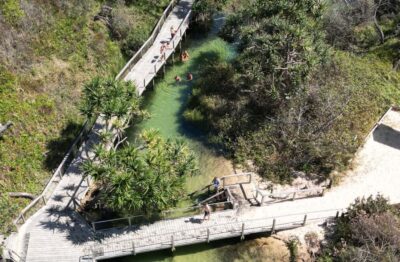 ★ 4.7From Noosa: K’gari (Fraser Island) Small-Group TourFrom $211445 reviews
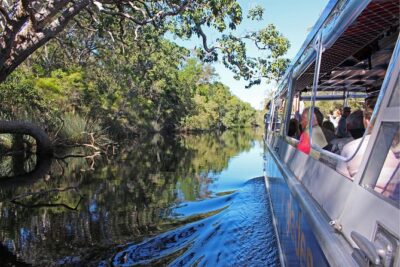 ★ 4.5Serenity Cruise to Australia’s EvergladesFrom $67408 reviews
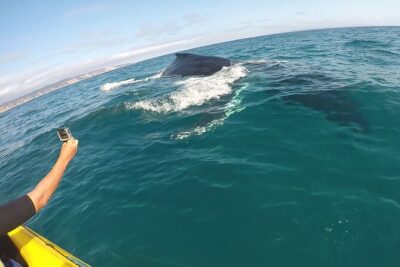 ★ 5.0Epic Kayak With Dolphins & Wildlife – 4WD Beach Adventure NoosaFrom $115366 reviews
Browse the lists this tour appears in