
REVIEW · BLUE MOUNTAINS DAY TRIPS
Stargazing with an Astronomer in the Blue Mountains
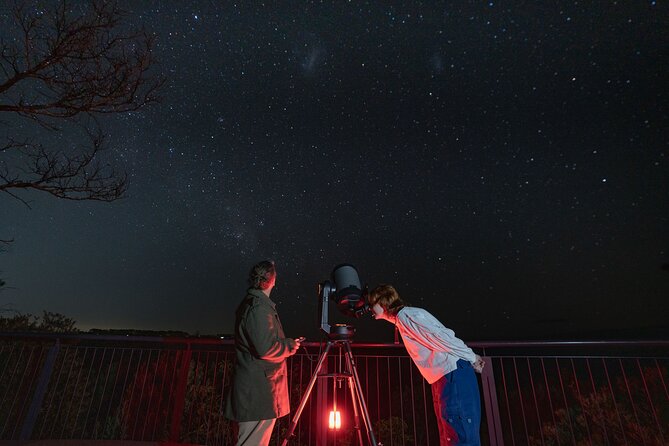
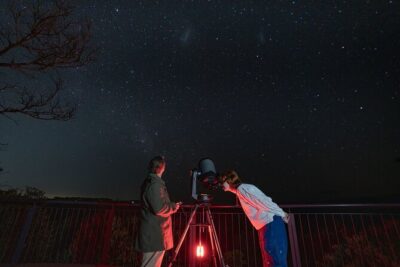
The night sky looks different here. In the World Heritage Greater Blue Mountains area, this 90-minute evening turns you from blank-sky guesser into confident Southern Sky spotter, with a professional-grade telescope and laser-guided constellation storytelling led by an astrophysicist. You also get English or French narration, plus hands-on moments where the sky feels close instead of distant.
One consideration is weather, especially wind, because the viewing spot can shift away from the lookout track and into a nearby park area. You will still do the program, but the exact stargazing setup may change when conditions get messy.
In This Review
- Key highlights to look for
- Wentworth Falls and the Southern Sky Setup
- Meet the Astronomer, Learn the Patterns, Ask Anything
- How the Telescope and Binoculars Change What You See
- The Constellation Stories: How They Keep You From Getting Lost
- What Happens When the Sky Won’t Cooperate
- Comfort, Drinks, and Staying Ready for Wind
- Accessibility: A Sky Show You Can Do From a Wheelchair or With a Stroller
- Price and Value for a 90-Minute Pro Astronomy Experience
- Who This Tour Is Best For (and Who Might Want to Skip)
- Final call: Should you book stargazing in the Blue Mountains?
- FAQ
- How long is the stargazing tour?
- Where does the tour start and end?
- Is the experience wheelchair and stroller accessible?
- What languages are available during the tour?
- What happens if the weather is bad?
- What objects can you see through the telescope?
Key highlights to look for
- Astrophysicist-led Q&A where you can ask what you actually see, not what you hope to see
- Professional-grade telescope time built for real details like lunar craters and planetary features
- Laser-guided constellation stories that help you connect dots fast
- Hot drinks based on conditions, including hot chocolate in the colder evenings
- Max group size of 20 people, so questions do not vanish into the dark
Wentworth Falls and the Southern Sky Setup
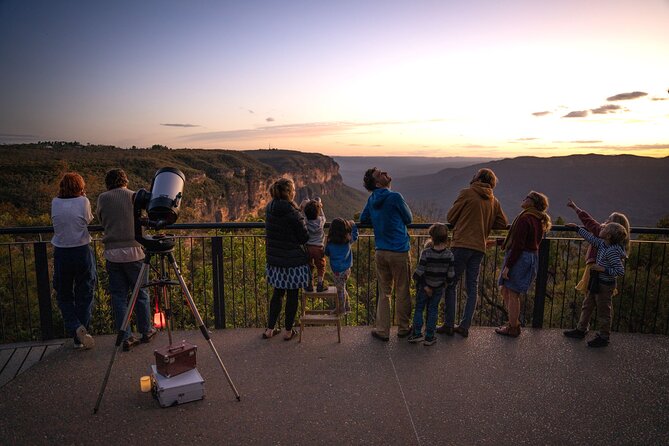
You start at Wentworth Falls Lookout Track in the Blue Mountains, and you return there when the tour ends. That location matters. Higher, darker sky helps your eyes adjust, and the Southern Hemisphere view is its own thrill, especially if you are used to Northern constellations.
This tour is built around guided orientation. Rather than just pointing upward, the experience teaches you how to notice patterns with your naked eye first, then confirm them with tools. That two-step method is what makes the night sky feel learnable.
And yes, you spend time under real sky, not just in a lecture room. The whole vibe is practical and interactive, with an astronomer guiding the pace.
Escarpment runs west, side by side
- Exclusive Blue Mountains Wildlife and Bushwalk Tour From Sydney★ 4.5 · 1,087 reviews
- Blue Mountains Sunset Waterfalls Wildlife Tour From Sydney★ 4.7 · 897 reviews
- Blue Mountains Day Tour With Bushwalks, Waterfalls & Featherdale★ 5.0 · 305 reviews
- Blue Mountains Hop On Hop Off Tour★ 4.5 · 293 reviews
Meet the Astronomer, Learn the Patterns, Ask Anything
The guide is an astrophysicist with over ten years’ experience, and the best part is how the conversation works. You do not have to be a science buff. The astronomer’s job here is to translate the night into something you can use immediately.
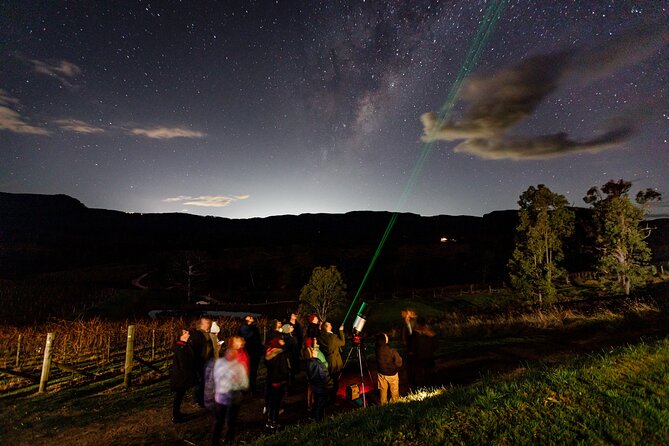
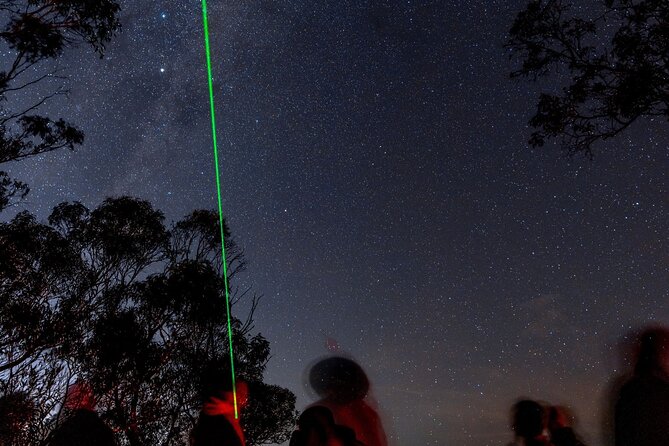
Laser-guided constellation storytelling is central. It helps you track what the astronomer is pointing at without losing your place when the sky is busy. You get a sense of where to look, what to expect, and how the shapes connect.
Then comes the Q&A with an astronomer. The group can ask questions and get clear answers tied to the objects in view. In the past, guides such as Nathan have kept things fun and engaging, with a steady focus on what people can see right then. Other hosts, including Tom and Alka, are also mentioned for their friendliness and strong follow-through with questions.
If you are coming from places with different night-sky landmarks, this is also where the tour scores points. Watching the Southern Cross appear and settle into place is the kind of moment that sticks.
How the Telescope and Binoculars Change What You See
This experience includes a state-of-the-art, professional-grade telescope, plus astronomy binoculars. That combo matters because the night sky has layers. Binoculars help you find and frame targets. The telescope then reveals detail you usually cannot see with your eyes.
The tour is set up to be flexible. Depending on the night and time of year, you might view a mix like:
- The Moon, including crater detail
- Planets such as Mars, Venus, Saturn (including rings), and Jupiter (including moons)
- Bright nebulae like the Orion Nebula
- Star clusters and double or triple stars
- Deep space objects such as galaxies and the Milky Way
Here is the practical value: you learn how to go from “I see a dot” to “I understand what that dot is.” The astronomer helps you connect that dot to a constellation, then to a specific object in the sky. That is where the experience becomes more than sightseeing.
Also, using professional equipment changes the feel of the night. You stop thinking of stargazing as a vague activity and start treating it like observation. It is surprisingly satisfying.
The Constellation Stories: How They Keep You From Getting Lost
Laser-guided stories are not just for show. They are a quick mental map. When you are standing outside in the dark, your brain wants a plan. The laser gives your eyes a reference point, and the astronomer talks you through what you are looking at.
You also learn how to identify constellations with the naked eye. That is the part that can pay off later. Even after the tour, you have a starting point for your next night-sky look, because you understand the first steps: where to aim, what to look for, and how the patterns hold together.
And the storytelling is tied to seasonal reality. Depending on the time of year, the sky program can shift. That is why the tour focuses on skills and cues, not only on a fixed list of objects.

What Happens When the Sky Won’t Cooperate
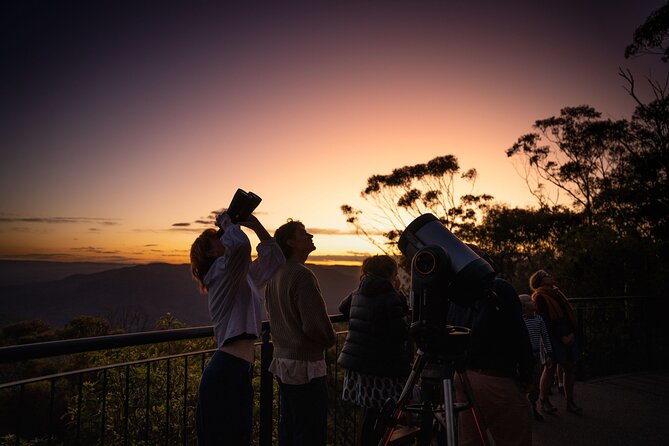
This is a weather-dependent experience, and the planning reflects that. If conditions are bad, you get your decision point at 1 pm on the day of the tour.
You will choose between:
- Receiving a gift voucher/credit to reschedule (transferable, valid for three years)
- Joining an alternative 90-minute indoor planetarium astronomy tour inside a dome, with a powerful projector and a cinema-style experience
The indoor option requires a minimum of 8 people to run. If that minimum is not met, you would follow the other option described for that day.
A key point for your expectations: no standard refund is offered in the bad-weather scenario, so treat the evening like a flexible commitment rather than a risk-free one. If you are the type who hates uncertainty, this is the one thing to weigh carefully.
In practice, though, the backup plan keeps you from losing the whole night. Even if you cannot get outdoor viewing, the program still aims to teach you the sky.
Comfort, Drinks, and Staying Ready for Wind
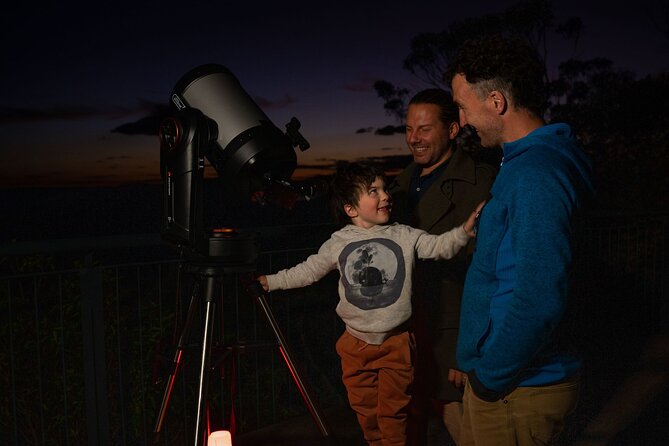
Stargazing is a slow activity. Your body can get cold even when you are mentally engaged. This tour helps with that through warm or cold drinks provided, weather dependent, with hot chocolates specifically mentioned as part of the evening.
You are also in a setting where conditions can change fast. One of the repeated notes from the experience is that wind can affect where you view from. For example, on at least one windy night, the program’s viewing took place in the park instead of at the lookout.
So your best move is to mentally plan for some adjustments. You are not just showing up for one perfect view, you are participating in a weather-aware astronomy session that can pivot.
Accessibility: A Sky Show You Can Do From a Wheelchair or With a Stroller
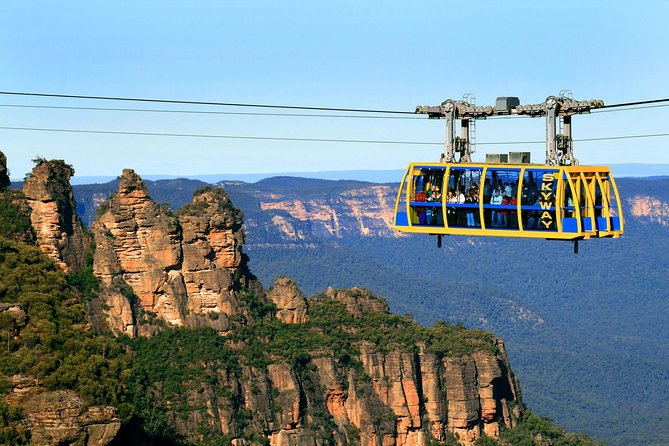
This is wheelchair and stroller accessible, which is a big deal for an outdoor evening. It means you are more likely to get a workable viewing setup rather than being forced into a corner behind everyone else.
Service animals are allowed too. If you need those accommodations, it is worth checking how the group handling works on the night you go, but the key point is that the experience is designed to include mobility needs.
Price and Value for a 90-Minute Pro Astronomy Experience
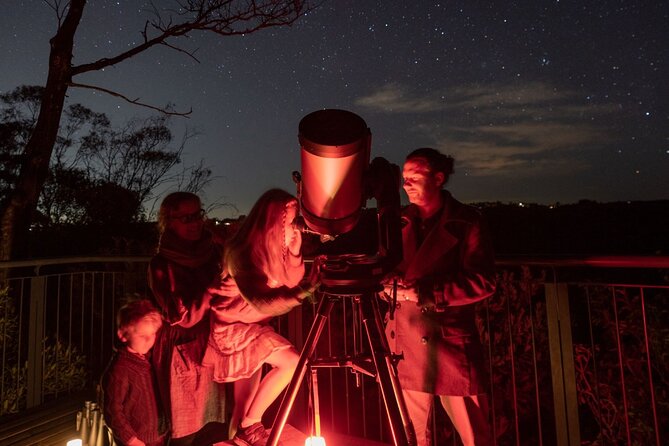
At $60.97 per person, this is not a bargain-basement activity, but it is also not priced like a luxury show. You are paying for a few things that matter in a stargazing context:
- A real astrophysicist guide
- A professional-grade telescope
- Laser-guided and structured constellation teaching
- The practical ability to see different objects depending on season and sky conditions
- Included hot drinks (and hot chocolate in colder conditions)
If you plan to drive up on your own, guess at constellations, and rely on your phone camera, the odds are you will learn less and see less. The value here is that you get a guided path and the right tools to match the path.
Also, the group size is capped at 20 people, which usually helps the evening feel more personal. You are not just a number in the dark.
Who This Tour Is Best For (and Who Might Want to Skip)
You will likely love this tour if you want:
- A guided first-time introduction to the Southern Hemisphere night sky
- A structured way to learn constellations instead of random sky gazing
- Pro equipment time, including telescope views of things like the Moon, planets, and nebulae
It is also a nice fit if you are traveling with mixed interests. Someone can focus on the hot chocolate and still get a science story that is digestible. Someone else can focus on the telescope and still end up learning the constellation context.
If you are only looking for a photo op with minimal explanation, you might find yourself wanting less talk and more free time. But the core format here is teaching plus Q&A, so that is the trade.
And remember the big variable, weather. If you are going on a night with high wind, expect the possibility of a location shift.
Final call: Should you book stargazing in the Blue Mountains?
I think you should book it if you want a real guided night-sky experience, especially if you have never seen the Southern Cross clearly before. The combination of professional telescope viewing, laser-guided constellation teaching, and hands-on questions is what makes the value feel genuine.
If you hate uncertainty and you are not comfortable with the same-day weather decision, you might think twice. But if you can roll with conditions and use the indoor planetarium as a backup plan, this is a strong way to spend an evening in the Greater Blue Mountains.
FAQ
How long is the stargazing tour?
The tour runs for about 1 hour 30 minutes.
Where does the tour start and end?
It starts at Wentworth Falls Lookout Track in New South Wales, Australia, and ends back at the same meeting point.
Is the experience wheelchair and stroller accessible?
Yes. The tour is wheelchair and stroller accessible.
What languages are available during the tour?
The tour is available in English and French.
What happens if the weather is bad?
On the day of the tour at 1 pm, you choose between receiving a gift voucher or credit to reschedule (transferable and valid for 3 years), or attending an indoor 90-minute planetarium astronomy tour. The indoor tour needs a minimum of 8 guests to run, and no refund is offered in case of bad weather.
What objects can you see through the telescope?
Depending on the night and time of year, you might see the Moon (including craters), planets such as Mars, Venus, and Saturn, Saturn’s rings, Jupiter’s moons, the Orion Nebula, star clusters, double and triple stars, galaxies, and the Milky Way.
Further Into the Blue Mountains
Added lately from Blue Mountains
- From Sydney: Blue Mountains Small-Group Tour Picnic & Hike
★ 4.2 · 26 reviews - Blue Labyrinth PRIVATE Tour: Sydney Blue Mountains by E-Bike
★ 5.0 · 29 reviews - Blue Mountains Full Day Guided Tour
★ 5.0 · 34 reviews - Army Truck Adventures – 3 Hour Guided Tour
★ 5.0 · 50 reviews - Blue Mountains Day Tour with Wildlife and Scenic World Entry
★ 4.0 · 51 reviews - PRIVATE Blue Mountains Scenic World Wentworth Falls & Cruise Tour
★ 5.0 · 52 reviews
Blue Mountains Day Trips, compared.
 ★ 5.0All Inclusive Blue Mountain,Scenic World,Lunch,Koalas,ferryFrom $2047,832 reviews
 ★ 4.5From Sydney: Blue Mountains Full-Day TripFrom $1484,471 reviews
 ★ 5.0Blue Mountains Small-Group Tour from Sydney with Scenic World,Sydney Zoo & FerryFrom $1613,709 reviews
 ★ 4.8Blue Mountain: Small-Group Tour with Lunch & Scenic WorldFrom $1373,009 reviews
 ★ 4.5Blue Mountains Day Trip from Sydney Including Scenic WorldFrom $1502,420 reviews
 ★ 4.8From Sydney: Blue Mountains Tour with Waterfall Walk & LunchFrom $852,400 reviews
 ★ 4.7Blue Mountains Adventure: Scenic World, Zoo & Koala PhotoFrom $1442,062 reviews
 ★ 4.5Blue Mountains Day Tour Including Parramatta River CruiseFrom $681,585 reviews
Browse the lists this tour appears in