
REVIEW · SYDNEY WALKING & SIGHTSEEING TOURS
Sydney Walking Tour including The Rocks (small group)
Sydney history is easier on foot. This small-group walk strings together major landmarks from Hyde Park to The Rocks, finishing by Circular Quay with plenty of real-city context. You’ll cover 60,000 years of Sydney’s story, moving from Aboriginal presence to convict struggles and later colonial life.
I really like the max 16-person group size. It keeps the pace friendly, and you can actually hear your guide even when questions pop up. I also love that most stops are free to enter, so the $32.28 is mostly paying for a guide who knows how to connect the dots without extra ticket costs.
One drawback to plan for: you are outdoors for 2.5 hours. Bring comfortable walking shoes and be ready for sun or heat, because there is not much shelter while you’re moving between stops.
In This Review
- Key things I’d watch for
- Sydney’s Rocks, Hyde Park, and Quay in 2.5 hours
- Meeting at Hyde Park: the perfect start spot
- Hyde Park to St Mary’s Cathedral: Sydney’s big-sky architecture
- Hyde Park Barracks and Queen’s Square: laws and life in the convict era
- The Rum Hospital link at Sydney Eye Hospital
- Macquarie Street: government power in walking distance
- Botanic Garden and the Aboriginal presence in the city
- The Old Government Stables and Sydney Conservatorium of Music
- The Edge of the Trees: a modern memorial with a long message
- Macquarie Place Park to Customs House: from public space to trade routes
- The Rocks: cobblestones, convict-era lanes, and city grit
- Suez Canal, Nurses Walk, Playfair Street, Argyle Street, George Street
- Campbells Cove finish: harbor views and an easy next step
- Price and value: $32.28 for a guided history walk
- Pace, comfort, and what to bring
- Who this tour is best for
- After the tour: where to go next in The Rocks and Circular Quay
- Should you book this Sydney Walking Tour of The Rocks?
- FAQ
- How long is the Sydney Walking Tour including The Rocks (small group)?
- How many people are in the group?
- Where does the tour start and end?
- Is the tour mostly outdoors and how hard is the walking?
- Are the places on the route included with extra ticket costs?
- Do I need a print ticket?
- Is free cancellation available?
Key things I’d watch for
- Max 16 guests means a small, easy, question-friendly group
- Free-entry stops keep your total spend low for a paid guided experience
- Aboriginal and convict-era storytelling gives you the big picture, not just postcard scenes
- Guide names like Lily, Leilani, and Lele show up often in strong feedback, especially for clear explanations and good pacing
- The Rocks at walking speed helps you understand the lanes, not just pass through them
- Campbells Cove finish pairs history with quick harbor views of Opera House and Harbour Bridge
Sydney’s Rocks, Hyde Park, and Quay in 2.5 hours
This tour is built like a guided map of central Sydney. You start in Hyde Park, work your way through key heritage buildings and government sites, then end in The Rocks with a harbor-side payoff at Campbells Cove. If it’s your first time in Sydney, this is a smart way to get your bearings fast.
I also like that it’s a small-group format. You’re not fighting through crowds to hear what’s going on. With a cap of 16, your guide can slow down when people have questions and speed up when the group is together.
And price-wise, $32.28 is pretty reasonable for a 2.5-hour guided walk, especially because the listed stops are free to access. You’re paying for interpretation, storytelling, and route flow, not a pile of entrance fees.
Walked, driven and bussed: other Sydney days
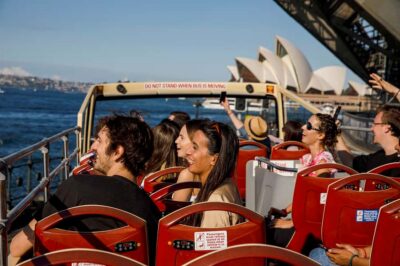
- Sydney: Big Bus Hop-On Hop-Off Tour with Optional Cruise★ 4.4 · 2,697 reviews
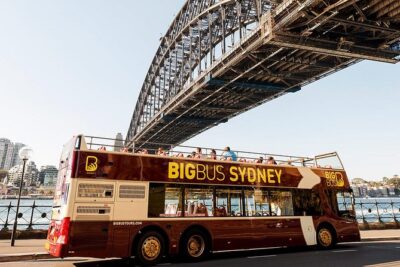
- Big Bus Sydney and Bondi Hop-on Hop-off Tour★ 4.0 · 2,690 reviews
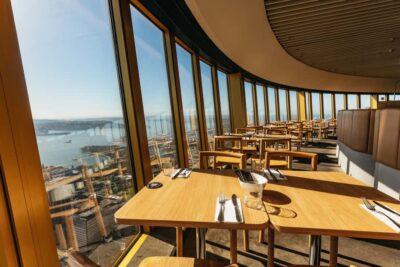
- Sydney: Unlimited Skyfeast at Sydney Tower★ 4.6 · 1,969 reviews
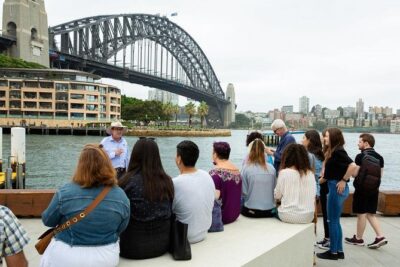
- Sydney The Rocks Guided Walking Tour★ 5.0 · 1,546 reviews
Meeting at Hyde Park: the perfect start spot
You meet at the Archibald Memorial Fountain in Hyde Park North, right at 110 Elizabeth Street. It’s central, easy to find, and it naturally sets the tone: a park first, then the city’s major institutions.
Starting in Hyde Park also makes the first stretch feel manageable. It’s a green buffer before you head into denser heritage areas. Hyde Park is Australia’s oldest park, so it’s an ideal “first chapter” before the buildings start piling on.
Tip from the practical side: Hyde Park can still feel busy and sunny in the middle of the day. If you’re going on a bright day, bring sun protection early. One of the most repeated pieces of advice is simple: sunscreen and a hat.
Hyde Park to St Mary’s Cathedral: Sydney’s big-sky architecture
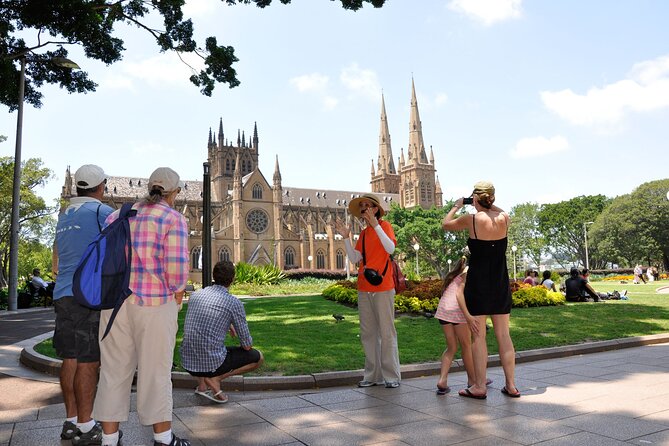
The walk begins with Hyde Park, then moves toward St. Mary’s Cathedral. Hyde Park is where you get your first calm moment, with lawns and statues that frame the rest of central Sydney’s layout.
St. Mary’s Cathedral is the next shift, moving you into Gothic-style detail and a very visible symbol of Sydney’s Catholic heritage. Even if you have no interest in architecture, it helps to see a landmark like this early, because it becomes a mental reference point later when you’re scanning the city.
What to look for here: how the cathedral rises over the street rhythm. Your guide typically ties the building back to the people and communities shaping Sydney in the colonial era.
Hyde Park Barracks and Queen’s Square: laws and life in the convict era
Next comes Hyde Park Barracks, a UNESCO World Heritage site with a convict past and a later role as an immigration depot. This stop matters because it connects two big themes in Sydney’s story: punishment and resettlement.
From there you’ll head into Queen’s Square, where the legal precinct energy becomes real. You’ll be near major civic buildings like the Supreme Court and Law Courts building, and the area helps explain how the colony organized power, order, and daily life.
This is where the tour earns its keep. It’s not just “look at this old building.” It’s also why the building existed and what it meant for real people. And with a small group, it stays conversational instead of lecture-style.

The Rum Hospital link at Sydney Eye Hospital
Sydney Eye Hospital is part of a story that’s more memorable than most textbook summaries. The building is tied to the Rum Hospital, which is described as Australia’s first public hospital, created through a deal involving rum.
I like this kind of explanation because it turns early Sydney into something human and messy, not just dates and dates. You get the sense that settlements ran on trade-offs, not perfect planning.
On a walk like this, small stories like the rum connection are what help you remember the route later. When you see the building again on your own, you’ll know what it means.
Macquarie Street: government power in walking distance
You then move along Macquarie Street, which is one of the easiest places to understand how Sydney’s authority grew. This stretch puts you near significant architectural and political landmarks, including Parliament House and other government sites.
Even if politics is not your thing, this section gives you a timeline feel. The street layout and the building styles help you see how central Sydney became the colony’s administrative center.
Practical note: this is an efficient “move and learn” segment. It’s not long and it’s not slow, but it sets you up for the heritage core that follows.
Botanic Garden and the Aboriginal presence in the city
You stop at the Royal Botanic Garden Sydney next. This is a different tone from government buildings, with plant life and a connection to Aboriginal culture. It’s not just a break from walking, it’s a reminder that Aboriginal knowledge and the land itself are part of Sydney’s ongoing story.
If you’re short on time and want one place that adds meaning beyond sightseeing, this stop is it. And since it’s on the same day as The Rocks, you get a wider view of how Sydney’s identity was built from multiple strands.
Keep expectations practical: you’re not touring the whole garden. You’re getting a guided highlight, so don’t treat it like a full botany day.
The Old Government Stables and Sydney Conservatorium of Music
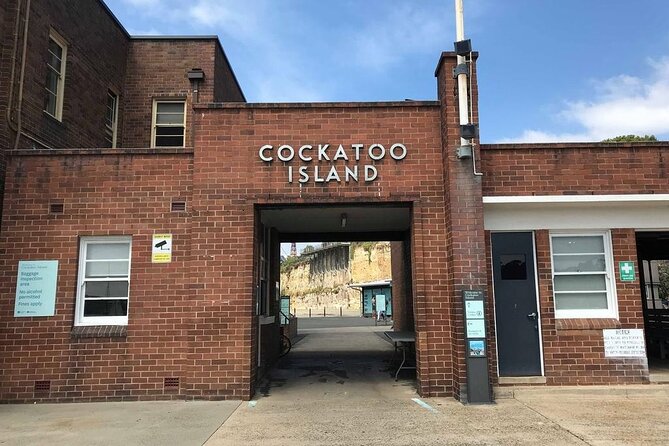
You’ll also pass the Sydney Conservatorium of Music, housed in the Old Government Stables. This is a great example of reuse, where a historic structure continues to matter without being frozen in time.
Your guide’s job here is to connect the building’s original use to its later life. That way you understand why the site is worth looking at, even if you skip the interior.
The Edge of the Trees: a modern memorial with a long message
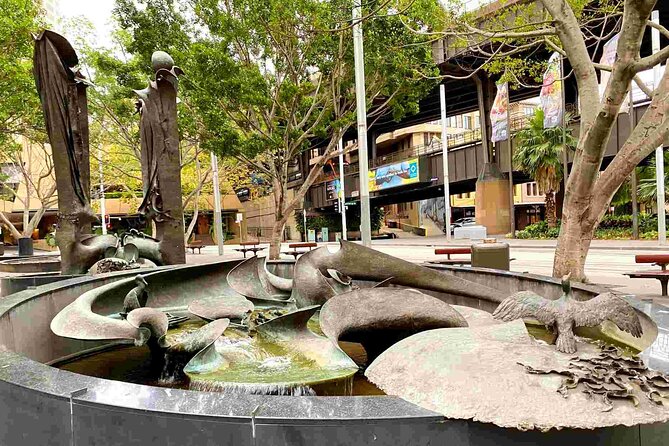
A standout cultural stop is The Edge of the Trees, an artwork designed for reflection at the intersection of Aboriginal and European cultures. It’s the kind of place that makes you slow down a bit, even if you’re ready to keep walking.
This is also a good moment to absorb the tour’s larger theme: Sydney’s story is not one straight line. It’s layers, changes, conflict, and adaptation.
Macquarie Place Park to Customs House: from public space to trade routes
From there, you head toward Macquarie Place Park, described as the city’s first public space with artifacts and a historic feel at the corners of central Sydney.
Then you move on to Customs House, which was once the heart of trade, overseeing ships and goods arriving to the city. If you want one quick way to picture how Sydney grew, it’s this kind of trade hub. Ports shaped money, migration, and the everyday flow of life.
This section also helps you understand why the later Rocks area mattered. When trade concentrated by the harbor, so did the businesses, housing, and conflict that followed.
The Rocks: cobblestones, convict-era lanes, and city grit
You spend a longer block of time in The Rocks, about 20 minutes, walking through lanes and sandstone streets that feel like a living museum of convict-era Sydney. The area is the tour’s center of gravity, and it’s where the route shifts from institutions to neighborhood-scale stories.
What I like about handling The Rocks on foot is that you start to see the geometry. You understand which lanes lead where and how the streets relate to the harbor area. You’re not just looking at a single highlight. You’re learning the neighborhood shape.
Expect story beats that explain convict pasts and later underworld legends. This is where guides tend to bring humor and energy, without losing the serious context.
Suez Canal, Nurses Walk, Playfair Street, Argyle Street, George Street
After the core The Rocks section, the walk keeps flowing through smaller lanes and streets that make the area feel layered.
- Suez Canal is one of the most memorable stops, described as a narrow laneway tied to criminals and shadowy characters. It’s the kind of setting where you can almost picture the scenes your guide is describing.
- Nurses Walk brings you toward the stories of early nurses and the challenges faced by women in those roles.
- Playfair Street is the charming lane segment where you can slow down and enjoy the preserved street character.
- Argyle Street and George Street show you The Rocks as part of the wider city pulse, mixing heritage with modern day-to-day life.
This part is where your guide’s pacing really matters. With a 16-person group, you’re less likely to get spaced out, so you keep the thread from one story to the next.
Campbells Cove finish: harbor views and an easy next step
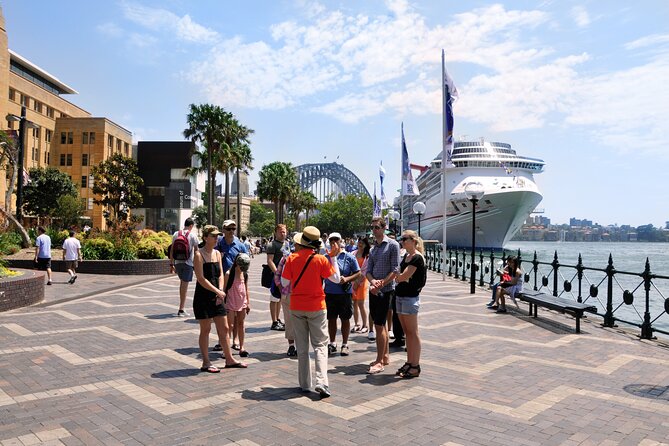
The tour ends at Campbells Cove at Circular Quay West. This is a practical ending, not just a pretty one. You’re close to public transport and you can easily continue to nearby pubs, and the tour area also lines up well with The Rocks weekend market energy.
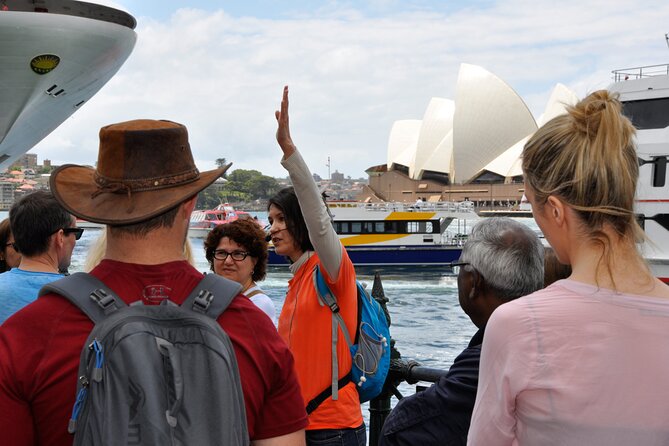
And yes, you get the quick picture-perfect view: Opera House and Harbour Bridge. It’s the kind of ending that makes the whole walk feel complete, like you finished the sentence at the harbor.
If you’re planning your next move after the tour, this is a strong spot to do it. You can head toward lunch, explore more streets on your own, or connect to other Sydney sights from Circular Quay.
Price and value: $32.28 for a guided history walk
At $32.28 per person for about 2 hours 30 minutes, the value comes from three things.
First, the small group size. It’s capped at 16, which protects the quality of the guide interaction. Second, the stops you’re walking to are free to access, so your money goes to guidance and storytelling. Third, the route covers a lot of different Sydney “modes,” from parkland and cathedrals to government zones and the harbor edge.
Put together, it’s a good option when you want a history-focused route without building a full day around ticketed museums.
Pace, comfort, and what to bring
This is a walking tour with a moderate physical fitness level requirement. People say the walk is easy and often mostly downhill, but you should still treat it like city walking: uneven sidewalks, lots of street crossings, and heat if the weather cooperates against you.
Here’s what I’d pack based on what actually helps on this route:
- Comfortable shoes you can wear for 2.5 hours
- Sunscreen and a hat on sunny days
- A light layer, especially if the mornings feel cool but afternoons heat up
- Water, since you’ll be outside between multiple stops
One more comfort factor: the guide work. Strong feedback highlights guides who keep people comfortable, including finding shade when possible during hot weather. That’s a big quality marker on an outdoor tour.
Who this tour is best for
This tour fits well if you’re:
- Visiting Sydney for the first time and want a clear orientation
- Curious about convict-era Sydney and how the city’s institutions shaped daily life
- Interested in Indigenous stories woven into central landmarks, not only peripheral attractions
- Traveling with friends or family and want a group size that stays manageable
If you hate walking, or you want deep interior museum time, you may prefer a more ticketed, slower pace. But for most first-time planners, this is a solid “get the map in your head” outing.
After the tour: where to go next in The Rocks and Circular Quay
Once you finish near Campbells Cove, you’re positioned to keep exploring with minimal effort. Since you end at Circular Quay, you’re close to major transport links and you can also drop into nearby pubs or head toward the Opera House and Harbour Bridge viewpoints.
If you felt motivated by specific stops, this is also the easiest day to return on your own. Your guide typically points out additional places you can revisit, including free museums in the central areas.
Should you book this Sydney Walking Tour of The Rocks?
Yes, you should book it if you want an efficient, guided way to connect Sydney’s major historic layers in one morning block. The small group cap matters, the storytelling style is consistently praised, and the free access nature of the stops keeps it good value for the price.
I’d skip it or switch to a different plan if you want a very slow pace, minimal outdoor time, or lots of inside museum time. But if you’re okay with a lively walk and you want to understand how Hyde Park, government Sydney, and The Rocks fit together, this is an easy pick.
FAQ
How long is the Sydney Walking Tour including The Rocks (small group)?
The tour runs for about 2 hours 30 minutes.
How many people are in the group?
It is limited to a maximum of 16 travelers.
Where does the tour start and end?
You start at the Archibald Memorial Fountain in Hyde Park North (110 Elizabeth St, Sydney NSW 2000). You end at Campbells Cove, 4 Circular Quay W, The Rocks NSW 2000.
Is the tour mostly outdoors and how hard is the walking?
It is a walking tour with a moderate physical fitness level. You should expect city walking for the full duration.
Are the places on the route included with extra ticket costs?
The stops listed for the tour show free admission.
Do I need a print ticket?
You use a mobile ticket.
Is free cancellation available?
Yes, you can cancel for a full refund up to 24 hours in advance of the experience start time.
Covering Sydney on Foot


Added lately from Sydney
- Sydney Private Food Walking Tour With Locals: The 10 Tastings
★ 4.0 · 53 reviews - Shuttle Transfer from Cruise Ship Terminal at Circular Quay to Sydney Airport
★ 4.0 · 53 reviews - Paint and Sip Classes Sydney: Acrylic Art, Canvas & Wine
★ 5.0 · 53 reviews - Historical True Crime Walking Tour of East Sydney
★ 5.0 · 53 reviews - Hunter Valley Wine Tour from Sydney with Lunch and 3 Cellar Door Tastings
★ 4.5 · 54 reviews - Hunter Valley: Wine, Chocolate and Lunch All Inclusive Tour
★ 4.3 · 54 reviews
Sydney Walking & Sightseeing Tours, compared.
 ★ 4.4Sydney: Big Bus Hop-On Hop-Off Tour with Optional CruiseFrom $512,697 reviews
 ★ 4.0Big Bus Sydney and Bondi Hop-on Hop-off TourFrom $522,690 reviews
 ★ 4.4Sydney Tower Eye: Entry with Observation DeckFrom $222,315 reviews
 ★ 4.6Sydney: Unlimited Skyfeast at Sydney TowerFrom $701,969 reviews
 ★ 5.0Sydney The Rocks Guided Walking TourFrom $321,546 reviews
 ★ 5.0Sydney Bike ToursFrom $851,125 reviews
 ★ 4.7Sydney: The Rocks 90-Minute History Walking TourFrom $321,092 reviews
 ★ 4.9Sydney Cricket Ground (SCG) and Museum Walking TourFrom $23616 reviews
Browse the lists this tour appears in