

REVIEW · MORNINGTON PENINSULA & HOT SPRINGS
The Explorer – Cranbourne Gardens
A quick bus ride, huge garden payoff. The Explorer takes you through the 37-acre Australian Garden at Royal Botanic Gardens Cranbourne with live commentary, so you get the big picture without the guesswork.
I especially like how this tour helps you see more even if you do not want (or cannot manage) long stretches of walking. The open-air minibus makes it comfortable for families and people with mobility limits, but the main drawback is time: at about 25 minutes, it is an overview, not a full day in the gardens.
In This Review
- Key highlights you should know
- A fast, friendly way to orient yourself at Royal Botanic Gardens Cranbourne
- Getting to the bus and making it part of your day
- Stop by stop: what you’ll experience on the route
- Red Sand Garden to the east-coast style route
- Howson Hill: a terrain shift that helps you read the grounds
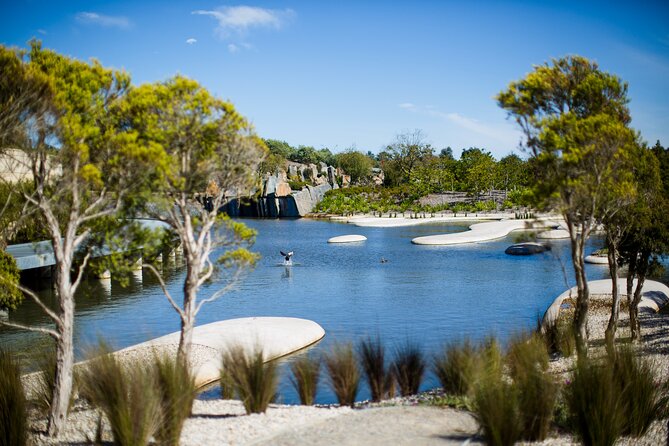
- Ian Potter Lake: water that breaks up the dry garden feel
- Arid Garden and Dry River Bed: seeing the dry-weather design idea
- Peppermint Garden return: the cool-down finish
- Why the live commentary is the real value
- The hop-off advantage: turn the bus tour into a flexible visit
- Price and value: $10.76 for a guided overview that saves time
- Who this tour is best for
- Families with kids
- People with mobility limitations
- Garden lovers and plant-curious visitors
- Practical tips so your 25 minutes feel like more
- Should you book The Explorer at Cranbourne Gardens?
Key highlights you should know
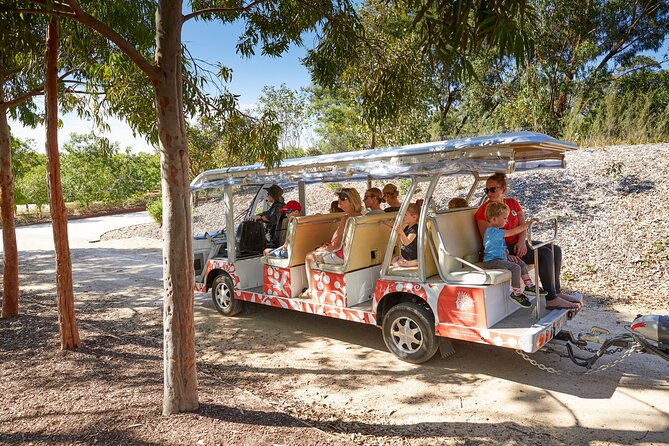
- Live driver narration keeps the route meaningful, covering plant themes, garden history, and cultural significance as you ride
- A practical route for variety includes stops along the Red Sand Garden, Howson Hill, Ian Potter Lake, Arid Garden, Dry River Bed, and back through the Peppermint Garden
- Hop-on, hop-off flexibility means you can pause the bus and explore parts of the Australian Garden at your own pace
- Good value for a short stop at $10.76 per person, with free entry to the gardens included
- Small group size with a maximum of 25 travelers, which feels easier than crowded bus tours
- Kids Explorer perks during school holidays can make it a smart family add-on, since children ride free on the Kids Explorer Bus
A fast, friendly way to orient yourself at Royal Botanic Gardens Cranbourne

If you’re passing through the Mornington Peninsula area, The Explorer is one of those “time-saver” ideas that actually feels worth it. You are getting a guided overview of the Australian Garden at Royal Botanic Gardens Cranbourne, and it is built for short visits, quick planning, or travelers who need an easier pace.
The tour departs from the Visitor Centre, then winds through a mix of garden settings designed around Australian plant stories. With driver commentary on board, you do not just stare out the window. You get a running explanation that helps you understand what you are seeing and why it is arranged that way. It is the kind of context that makes your later walk through the gardens feel more purposeful.
You will want to think of this as your orientation lap. The payoff is that you can decide what you want to see up close after the bus ride, instead of wandering and hoping you pick the right paths.
Soaks, cellar doors and bay towns down the peninsula
- The Explorer – Cranbourne Gardens★ 5.0 · 135 reviews
- Peninsula Hot Springs Spa Experience and Express Transfer Shuttle★ 5.0 · 131 reviews
- Peninsula Hot Springs and Beach Boxes Day Trip from Melbourne★ 4.5 · 64 reviews
- Mornington Peninsula Sightseeing and Bay Cruise★ 4.5 · 51 reviews
Getting to the bus and making it part of your day
Your ticket is redeemed at Royal Botanic Gardens Cranbourne, at Ballarto Road and Botanic Drive in Cranbourne VIC 3977. From there, the Explorer departs from the Visitor Centre, so it is straightforward to line up your visit.
This matters because gardens can be sprawling. With only about 25 minutes on the bus, the tour works best when you show up ready to go and you plan a little time afterward. If you have a tight schedule, I like pairing the bus with a short self-guided stroll or a break at the on-site cafe before you head off to the next stop.
Also, remember it is an open-air minibus. That is great for views and fresh air, but you should dress for the weather. If the sun is strong, bring a hat and sunscreen. If it is cool, layer up. If it is windy or rainy, you may have a different date or a full refund offer, since the experience requires good weather.
Stop by stop: what you’ll experience on the route
The Explorer ride is built around named garden areas and features. Even though you are not doing a long hike, each section signals a different part of the collection, so the whole thing feels like a guided “tour map” you can remember.
Red Sand Garden to the east-coast style route
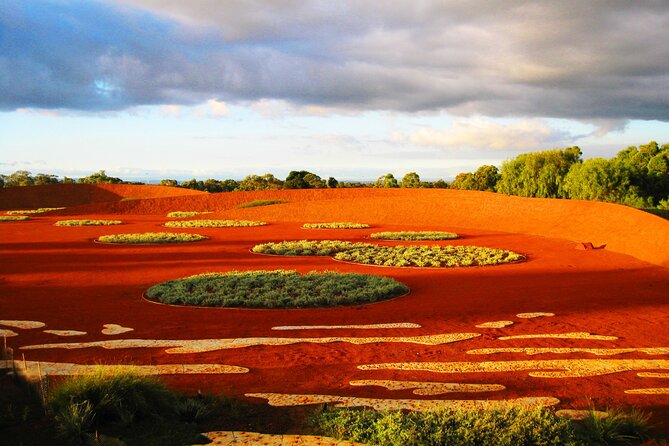
The ride starts at the Red Sand Garden, then heads along the east-coast journey of the Australian Garden before curving back later. This is where you start building your mental map.
Here’s why I like this first segment: the Red Sand Garden is a quick way to understand the overall theme of the grounds. The bus helps you see how the garden uses texture and setting changes to guide your attention. You’re not just learning plant names, you’re learning how the designers shaped different environments so visitors can recognize the feel of different Australian regions.
If you are going to do any walking later, pay attention to what looks closest to your interests. Do you want more of the dry, open feeling you see near the Red Sand Garden? Or are you more drawn to water and higher-relief features that show up later on the route?




Howson Hill: a terrain shift that helps you read the grounds
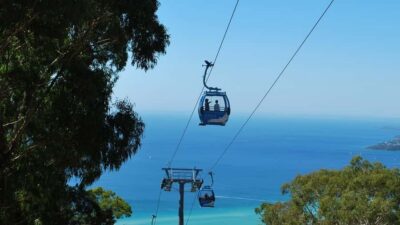
Next comes Howson Hill. The tour route includes it as a named stop, which tells you it is a distinct feature in the garden layout.
Even if you only get a brief view from the bus, a hill like this gives you something valuable: a sense of how the grounds rise and change. That makes your later walking feel less random. You can look at the paths and say to yourself, I think I remember where that elevation shows up.
Ian Potter Lake: water that breaks up the dry garden feel
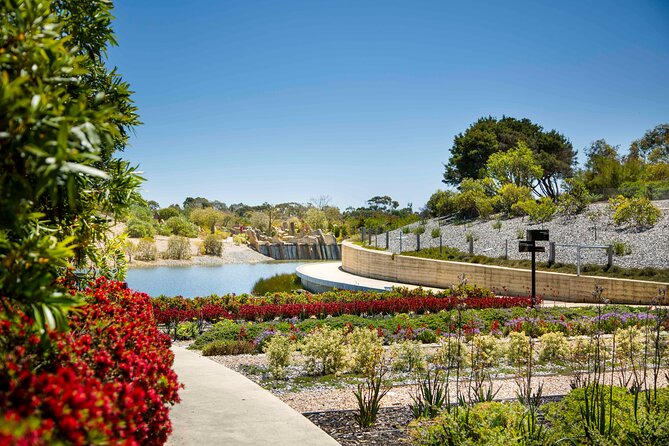
Then the bus passes Ian Potter Lake. A lake area gives you a visual and practical break from more dry-leaning garden themes. It is also one of those spots that often draws the eye, because water tends to create a different micro-environment, even when you are just viewing from a seat.
This is a great moment to slow down mentally. If you plan to hop off at stops, Ian Potter Lake is the kind of location where it can be worth getting out for a short break, to reset your bearings before you continue.
Also, one of the joys mentioned in feedback is wildlife sightings like a wallaby. You are not guaranteed to see anything, but water features and garden cover can increase your odds of spotting animals during your visit, especially when it is quiet around the paths.
Arid Garden and Dry River Bed: seeing the dry-weather design idea
The route continues into the Arid Garden and then the Dry River Bed. These two areas are especially useful if you like the science side of gardens, or if you want to understand how Australian landscapes cope with seasonal dryness.
Here is what you can do that actually helps while riding:
- Watch how the design signals water scarcity through the way plants and groundcover are grouped
- Listen for commentary about adaptation and how visitors can read these zones as distinct
- Note any areas that look like they would be fun to walk through if you have mobility and energy that day
Even though you are on a bus for this portion, the commentary can turn what feels like visual variety into clear ideas. Dry River Bed spaces are often about water flow history and seasonal rhythms, and those themes tend to click faster when you have a guide explaining the intent.
Peppermint Garden return: the cool-down finish
To close out the ride, you circle back through the Peppermint Garden. I like end segments like this because they give you closure. You can look back at what you learned from earlier zones and see how the garden transitions again.
It also helps if you plan to do a bit more walking after. A return route like this often means the bus is threading you back toward easier access points, so it’s simpler to decide where to hop off.
Why the live commentary is the real value

The headline features are the bus ride and the garden views, but the real reason this tour feels worth it is the live driver commentary.
Because the driver talks while you ride, you learn the context in the exact order you are seeing the grounds. That sounds basic, but it makes a difference. Without narration, you might walk later and think, I saw that already, but I do not remember why it mattered.
With the commentary, you’re picking up:
- stories connected to the garden’s design and history
- cultural significance tied to Australian environments
- nature interpretation that turns a feature into a concept
One operator named Peter gets singled out in feedback for being funny and friendly, and for knowing the plants and garden stories. That kind of host energy matters on short tours. It keeps the ride from feeling like a checklist, and instead turns it into something you can remember.
The hop-off advantage: turn the bus tour into a flexible visit
Your ticket includes the flexibility to hop off at various stops within the Australian Garden. That changes the math of the whole experience.
On a 25-minute ride, you cannot cover everything well on foot, but you can still use hop-off stops to build your own mini-itinerary. Here’s an easy strategy:
- Ride once for orientation
- Choose one or two areas you liked most
- Hop off, walk a loop, take photos, then rejoin if the schedule allows
Since you’re not given a long time on the bus, your goal should be focus, not completion. Pick the zone you want to understand more deeply, and then use the rest of the day for food, breaks, and slower exploration.
And yes, there is an on-site cafe that can anchor the visit if you want a simple plan after the bus. If you are with kids, this kind of break is often what turns a quick outing into a day you actually enjoy.
Price and value: $10.76 for a guided overview that saves time

At $10.76 per person, this is not an expensive add-on, especially because admission to the gardens is included as free with your ticket. You are paying primarily for the bus ride and the guided narration.
That matters because Royal Botanic Gardens can take time to navigate well on your own. Even if you only have a short stop, you can spend that time more intelligently. Instead of walking a random route and missing the garden’s key themes, you get an organized view of major named zones.
I also like that the group size is capped at 25 travelers. Smaller groups tend to feel less chaotic, and a bus tour can become annoying if it feels too cramped. Here, it should stay in the comfortable zone.
For families, the tour is also a low-cost way to get kids engaged without committing to a long walk in one go.
Who this tour is best for
This is the kind of outing that works across a few different travel styles.
Families with kids
The Kids Explorer idea is a strong fit during school holidays, since children ride free on the Kids Explorer Bus. Even outside that window, the bus format tends to keep kids engaged, and the tour is designed for sightseeing with the senses, not just sitting still.
Also, kids often do better with a short burst. Twenty-five minutes is a manageable attention span. Then you can switch to walking where it’s fun.
People with mobility limitations
The tour is specifically positioned as ideal for visitors with mobility issues. The bus format means you can see major garden areas without committing to longer stretches of uneven walking.
The good part for planning is that the broader gardens include options like level walking paths alongside winding ones. So you can mix and match your comfort level once you hop off.
Garden lovers and plant-curious visitors
If you like learning while you look, the commentary style is what you want. You get nature interpretation and garden stories as the route takes you through contrasting areas, including arid and dry-river designs compared with greener garden sections.
Even if you are not a deep plant nerd, that context helps you notice details you might otherwise skip.
Practical tips so your 25 minutes feel like more
This short tour can still feel like a lot, if you go in with the right mindset.
Wear shoes you can walk in after. Even if you plan to stay seated, you might want to hop off at a stop you liked. Bring water. Gardens can be sunny, and you may end up lingering longer than you expect.
If you are sensitive to sun, plan for it. The open-air bus is great, but it also means you feel the weather more directly than you would on a fully enclosed vehicle.
Finally, I recommend treating the ride like your map. When you step back on land, aim for a targeted loop, one area at a time. It will feel better than trying to cover the whole garden complex in a single go.
Should you book The Explorer at Cranbourne Gardens?
I think you should book if you want a fast, guided overview of the Royal Botanic Gardens Cranbourne Australian Garden, especially if you have limited time, you are traveling with kids, or you or someone in your group prefers a lighter pace.
It’s also a smart choice if you are stopping en route to Phillip Island and want to make the most of a quick visit without getting lost in a huge garden.
Skip it if you’re planning a long, slow, full-day garden experience where you want to linger for hours in one section. In that case, the bus can still help you orient, but you will likely want more walking time than the tour provides.
If you want a short win that helps you enjoy the gardens more afterward, this is a very practical way to do it.
Peninsula Days and Hot Pools



Added lately from Mornington Peninsula
- 90 minute wildlife and scenic cruise
★ 4.5 · 21 reviews - Mornington Peninsula Boutique Wine and Lunch Small Group Tour
★ 5.0 · 22 reviews - 3-Hour Dolphin and Seal Sightseeing Cruise, operated with swim tour passengers
★ 4.0 · 24 reviews - Ultimate Mornington Peninsula Food and Wine Small Group Tour
★ 5.0 · 28 reviews - From Melbourne: Hop On Hop Off Mornington Peninsula
★ 5.0 · 30 reviews - Mornington Peninsula Day Tour. Your Day Your Way. Your group only
★ 5.0 · 34 reviews
Mornington Peninsula & Hot Springs, compared.
 ★ 4.6Melbourne: Peninsula Hot Springs Early Bathing & Scenic TourFrom $127356 reviews
 ★ 4.6Peninsula Hot Springs: Entry Ticket with Bath HouseFrom $56225 reviews
 ★ 5.0Peninsula Hot Springs Spa Experience and Express Transfer ShuttleFrom $129131 reviews
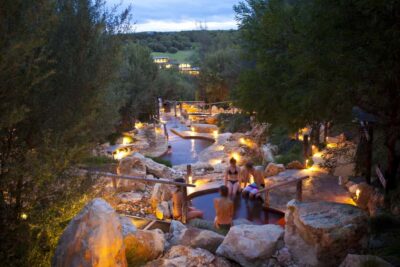 ★ 4.8From Melbourne: Peninsula Hot Springs & Bathing Boxes TourFrom $130124 reviews
 ★ 4.5Peninsula Hot Springs Day Trip with Bathing Entry from MelbourneFrom $12973 reviews
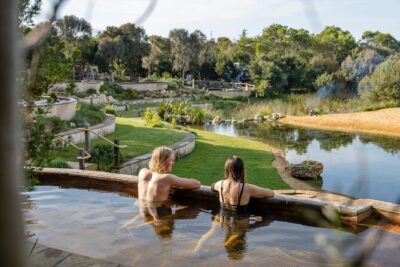 ★ 5.0Mornington Peninsula Small Group Thermal Springs w/ Lunch & WineFrom $17569 reviews
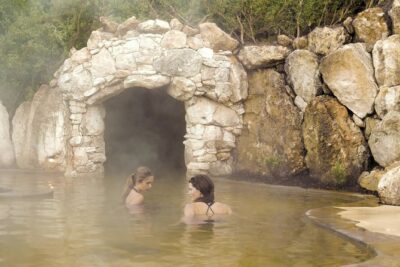 ★ 4.5Peninsula Hot Springs and Beach Boxes Day Trip from MelbourneFrom $13564 reviews
 ★ 5.0Mornington Peninsula Wine Day TourFrom $22258 reviews
Browse the lists this tour appears in