
REVIEW · NATIONAL PARKS
Tasmania: Wilderness and Wildlife Guided 6-Day Tour
Tasmania hits different when you hike it. This small-group guided circuit threads the island from Hobart to Strahan, then up to Cradle Mountain and back down the East Coast. You get big-ticket nature days, plus real wildlife time at Bonorong, without needing a car or planning every turn.
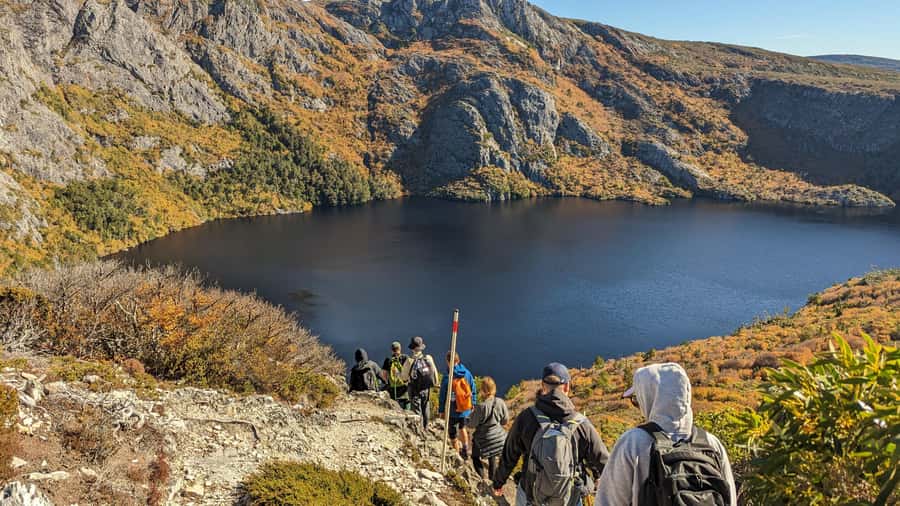
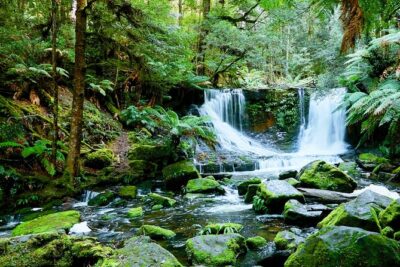
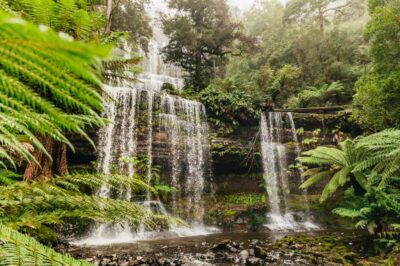
I especially like the way the trip lets you match your day to your energy level. Each day includes short walks that range from easy strolls like Russell Falls to more challenging hikes like the Dove Lake circuit, and you can choose what fits. I also love how often you’re not just looking at scenery, you’re stepping into it, from rainforest walks on the West Coast to beach walks at Freycinet and the Bay of Fires.
One possible drawback: the pace is active. Short walks happen almost every day, so you need comfortable shoes, warm layers, and a willingness to move. Also, I’ve seen at least one comment that the bus can feel a bit old, so if you’re picky about transport, plan for that.
In This Review
- Key highlights that matter in real life
- A six-day Tasmania loop with no rental car headaches
- Day 1: Hobart to Strahan, Mount Field waterfalls and Lake St Clair quiet
- Day 2: Wild West Coast, Henty Sand Dunes and ancient rainforest on foot
- Day 3: Cradle Mountain hikes, Dove Lake circuit and Marion’s Lookout
- Day 4: Launceston to Bicheno, Cataract Gorge and the Bay of Fires white sands
- Day 5: Freycinet National Park, Wineglass Bay viewpoints and Mt Amos choices
- Day 6: Bonorong devils and Richmond charm, then kunanyi at Wellington Park
- Price and what you’re actually buying for $831
- Transportation comfort and daily pace, the stuff that affects your mood
- The best kind of traveler for this route
- Should you book this Tasmania wilderness and wildlife tour?
- FAQ
- How long is the Tasmania Wilderness and Wildlife Guided 6-Day Tour?
- Where does the tour start and end?
- Is food included in the tour price?
- What activities are included besides driving and sightseeing?
- Can I choose different hikes based on my fitness?
- Is there anything extra I might want to pay for?
- How does pickup work if I’m staying outside central Hobart?
Key highlights that matter in real life
- Small-group flexibility on hikes, so you can do an easier option or push harder when you feel good
- Wildlife beyond the photo, with a dedicated Bonorong stop for devils, quolls, and wombats
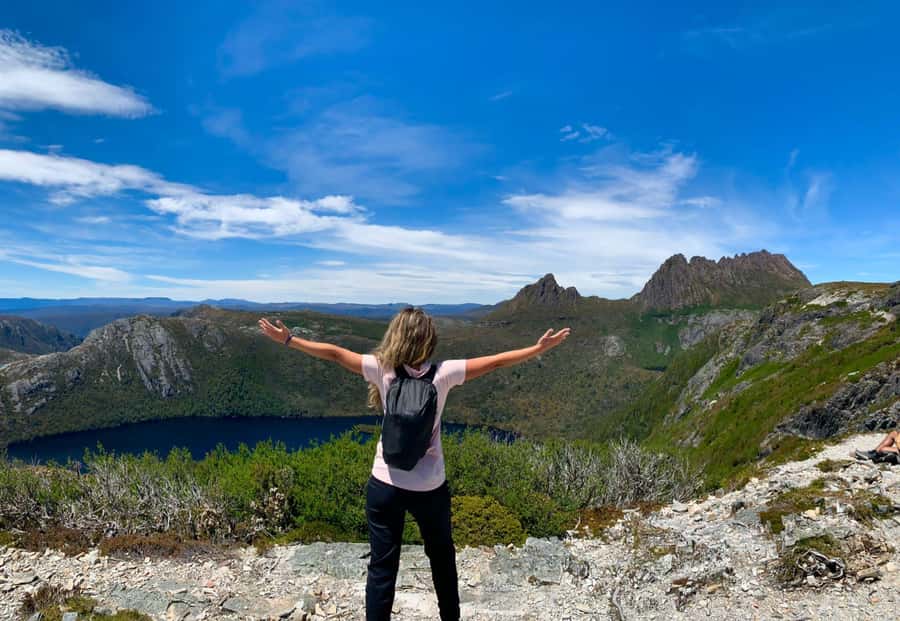
- World Heritage Cradle Mountain, including the classic Dove Lake circuit and Marion’s Lookout option
- East Coast beaches that don’t need hype, especially the Bay of Fires and Freycinet’s Wineglass Bay views
- A guide with local stories, with reviews naming guides like Phil, Keygan, Tim, and Brendon
A six-day Tasmania loop with no rental car headaches
If you’re coming to Tasmania without a car, this kind of route is the practical magic. You still get long stretches of wild coastline, mountain scenery, and rainforest, but you don’t spend your trip fighting parking, roads, and timing. The tour runs as a small-group format with an English-speaking live guide, and that matters because the stops are timed for walk windows and viewpoint light, not just a checklist.
What I like most is the balance. You get world-famous places like Cradle Mountain and Freycinet National Park, then you also spend time in the West Coast’s quieter country, including a nature walk through ancient rainforest. And it’s not just scenery either. There’s a genuine wildlife-focused day at Bonorong, which is where you’ll get your best odds of seeing Tasmanian animals up close.
You should also know this is built for people who can handle daily movement. The walks are optional, but short walks show up on most days. Most are easy to moderate, and they’re described as short with a mix of surfaces and some steps on the longer hikes. That means you’ll enjoy the trip most if you’re the type who feels better outdoors, not stuck waiting for the next stop.
Undecided? The Hobart reviews closest to this one sit below.
- Bruny Island Food, Sightseeing, Guided Lighthouse Tour & Lunch★ 5.0 · 2,989 reviews
- Full-Day Guided Bruny Island Tour from Hobart★ 5.0 · 1,331 reviews
- kunanyi/Mt Wellington Explorer Bus- Return Tour (2.5 hours)★ 5.0 · 1,249 reviews
- Hobart: Bruny Island Food, Sightseeing & Lighthouse Day Tour★ 4.8 · 960 reviews
Day 1: Hobart to Strahan, Mount Field waterfalls and Lake St Clair quiet
Day one is all about easing into Tasmania’s big scales, then putting your feet on something real. You start from Hobart and head into the Western Wilds, with a stop at Mount Field National Park. One highlight here is a walk to Russell Falls, a short 25-minute round trip at about 1.4 km. It’s an easy layout with an even surface and no steep sections, so it’s a good first day walk when your legs are still waking up.
You also visit Lake St Clair, which is described as Australia’s deepest freshwater lake. Even if you do only a short stroll, the feeling of it is different from a coastal viewpoint. It’s inland, it’s still, and it sets you up for the contrast later when you hit the coast and beaches.
The route also drives through Franklin-Gordon National Park. You’ll be seeing pristine rainforest and mountain scenery from the road, and that kind of driving section is underrated because it gives you time to watch the vegetation change while you travel. Then you land in Queenstown, including a look at the old mining town atmosphere, before arriving in Strahan, a harbourside base for the next night.
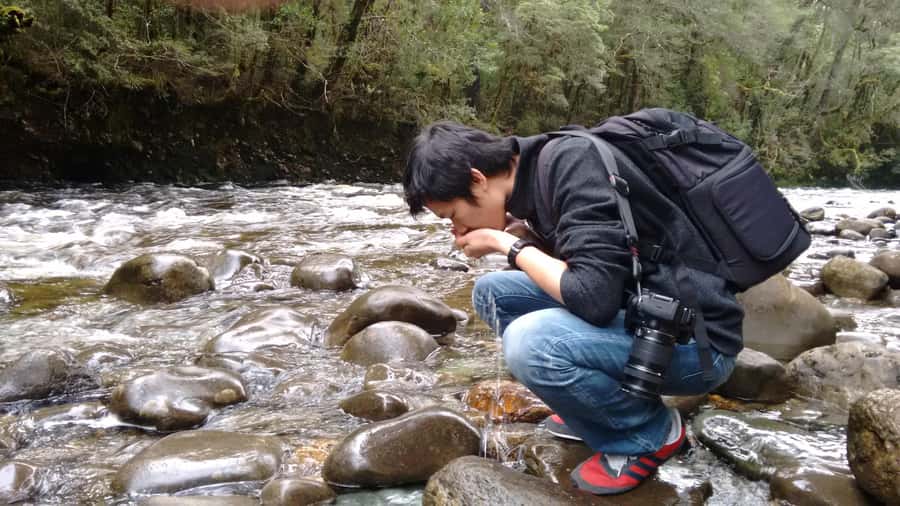
Practical note: food isn’t included, so you’ll want to plan for at least a couple of meals on your own across the day. Your best bet is to keep snacks and refill water whenever you can, because the walks encourage you to stay out longer than you think.
Day 2: Wild West Coast, Henty Sand Dunes and ancient rainforest on foot
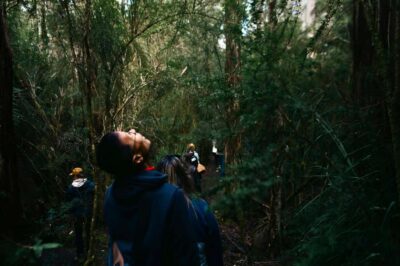
The West Coast day is the one that feels most like Tasmania’s untamed side. You start with Henty Sand Dunes, described as gigantic, and then you join a guided nature walk in ancient rainforest. That rainforest walk is where a guide really earns their keep, because the value isn’t only the scenery. It’s the ability to explain what you’re seeing, how the area works, and why the plants and terrain look the way they do.
After the rainforest, you get options. There’s a scenic Gordon River cruise available at your own expense. If you’re the type who likes long boat views and don’t mind paying extra for the experience, it’s a nice add-on. If you’d rather keep your time on land, the day still works because you have the West Coast sights and short walks already built in.
Then you end up at Ocean Beach. The tour frames this as some of the world’s freshest air, which is a polite way of saying you’ll feel the ocean and wind here. If you’re wearing layers, this is a good day to keep a jacket handy, because coastal weather can change fast.
Overnight is back in Strahan again, which is convenient because it reduces the pressure on you for travel logistics. You can focus on walking and getting your bearings instead of constantly switching bases.
Day 3: Cradle Mountain hikes, Dove Lake circuit and Marion’s Lookout
If your Tasmania trip has one must-do hiking day, this is it. Cradle Mountain National Park is World Heritage-listed, and the day is structured around giving you walk choices based on fitness.
You’ll likely hear about the Dove Lake circuit a lot because it’s one of the best short walks in Australia, and the details here are helpful: it’s described as 2 to 3 hours for a 6 km circuit. Expect rougher surfaces, some hill sections, and lots of steps. That means it’s still “short” in distance, but it’s not a flat walk. If you’re used to stairs and uneven footing, you’ll probably feel good. If not, go for a different option and save your energy for later views.
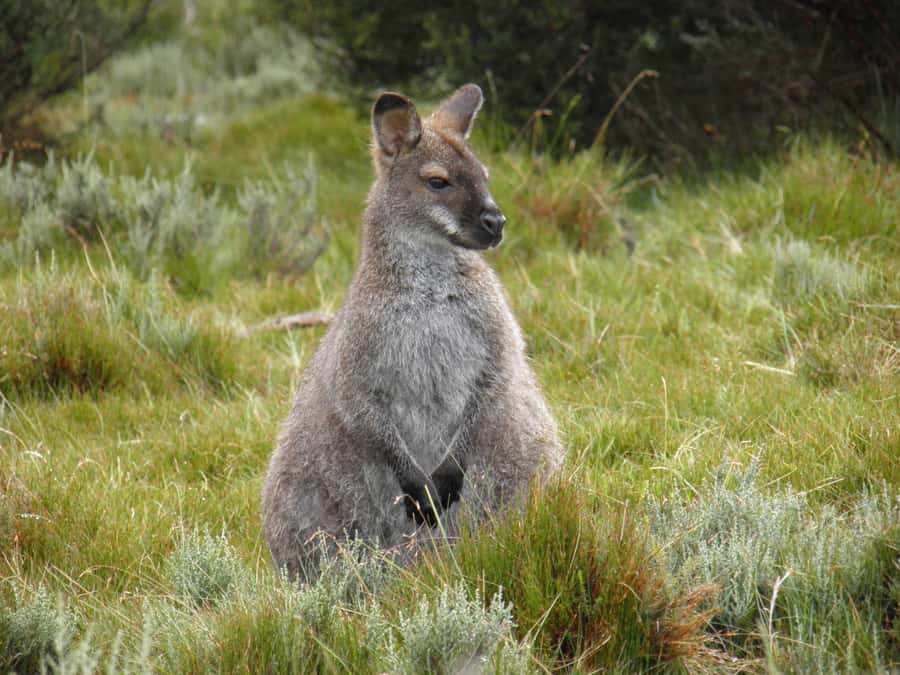
For a more challenging choice, there’s the scenic climb to Marion’s Lookout. You’ll also look for wombats at Ronny Creek. I like this part because it turns the day into more than just hiking. When the wildlife moment comes, it feels like a payoff instead of a random photo.
Leaving the highlands, the day includes a stop at the Town of Murals (Sheffield), then you continue to Launceston for the night. It’s a nice shift in mood. You go from alpine and glacial scenery into small town charm without it feeling like a wasted travel day.

Day 4: Launceston to Bicheno, Cataract Gorge and the Bay of Fires white sands
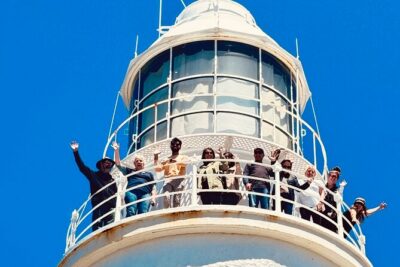
This day mixes a classic city break with one of Tasmania’s most photogenic stretches of coastline. In Launceston, you visit Cataract Gorge. The tour is positioned around a short look at the gorge and wildlife spotting, specifically wallabies. That’s one of those “yes, it’s a lookout” experiences that can become surprisingly memorable when animals show up.
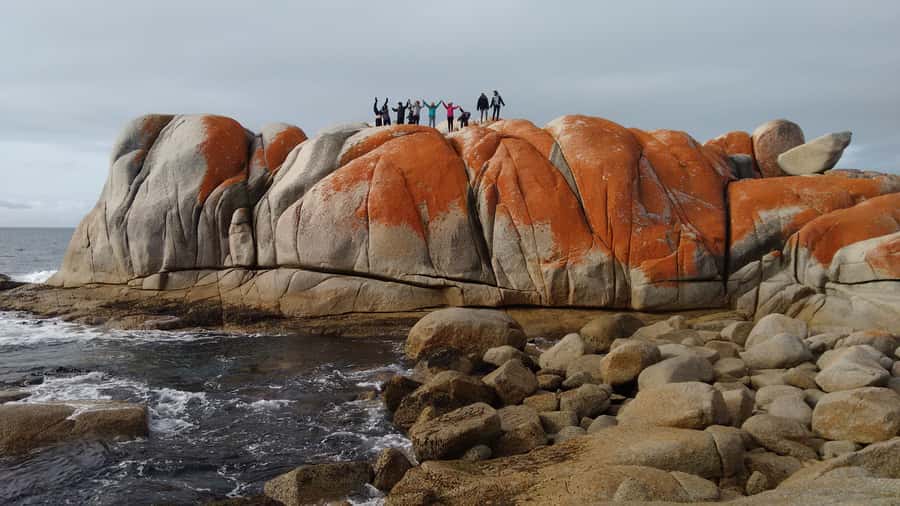
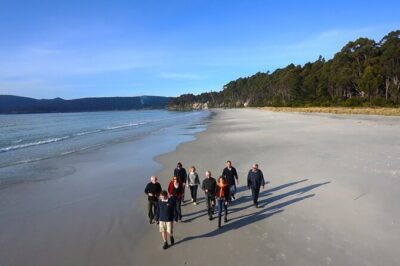
Then you drive for breathtaking East Coast scenery, with lunch in St Helens before walking at the Bay of Fires. The Bay of Fires focus here is on white sands and beach walking. It’s also set up as a quieter, more natural feeling day compared to an agenda packed with multiple big stops.
You sleep in Bicheno, a fishing village where penguins can be seen emerging from the sea. The wording matters: it’s not guaranteed, but it’s a strong chance to catch that coastal wildlife moment. If penguins are a priority for you, plan your timing and don’t treat this as a drive-by stop. Stick around when it’s a calm time to view the coastline.
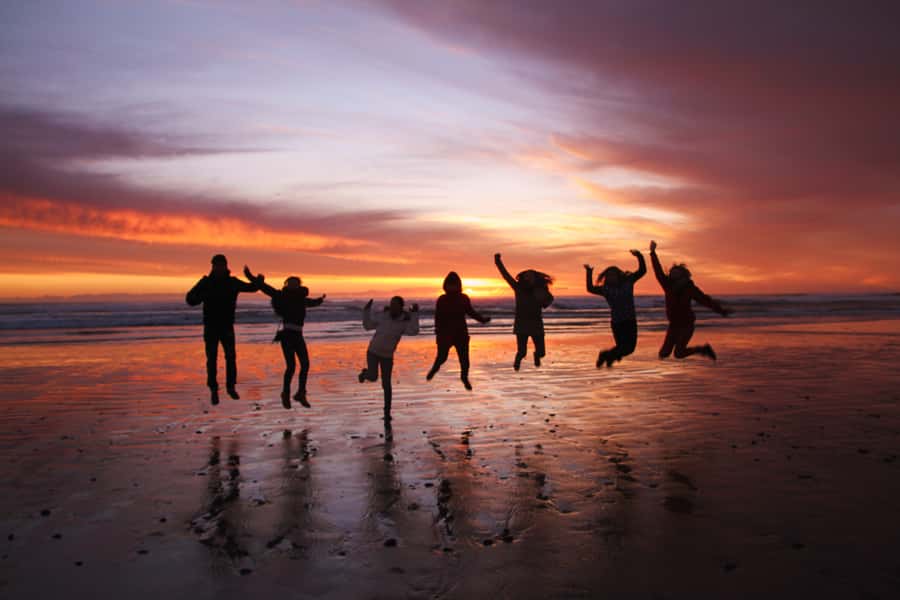
Also, don’t underestimate how long you’ll want to stay out on the beach even when the planned walk is shorter. The air and light at this part of Tasmania are part of the experience, and once you’re walking the sands, you usually don’t want to rush.
Day 5: Freycinet National Park, Wineglass Bay viewpoints and Mt Amos choices
Freycinet is Tasmania’s most famous coastal national park, and the structure of the day shows you why. You start with a mix of beaches, forests, coves, and lookouts, then you move through the Hazards mountain range view from Honeymoon Bay. The Hazards are pink granite, and seeing them from the coast helps you understand the whole geometry of this place.
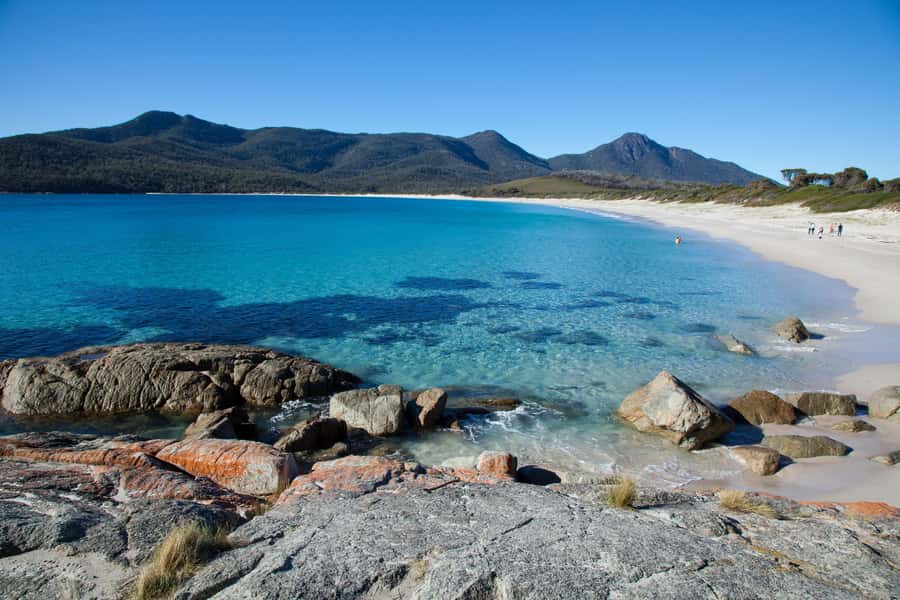
From there, you get to choose how hard you want to go. There are two paths: a challenging climb to the summit of Mt Amos, or a walk that focuses on lookouts for Wineglass Bay plus the curved white sands view continuing down toward the beach. I like that the tour offers options without making you feel like you’re wasting the day. Both choices connect to the same central payoff, the shape and color of the coastline.
Then you finish with Cape Tourville, with ocean and mountain views before heading back to Hobart via the Great Eastern Drive. That drive section matters because it gives you long sightlines after an intense walking day, so you’re not just doing effort, you’re absorbing the reward.
If you’re carrying a camera, bring it, but also keep your phone ready. You’ll be stopping for lookouts, and you’ll likely want quick reference shots for the curves and viewpoints. It’s the kind of coastline where photos don’t fully capture the scale until you look back later and match them to what you felt on your feet.
Day 6: Bonorong devils and Richmond charm, then kunanyi at Wellington Park
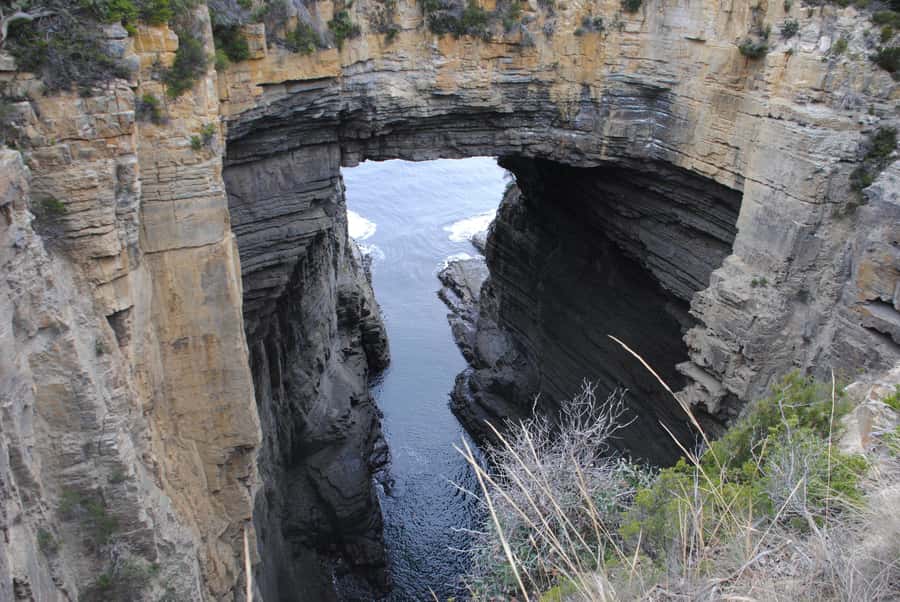
The final day is built for two things: wildlife and a last hit of walking scenery around Hobart. You begin at Bonorong Wildlife Sanctuary, which is presented as Tasmania’s best-known conservation and wildlife sanctuary. This is where you’re likely to get a wider range of animal encounters in a shorter time block.
The tour mentions quolls, wombats, kangaroos, and Tasmanian devils at Bonorong. It’s also described as a special experience guided by sanctuary staff, which is another reason this day feels different from a “drive-by wildlife stop.” You’re not only hoping to see animals. You’re learning how they fit into conservation and how the sanctuary operates.
After that you walk around Richmond, a colonial village. That’s a good contrast to the wilderness days. You can stretch your legs on flatter ground and enjoy a slower pace before the last natural area.
Then you return to Hobart via the Coal River Valley and head to Wellington Park, known locally as The Mountain, and by its palawa name kunanyi. The tour guide provides an experience around fern glades, eucalyptus forests, dramatic rock columns, and boulder fields, with superb walking tracks to lookouts. This final walk is your “finish strong” moment. Even if you choose a shorter track, you’ll get big views without needing another huge hike.
Price and what you’re actually buying for $831
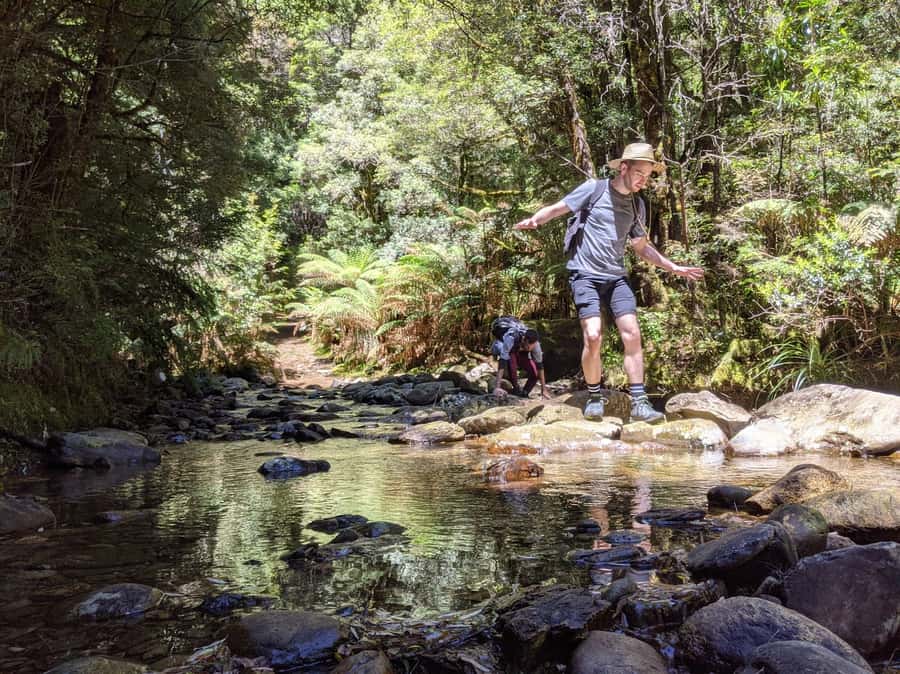
At $831 per person for 6 days, the real value is not just the itinerary. It’s the built-in costs you’d otherwise pay separately while trying to do Tasmania on your own.
Included in the price are pickups and drop-offs at selected Hobart locations, five nights of accommodation, national park entrance fees, guided walks with commentary, and entry to Bonorong. That’s a lot of “friction removal.” You avoid hunting down tickets, mapping drive time, and organizing each park stop.
What you should expect to pay separately: food and drinks, plus the Gordon River cruise if you choose it. Because food isn’t included, I suggest budgeting for at least breakfast when it’s convenient to grab, and then planning lunch and dinner around the days that have walking breaks.
The best way to think about the price is this: it covers transportation between major regions, the guide’s time, and park entries. If you’re the kind of traveler who would spend money to hire local knowledge anyway, the tour starts to feel less like a fixed cost and more like a structure that makes Tasmania easier to enjoy.
Transportation comfort and daily pace, the stuff that affects your mood
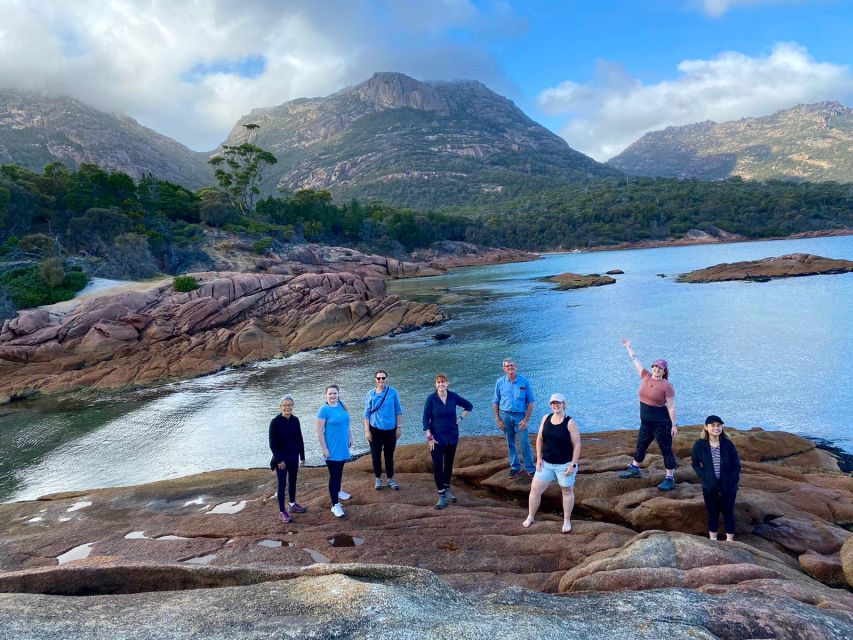
This is an active tour. You get short walks every day, and most are classified as easy to moderate. Still, “easy to moderate” can mean different things on different trails, and this one includes rough surfaces and, on the longer hikes like Dove Lake, many steps.
I recommend preparing for cool weather and variable conditions. Warm clothing and a jacket are listed as must-haves, along with sunglasses, sun hat, sunscreen, and water. Yes, even if the sky looks overcast. Tasmania weather shifts, and sun reflecting off pale sand and rock can surprise you.
You’ll also want comfortable shoes and, for the more active routes, proper hiking shoes. Bring long pants and keep a towel and swimwear available. The inclusion of towel and swimwear in the packing list is a clue that you may have an opportunity to cool off during the trip, even if it’s not the main plan.
For luggage, there’s a clear limit: up to 20 kg, stored in a trailer on travel days. That’s useful if you want to pack smart and not carry heavy bags while you’re hiking.
Finally, on comfort: one review noted the bus was a bit old. That doesn’t mean the trip is miserable, but it’s fair to expect less modern seating or a rougher ride. If you’re sensitive to travel comfort, pack extra layers and consider how you’ll handle wind on long drives.
The best kind of traveler for this route
This tour fits best if you want a big Tasmania sampler with guided walking options and wildlife time, without the hassle of self-driving. If you like meeting other people but still want choice each day, you’re in the right place.
You’ll enjoy it most if you:
- like walking in rainforest and along beaches, not just scenic viewpoints
- can handle easy to moderate trails and some steps
- want a structured route that hits the major highlights plus less obvious stops like Queenstown and Sheffield
It is not suitable for children under 8, people with back problems, or anyone with mobility impairments. That’s not a “maybe with modifications” situation, so if accessibility is part of your planning, you’ll want to look for another style of trip.
Should you book this Tasmania wilderness and wildlife tour?
I’d book it if your goal is simple: see Tasmania’s most famous outdoor regions in one trip, with a guide, short walks, and a real wildlife sanctuary day. The itinerary has the right spine, West Coast wilderness, Cradle Mountain hiking, then East Coast beaches, and it ends with a wildlife-and-lookouts combo that makes the final day feel complete.
I’d think twice if you want a low-effort holiday. Even though the walks are optional, the tour is built around daily outdoor movement, and the longer hikes include steps and rough ground. Also, if you care a lot about vehicle comfort, know the bus has been described as a bit old.
If you’re willing to pack layers, wear supportive shoes, and choose your hike level with confidence, this is a strong value way to experience Tasmania without needing a car.
FAQ
How long is the Tasmania Wilderness and Wildlife Guided 6-Day Tour?
It runs for 6 days, with 5 nights of accommodation. Availability and starting times depend on your chosen date.
Where does the tour start and end?
It starts with pickup from selected Hobart city locations and ends back in Hobart on the final day.
Is food included in the tour price?
No. Food and drinks are not included.
What activities are included besides driving and sightseeing?
You get guided walks with commentary on most days, national park entrance fees, and entry to Bonorong Wildlife Sanctuary.
Can I choose different hikes based on my fitness?
Yes. There are multiple walk options each day, and guests can choose a route that matches their fitness and energy levels.
Is there anything extra I might want to pay for?
The Gordon River cruise is optional and would be paid at your own expense.
How does pickup work if I’m staying outside central Hobart?
Pickup is available from any centrally located hotel or hostel in Hobart. Pickup is not available from Airbnbs and private residences, so you may need to contact the operator for the closest convenient meeting point.
Added lately from Hobart
- Wineglass Bay and Maria Island Scenic Flight Experience
★ 4.7 · 54 reviews - Hobart: Tahune Airwalk & Hastings Caves – Active Day Tour
★ 4.8 · 56 reviews - Hobart: Mt Wellington, Richmond, & Bonorong Wildlife Tour
★ 4.6 · 59 reviews - Tasmania: Wilderness and Wildlife Guided 6-Day Tour
★ 4.6 · 60 reviews - Port Arthur, Richmond and Lavender Active Day Tour
★ 4.5 · 61 reviews - kunanyi/Mt Wellington Explorer Bus – One Way Tour
★ 5.0 · 63 reviews
National Parks, compared.
 ★ 5.0Litchfield National Park and Jumping Crocodile CruiseFrom $1722,119 reviews
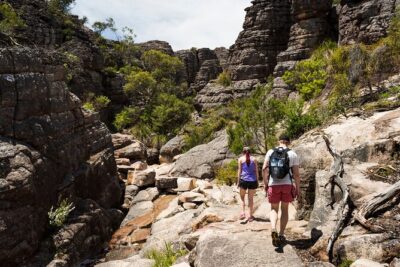 ★ 5.0Grampians National Park Small-Group Eco Tour from MelbourneFrom $111761 reviews
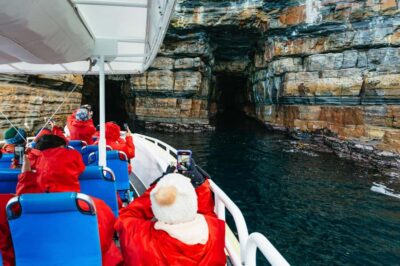 ★ 4.9From Port Arthur: Tasman Island Wilderness CruiseFrom $127704 reviews
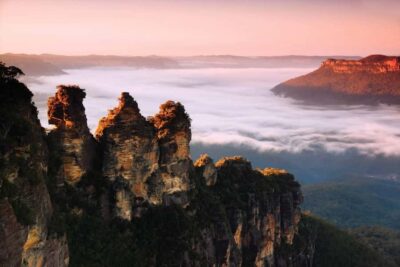 ★ 4.6Sydney: Blue Mountains National Park Tour with River CruiseFrom $70701 reviews
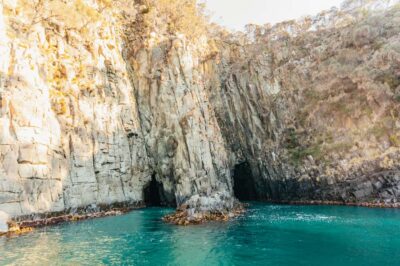 ★ 4.8From Hobart/Adventure Bay: Bruny Island Wilderness CruiseFrom $127601 reviews
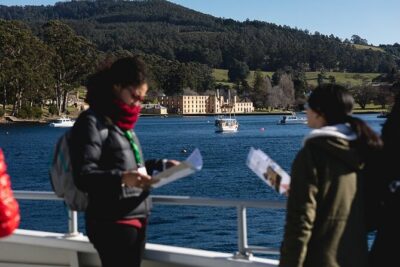 ★ 4.5Port Arthur Full-day Guided Tour with Harbour Cruise and Tasman National ParkFrom $121585 reviews
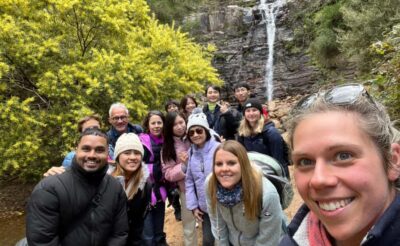 ★ 4.8From Melbourne: Grampians National Park Group TourFrom $102505 reviews
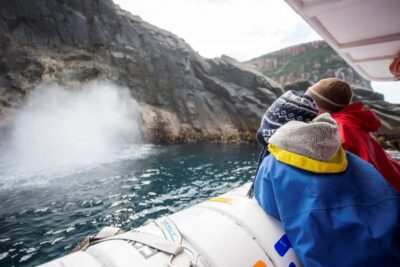 ★ 4.8Hobart: Bruny Island Wilderness Coast Eco Cruise with LunchFrom $194498 reviews
Browse the lists this tour appears in