
REVIEW · ULURU & AYERS ROCK TOURS
Yulara: Uluru & Kata Tjuta 25-Minute Helicopter Experience
Uluru looks unreal from the ground, then the sky changes everything. This 25-minute helicopter combo from Yulara ties together Uluru and Kata Tjuta, with pickup from Ayers Rock Resort and a professional team running the show. You get the classic Red Center views, but from angles you simply cannot match on foot.
Two things I really like: the way the flight time is used for real sightlines (so you get solid viewing from different sides), and the pilot-led commentary that keeps the trip engaging. One possible drawback is the short time in the air, so if you want a long scenic loop, you may feel it ends fast.
In This Review
- Key things to know before you go
- Uluru and Kata Tjuta from the air: why this combo hits different
- Yulara pickup and transport: how the hour gets built
- What the 25-minute flight is like: angles, domes, and photo chances
- Cultural sensitivity and flight limits: what you will and will not see
- Your pilot and the onboard experience: safety, humor, and good viewing
- Boarding and comfort: steps, shoes, and fitness expectations
- Price and value at $237 per person: when it feels worth it
- Practical planning tips for a smoother flight
- Who should book this, and who should skip it
- Should you book this Uluru and Kata Tjuta helicopter ride?
- FAQ
- How long is the helicopter experience?
- How much does it cost?
- What’s included in the price?
- Where does pickup happen?
- What do I need to bring?
- Does the flight fly directly over Uluru or completely around it?
- Is there a weight limit?
- Is it suitable for people with mobility impairments?
- Is there a minimum number of passengers?
- What is the cancellation policy?
Key things to know before you go
- 25 minutes in a helicopter is the core experience, and the rest of the hour is transfers plus check-in and briefing
- Uluru and Kata Tjuta combined means you see both rock formations in one go, without needing to choose
- Kata Tjuta viewing is influenced by sacred-site restrictions, so you won’t get full ground coverage translated perfectly into the air
- You may need to use steps and platforms to enter and exit the helicopter
- Audio and safety briefings happen on the ground and in the air, and a few passengers have noted shuttle audio clarity can vary
Uluru and Kata Tjuta from the air: why this combo hits different
If you’ve only seen Uluru and Kata Tjuta from viewing areas, you already know they feel big. From the air, you start to understand the scale and the spacing between features, like the formations sit in a wider puzzle of red rock, flat desert, and distant ridges.
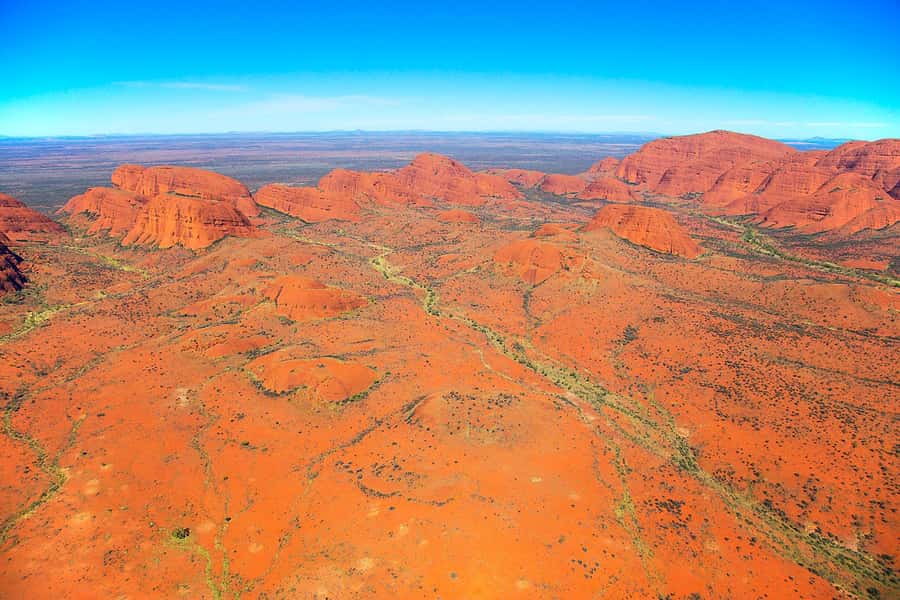
Uluru is one signature monolith, Kata Tjuta is a set of domes. Kata Tjuta literally means many heads, and it’s formed by about 36 conglomerate rock domes. The highest dome rises about 198 meters higher than Uluru, and that height difference shows up fast when you’re above it, not beside it.
This experience is valuable because it gives you a “before and after” mental map. Up close on the ground, it’s about details and atmosphere. In the helicopter, it becomes geometry, and that helps your photos look more intentional, not just pretty.
Sunrise and sunset slots at the rock, reviewed
- Uluru 15-Minute Helicopter Experience★ 4.9 · 548 reviews
- Yulara: Uluru & Kata Tjuta 25-Minute Helicopter Experience★ 4.8 · 536 reviews
- Yulara: Uluru Sunrise and Kata Tjuta Day Trip by Bus★ 4.5 · 469 reviews
- Uluru: Sacred Sites & Sunset Tour with Wine & Cheeseboard★ 4.5 · 450 reviews
Yulara pickup and transport: how the hour gets built
This tour runs about 1 hour total, with pickup from select accommodations within Ayers Rock Resort. Meeting points are clearly defined at Sails in the Desert Hotel, Outback Hotel & Resort, Desert Gardens Hotel, and the Ayers Rock Resort Campground (at the bus stop on the ring road).
You’ll want to be outside your pickup point at least 5 minutes early. That timing matters because a helicopter departure is not a wait-and-see situation. The transport is by air-conditioned bus, and the overall transport experience has strong ratings, with 94% giving a perfect score for the ride.
There is also a practical reality here: you’re going to do a safety briefing before you fly, and you’re doing it on a schedule that’s built around your flight time. One small consideration: some people have mentioned that shuttle safety instructions can be harder to hear, especially for older passengers sitting farther back. If you’re sensitive to audio, sit closer to the front, and keep your phone or watch handy so you’re not guessing timing when the group is moving.
What the 25-minute flight is like: angles, domes, and photo chances
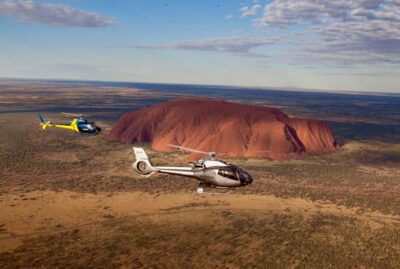
The headline is simple: you get 25 minutes in the helicopter over Uluru and Kata Tjuta. You also get the kind of onboard behavior that matters for viewing, the pilot adjusts the flight path and makes sure passengers can see well from both sides at different points.
That sounds minor until you’re sitting there with a camera and realizing how often pilots forget that not everyone can see the same thing at the same time. In this flight style, you’re more likely to get that turn-by-turn viewing that leads to sharper photos and fewer “I missed it” moments.
You’re also going to get a better sense of why people come back to the area even after seeing the rocks once. Kata Tjuta isn’t a single shape. It’s a broad grouping of domes spread out, and you see the pattern as a system. From above, the domes look like folded layers of stone, with shadows that make depth obvious.
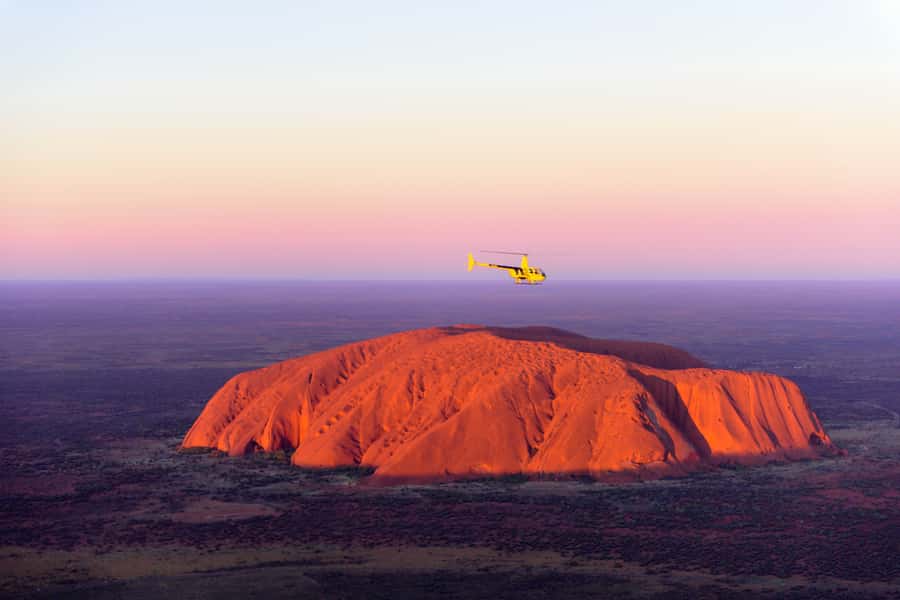
Then there’s Uluru. From the air, it isn’t just a big rock. It becomes a landmark with clear edges and changing tones as the light hits different faces. If you like travel photos that show scale, this is where you get it.
One fair warning: 25 minutes goes quickly. People who do this say the flight is magical, but it’s still short, so if your travel style is slow and lingering, plan the rest of your day around extra ground time too.
Cultural sensitivity and flight limits: what you will and will not see

Here’s the part that’s important to understand up front. The flights do not fly directly over nor completely around Uluru or Kata Tjuta due to cultural sensitivity of the feature.
What this means in plain language: your photos might not look like a full 360-degree tour of the rocks. You may miss the exact angle you hoped for from one specific viewpoint, especially if you’re imagining an overhead shot.
But that’s also why this flight still feels worthwhile. You’re not trying to recreate a perfect, full circle view. You’re getting an aerial overview plus several specific angles that explain how the formations sit in relation to the surrounding area.
If you’re someone who needs complete coverage for your own mental checklist, adjust your expectations. If you’re more flexible and you care about getting a few excellent shots plus a real sense of scale, you’ll likely feel like this was the right choice.
The domes and the canyon rim, in other write-ups


Your pilot and the onboard experience: safety, humor, and good viewing
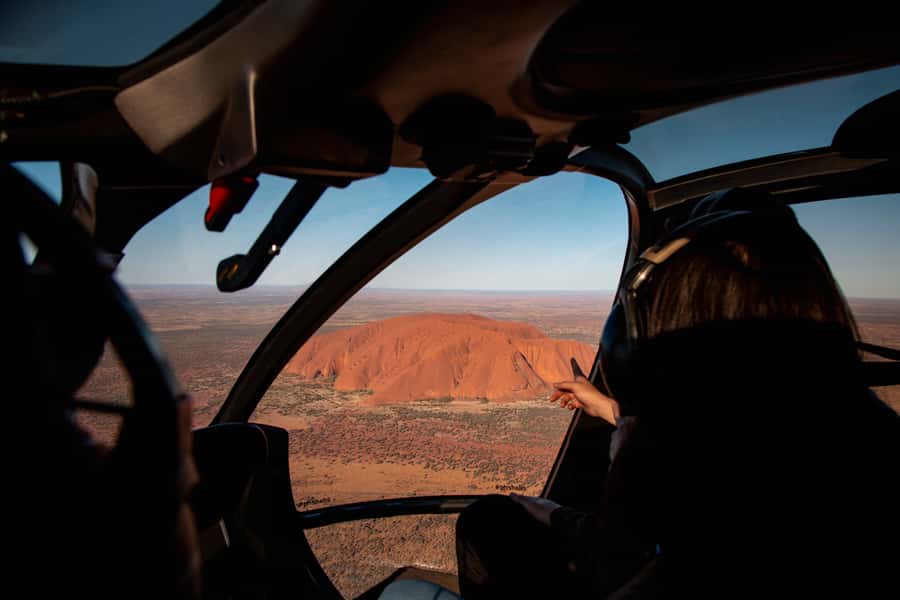
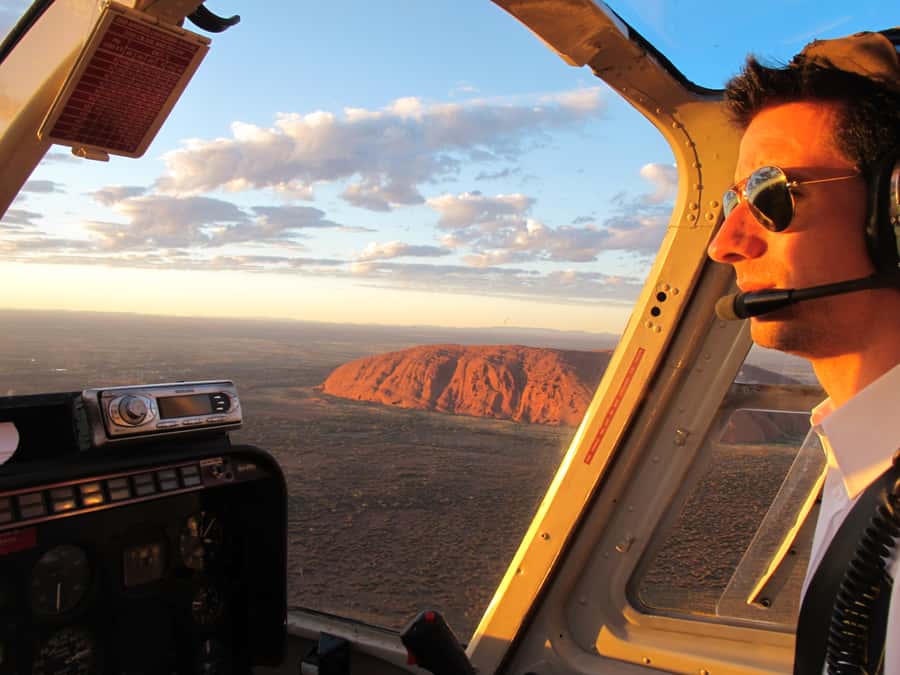
The strongest praise in the experience is how professional the team feels and how well the pilot handles both safety and storytelling. People mention pilots who are very good at keeping things informative and entertaining, while still making it feel controlled and safe.
Names you may hear in your research include Cal as a pilot who delivered a great experience and strong confidence, Jake as another pilot noted for being knowledgeable and friendly, and David and Jimmy also show up in the stories as pilots who gave passengers plenty of information during the flight. A staff member named Amber is also mentioned for support, and a ground person named Parvis earns high praise in at least one account.
That matters because in a helicopter, the pilot’s style directly affects your trip. When the pilot is clear about what you’re seeing, and when they turn the aircraft so you can view both sides, passengers don’t feel like they are trapped with the wrong view.
On audio: there’s a practical note. Some passengers want improved audio clarity during the shuttle safety instructions. On the flight itself, people describe the pilot commentary as a highlight, but audio can still vary with seat position and how the system works. If you’re hard of hearing, ask the staff on the ground if there are any accommodations available when they confirm your flight and seat.
Boarding and comfort: steps, shoes, and fitness expectations

This tour is not a sit-and-forget experience. Before you fly, you need to be able to enter and exit the helicopter using steps and platforms.
That’s why the experience is listed as not suitable for people with mobility impairments. It’s also not recommended for people with low fitness. If you have any hesitation about stepping up, balancing, or standing for short periods, consider a ground-based option instead.
What to wear is simple and practical: closed-toe shoes. Skip flimsy sandals and bring something you can move in. The desert can be hot, dusty, and dry, so shoes that protect your feet are the smart move.
There’s also a weight rule. If you weigh over 125kg / 275lbs, you must book directly with the operator so an appropriate seat can be assigned. The experience is also listed as not suitable for people over 275 lbs / 125 kg, so if you’re near that threshold, confirm your seating early and follow the operator guidance.
Price and value at $237 per person: when it feels worth it
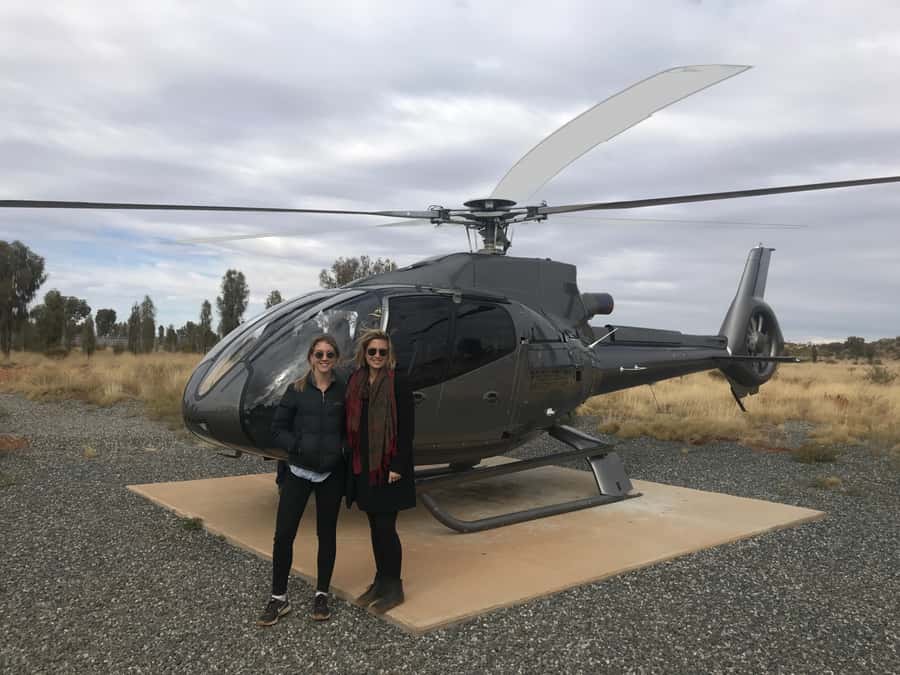
At $237 per person, this is not the cheapest way to see Uluru and Kata Tjuta. The value comes from what you’re buying: time in the air, plus access to aerial angles that compress planning.
If you were to try to do this with only ground viewpoints, you’d spend more time driving, walking, and repositioning, and you still wouldn’t get the top-down understanding of scale. With this flight, you get a tight, high-impact overview.
Also, your transfers are included. You’re not just purchasing the helicopter seat. You’re getting a round-trip transfer and a ride in an air-conditioned bus, along with the pilot for the flight itself. That reduces hassle at the exact moment your day feels most chaotic.
Price math in a simple way: if you have limited time in the Red Center, this is one of the fastest ways to get a “big picture” payoff. If you have plenty of time and you love slow hiking, you might prefer spending that money on more ground experiences instead. For many first-timers, though, the helicopter time is the best use of a limited day.
One more value note: the flight works with a 2-person minimum, meaning single passengers get paired with other passengers. That’s normal for shared experiences, but it does mean your exact seating experience depends on how the flight fills.
Practical planning tips for a smoother flight
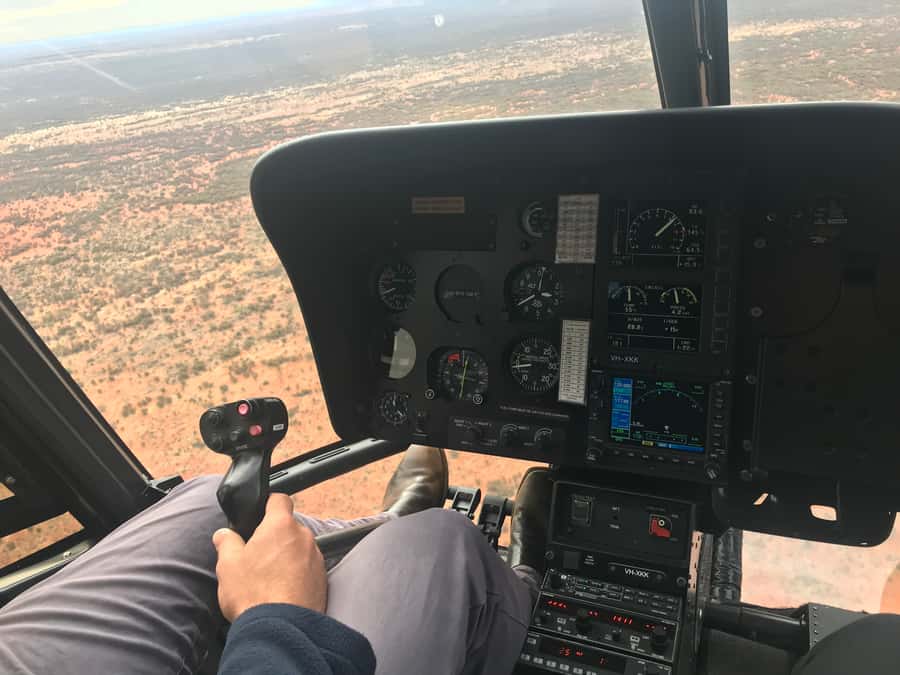
A few details can make your experience smoother and your photos better:
- Pick your seat wisely. If you’re with a partner, share who cares more about the left or right view, then follow the pilot’s turning cues.
- Keep your timing tight. Be at the bus pickup point at least 5 minutes early so you don’t feel rushed.
- Bring closed-toe shoes and plan for walking around the helipad area.
- Expect cultural flight limits. You are getting aerial angles, not a full, unrestricted orbit of the rock faces.
- Plan one buffer day. Flights use scheduled departure windows that are confirmed by the provider, and your meeting point time is confirmed after booking. It helps to avoid stacking too many time-sensitive plans the same morning.
If your priority is photos, remember that lighting in the desert shifts fast. If you can choose a departure time based on availability, try to align it with your personal comfort for heat and wind.
Who should book this, and who should skip it

This is a great fit if you want an efficient, high-impact way to understand both Uluru and Kata Tjuta. It also suits couples, families who are comfortable with stepping onto and off the helicopter, and anyone who wants to maximize first-day or limited-day viewing.
You should think twice if you have mobility limitations, struggle with stairs and platforms, or prefer long, unhurried time overhead. The physical requirements are real for this style of aircraft boarding, and the duration in the air is intentionally short for a multi-stop viewing experience.
If you’re traveling solo, don’t worry about being left out. Single passengers are paired with other passengers under the 2-person minimum rule, so you are not likely to be the only person in your category.
Should you book this Uluru and Kata Tjuta helicopter ride?
I’d book it if you want the easiest path to an aerial sense of scale, and if you’re excited by the idea of seeing both formations in one short session. The way passengers describe the professionalism, plus the pilot commentary and organized pickup, points to a smooth experience for first-timers.
I would skip it if your top priority is a long aerial journey or if your mobility needs don’t fit the step-and-platform boarding. Also skip it if you’re hoping for a perfectly unrestricted view of every side of Uluru and Kata Tjuta, because cultural sensitivity limits flight paths.
If you fit the right box, this is one of those Red Center experiences that turns the rocks from an attraction into a real spatial understanding. And yes, it is short, but the payoff is big for the time you spend.
FAQ
How long is the helicopter experience?
The total duration is about 1 hour. That includes round-trip activities plus a 25-minute helicopter tour.
How much does it cost?
The price is $237 per person.
What’s included in the price?
You get round-trip transfer, transportation in an air-conditioned bus, the pilot, and the 25-minute helicopter tour.
Where does pickup happen?
Pickup is available from accommodations within Ayers Rock Resort, including Sails in the Desert Hotel, Outback Hotel & Resort, Desert Gardens Hotel, and Ayers Rock Resort Campground. You meet outside the reception lobby for the first three, and at the bus stop on the ring road for the campground.
What do I need to bring?
You should bring closed-toe shoes.
Does the flight fly directly over Uluru or completely around it?
No. The flights do not fly directly over nor completely around Uluru or Kata Tjuta due to cultural sensitivity.
Is there a weight limit?
If you weigh over 125kg / 275lbs, you must book directly with the operator so a suitable seat can be assigned. The activity is also listed as not suitable for people over 275 lbs / 125 kg.
Is it suitable for people with mobility impairments?
No, it is listed as not suitable for people with mobility impairments. You will also need to be able to use steps and platforms to enter and exit the helicopter.
Is there a minimum number of passengers?
Yes. A 2-person minimum applies to flights. Single passengers will be paired with other passengers.
What is the cancellation policy?
There is free cancellation up to 24 hours in advance for a full refund.
Domes and Canyon Rims



Sunrise, Sunset and the Base Walk



Added lately from Yulara
- King’s Canyon: 15-minute Scenic Helicopter Tour
★ 4.9 · 78 reviews - Uluru: Small Group Sunset Tour with Sparkling Wine
★ 4.5 · 82 reviews - From Yulara: 3-Hour Small Group Kata Tjuta Afternoon Tour
★ 4.7 · 101 reviews - Uluru: Uluru Base Segway Tour
★ 4.6 · 112 reviews - Kata Tjuta: Small Group Sunrise Tour with Picnic Breakfast
★ 4.7 · 113 reviews - Yulara: Uluru and Kata Tjuta Sunset Helicopter Tour
★ 4.9 · 148 reviews
Uluru & Ayers Rock Tours, compared.
 ★ 4.6From Alice Springs: Day Trip to Uluru with BBQ DinnerFrom $254761 reviews
 ★ 4.5Ayers Rock Day Trip from Alice Springs Including BBQ DinnerFrom $262639 reviews
 ★ 4.6Uluru: Field of Light Sunrise Tour with Hot DrinksFrom $91572 reviews
 ★ 4.9Uluru 15-Minute Helicopter ExperienceFrom $145548 reviews
 ★ 4.6Kings Canyon: Full-Day Tour from Ayers Rock ResortFrom $244541 reviews
 ★ 4.5Yulara: Uluru Sunrise and Kata Tjuta Day Trip by BusFrom $140469 reviews
 ★ 4.5Uluru: Sacred Sites & Sunset Tour with Wine & CheeseboardFrom $140450 reviews
 ★ 5.0Segway the FULL base of UluruFrom $171449 reviews
Browse the lists this tour appears in