

REVIEW · ULURU & AYERS ROCK TOURS
Uluru: Uluru Base Segway Tour
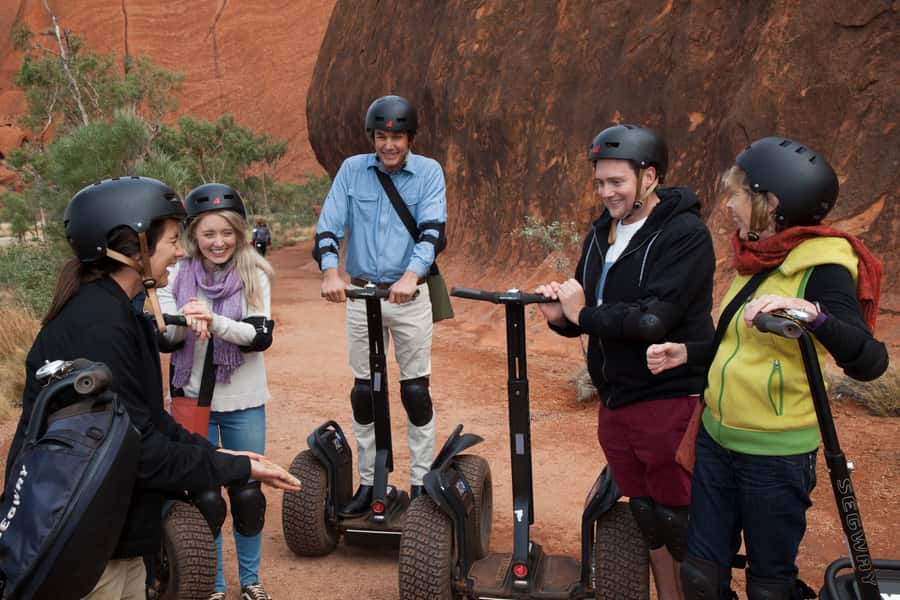
A Segway around Uluru feels unreal. You get Segway training first, then glide the full-base circuit with a guide pointing out what you see.
What I like most is the calm, patient training and the steady pace. Guides such as Hallie and Emma keep first-timers comfortable, and you stop often enough to actually take in the story, not just the ride.
The main thing to plan for is the extra logistics, because the Uluru-Kata Tjuta National Park entry ticket is not included, and transfers from Ayers Rock Resort are also not included.
In This Review
- Key things to know before you book
- Getting to Kuniya Carpark, then meeting your guide
- The 150 minutes: training, safety gear, and a Segway that stays under control
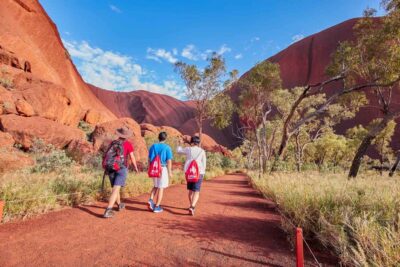
- Gliding the entire base of Uluru: close-up views with less strain
- The cultural and nature lessons you actually get time to hear
- What the stops feel like on the ground: practical, not performative
- Clothing, weather, and body limits you should not ignore
- Price and value: what $133 buys you, and what costs extra
- The language bonus: English guide plus audio options
- Who this Uluru Base Segway Tour fits best
- Should you book this Uluru Base Segway Tour?
- FAQ
- How long is the Uluru Base Segway Tour?
- What is included in the ticket price?
- What is not included?
- Do I need an Uluru-Kata Tjuta National Park entry ticket?
- Where is the meeting point?
- What should I bring?
- Are closed-toe shoes required?
- What are the Segway rider weight limits?
- Is this tour suitable for children?
Key things to know before you book
- Whole-base route that lets you see more of Uluru without pounding your feet for hours
- Hands-on Segway training with protective safety gear included
- Anangu culture + nature talk, with stops covering plants, animals, geology, and local meaning
- Small group limited to 10, so you get more attention during practice
- Minimal-noise riding, a smoother way to experience the Rock in the outback heat
Getting to Kuniya Carpark, then meeting your guide
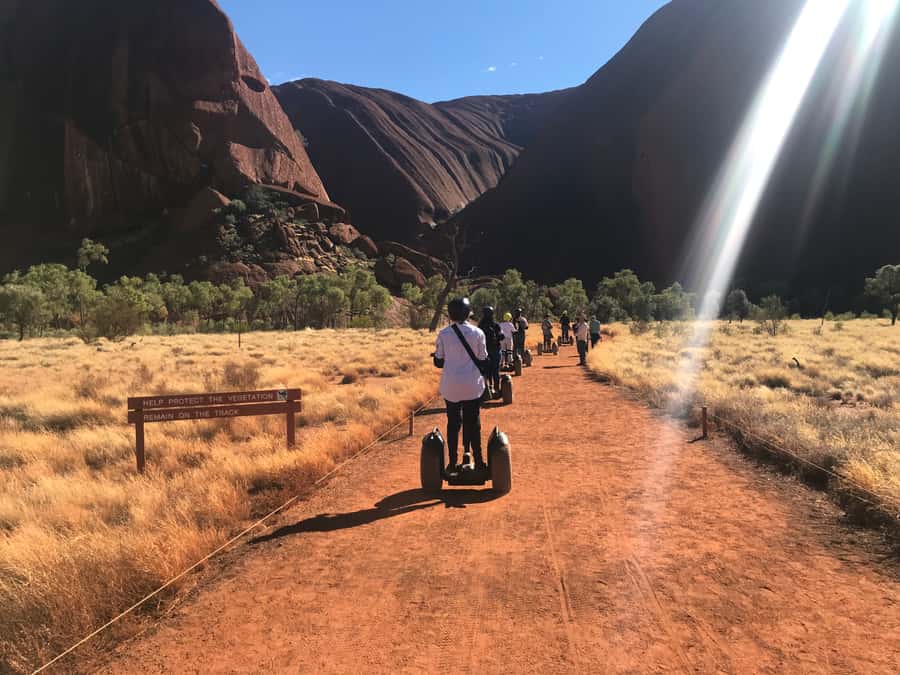
This Uluru Segway Base Tour starts at Kuniya Carpark in Mutitjulu (Kuniya Carpark, Uluru, Mutitjulu NT 0872). The park is inside Uluru-Kata Tjuta National Park, and you’ll drive in yourself to reach the meeting spot.
If you’re using the official directions: drive into the national park, go past the sunset viewing area, take the roundabout turn right, follow the road, and then take the first left into Kuniya carpark. The meeting point is at the back of the carpark and is described as easy to find once you park.
Here’s the practical reality: there’s no public transit to Uluru, and it’s too far to walk from the resort. So even though the tour itself is guided start to finish, you should treat getting to Kuniya carpark as part of your job.
Sunrise and sunset slots at the rock, reviewed
- Uluru: Field of Light Sunrise Tour with Hot Drinks★ 4.6 · 572 reviews
- Uluru 15-Minute Helicopter Experience★ 4.9 · 548 reviews
- Yulara: Uluru & Kata Tjuta 25-Minute Helicopter Experience★ 4.8 · 536 reviews
- Yulara: Uluru Sunrise and Kata Tjuta Day Trip by Bus★ 4.5 · 469 reviews
The 150 minutes: training, safety gear, and a Segway that stays under control
The total duration is 150 minutes. That includes your training time, then the guided ride around Uluru’s full base.
You’ll learn the basics of driving a Segway before you start the real loop. Protective and safety gear is included, and the tour is run by a live English guide. There’s also an audio guide included in Spanish, Chinese, French, German, Italian, and Japanese, which is useful if you want a second layer of explanation while you ride.
One detail I really appreciate from past experiences with this kind of setup is how the training time makes or breaks the day. Here, guides are set up to teach you until you feel steady, not just until you are technically able to move. First-timers have a lot of good results with this, including people who hadn’t used a Segway before.
And yes, it’s a ride, not a race. The Segways are speed limited, so the experience feels controlled and relaxed. That matters at Uluru, where heat and bright light can make anything feel like more effort than it should be.
Gliding the entire base of Uluru: close-up views with less strain
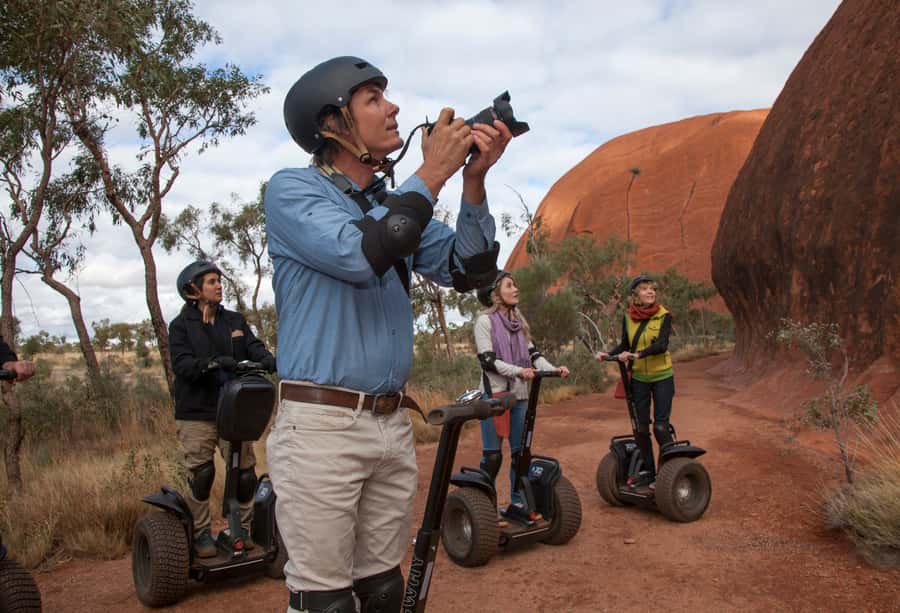
The headline is simple: you follow your guide around the entire base of Uluru. This is the big value play. Uluru is a huge, ancient rock, and seeing the full perimeter on foot would take a lot of time and energy.
On a Segway, you still get up close, but you trade leg burn for a slower, steadier rhythm. That makes a huge difference if you’re traveling with limited mobility, or if you just want to save your legs for other things in Central Australia.
The route also gives you repeated chances to look up and around. From the ground, Uluru can feel like one big view. On a loop, it becomes a changing view, with different angles and details showing up as you move.
There’s also something psychological here: the Segway lets you pay attention. When you’re not fighting a long walk, you can listen, look, and ask better questions.
The cultural and nature lessons you actually get time to hear
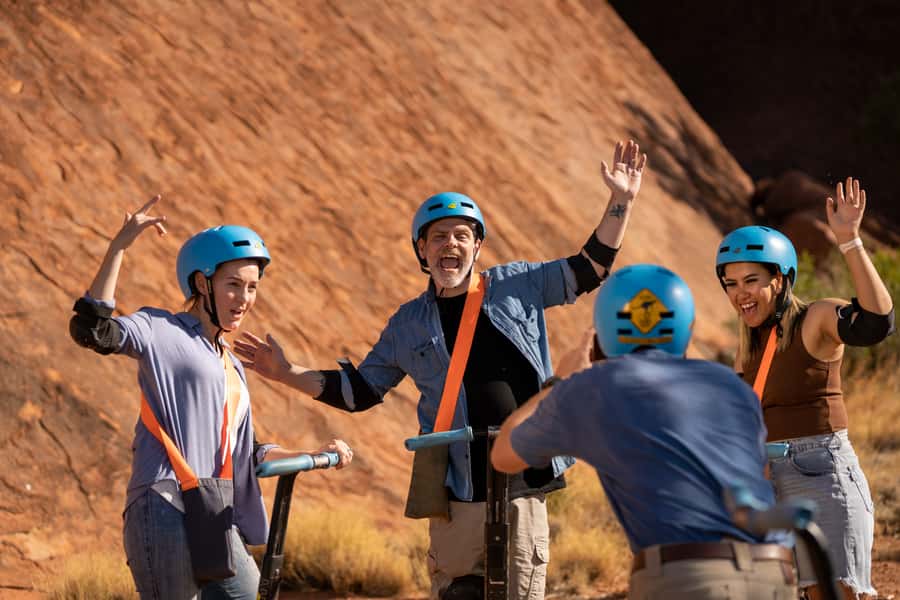
This tour is built around more than scenery. You learn about local Anangu culture, flora, fauna, geology, and the European history of the area.
Your guide takes you around the perimeter and pauses to connect the landscape features to meaning and history. The good guides in this format do three things well:
- They explain what you’re seeing in plain language
- They tie nature details to the places you pass
- They keep the story linked to the Rock itself, not just general facts
From experience patterns on similar tours, the best part is how the guide’s pacing gives you time to absorb the explanations. People often come out remembering not just that Uluru is impressive, but why it matters, what plants and animals are associated with the area, and how geology shapes what you see.
You’ll also get lessons on European history in the region. That’s a useful balance, because Uluru’s story is layered, and the rock has been viewed and used differently across time.
If you care most about geology, say so early. One person specifically wished the geology story had been even more detailed, and you can use that mindset with your guide: ask questions while you’re out there, because that’s when you’ll get the most tailored answers.



What the stops feel like on the ground: practical, not performative
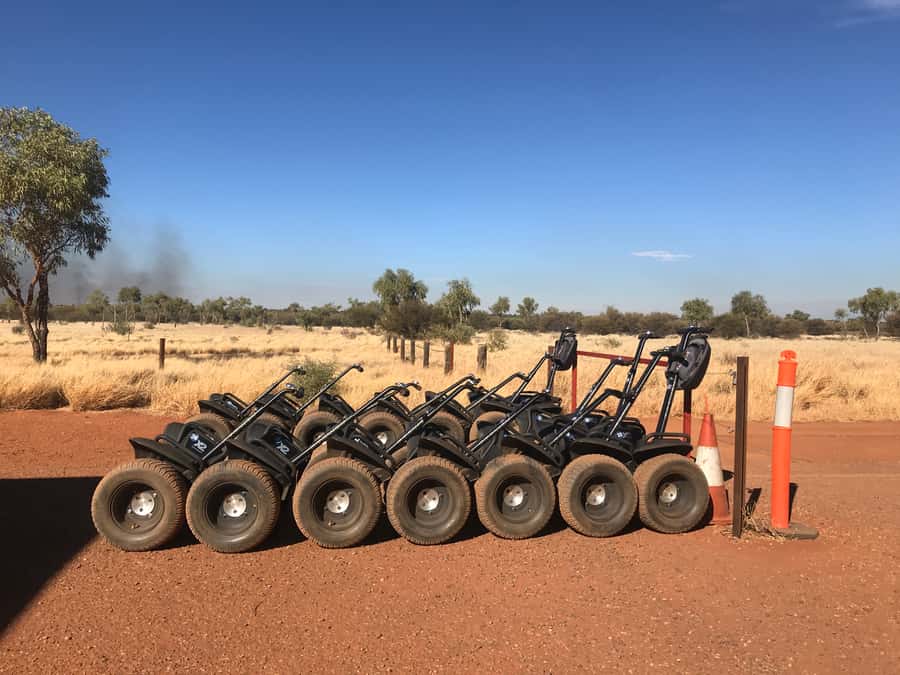
Even though you’re riding, you’re not just being dragged past points of interest. The tour is described as fully guided around Uluru’s full base, with you taking in highlights of the rock and learning at points along the route.
In practice, that usually means the guide slows down, keeps the group together, and uses the pauses to connect each feature to the bigger story. It’s not a museum lecture. It’s more like getting a guided walk lesson, but with wheels.
And because the group is limited to 10 participants, those stops tend to work better. Smaller groups mean less waiting, fewer bottlenecks, and more direct attention when someone needs a quick reset.
There’s also a nice bonus built into how the Segway works: riders tend to be more willing to try small adjustments, like turning their heads, watching the guide point, and asking a question, because the ride is stable and the effort is low.
Clothing, weather, and body limits you should not ignore
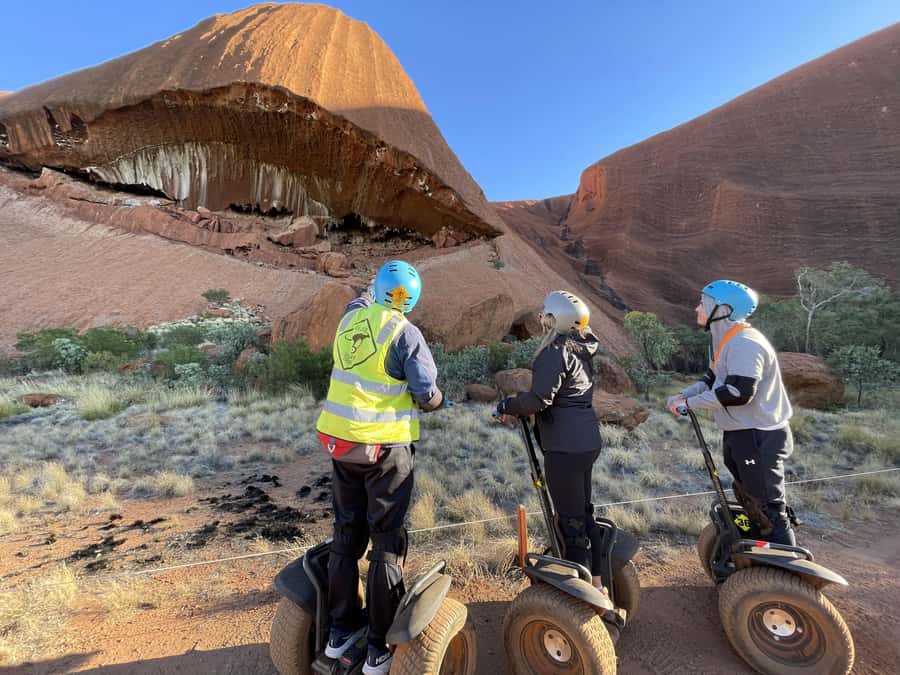
Uluru can be hot, and the tour keeps you outside while you learn. Bring water. The advice is at least 1 liter of water per person, plus a cap and sunglasses, and a shirt with sleeves.
Closed-toe shoes are required, and flip-flops won’t be permitted. This is not just a comfort rule, it’s a control rule. You need stable footing when you mount, dismount, and practice.
There are also clear rider suitability limits:
- Rider weight must be between 45 and 117 kilograms
- People under 12 years are not suitable
- Unaccompanied minors are not allowed
- Not suitable for pregnant women
- Not suitable for people with back problems
- Not suitable if you cannot ride a bike
- Not suitable for wheelchair users
- Not suitable for visually impaired people
- Not suitable for people over 70
- Not suitable for pre-existing medical conditions and recent surgeries
If any of those apply, don’t assume you can negotiate it on the day. Follow the rules so your safety plan matches the activity setup.
Price and value: what $133 buys you, and what costs extra
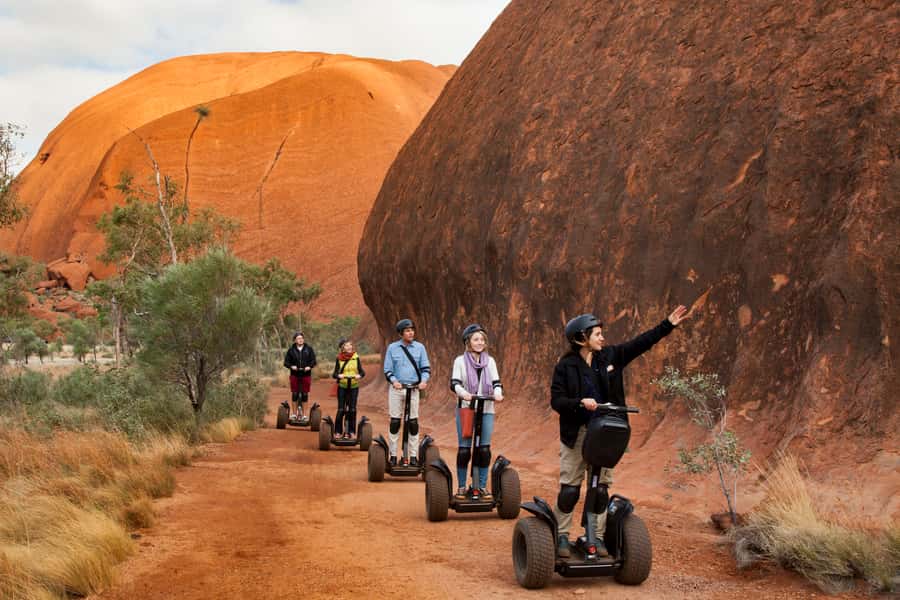
The price is $133 per person for the Segway tour and training (150 minutes). Included are Segway training, the Segway tour around Uluru, and all protective and safety gear.
That’s the part you can feel on your first minute. You’re not renting equipment and trying to figure out how to ride in a busy outdoor space. You’re trained, geared up, and guided for the full experience.
What’s not included is the Uluru-Kata Tjuta National Park entry ticket. It’s listed as $38 per adult if purchased from the National Park entry station or online. There’s also a cash option noted for guests, with $25 cash per person to cover National Park entry.
Transfers from Ayers Rock Resort are also not included. So your real cost depends on how you plan to get to Kuniya carpark.
Is it pricey? It can be, especially if you’re just trying to see Uluru and you’re fine with walking. But if you want the full base experience with less physical strain, the included training and gear can make the price feel more justified. You’re paying for time, equipment, and guide attention, not just for a route.
The language bonus: English guide plus audio options
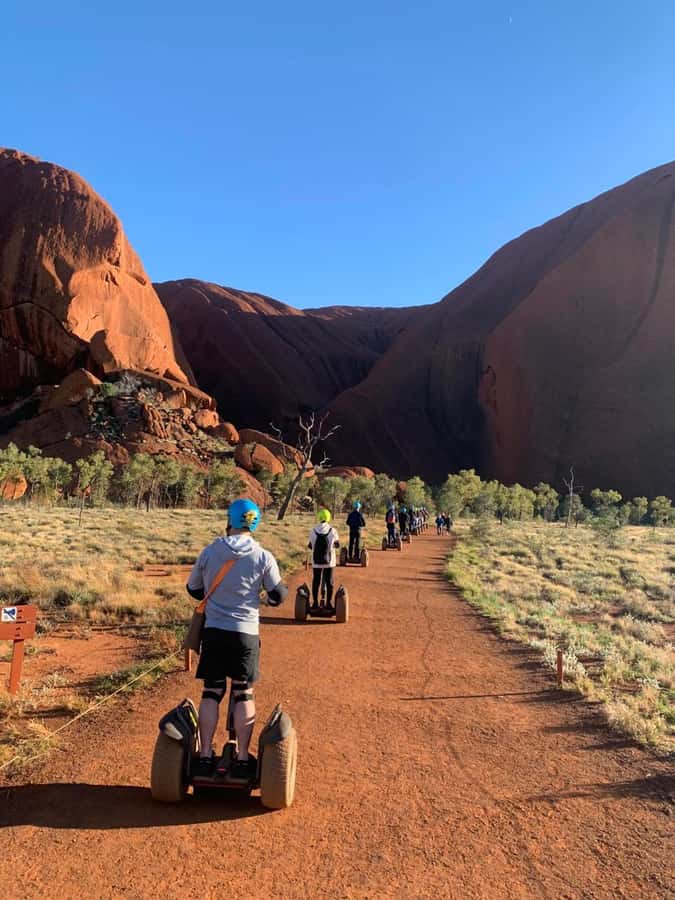
The live tour guide is in English. Audio guide is included in Spanish, Chinese, French, German, Italian, and Japanese.
This is a practical plus if you have mixed-language preferences in your group, or if you want a second way to follow along. When you’re moving, listening closely is part of the deal, and audio can help you keep up without losing your sense of where you are on the perimeter.
Who this Uluru Base Segway Tour fits best
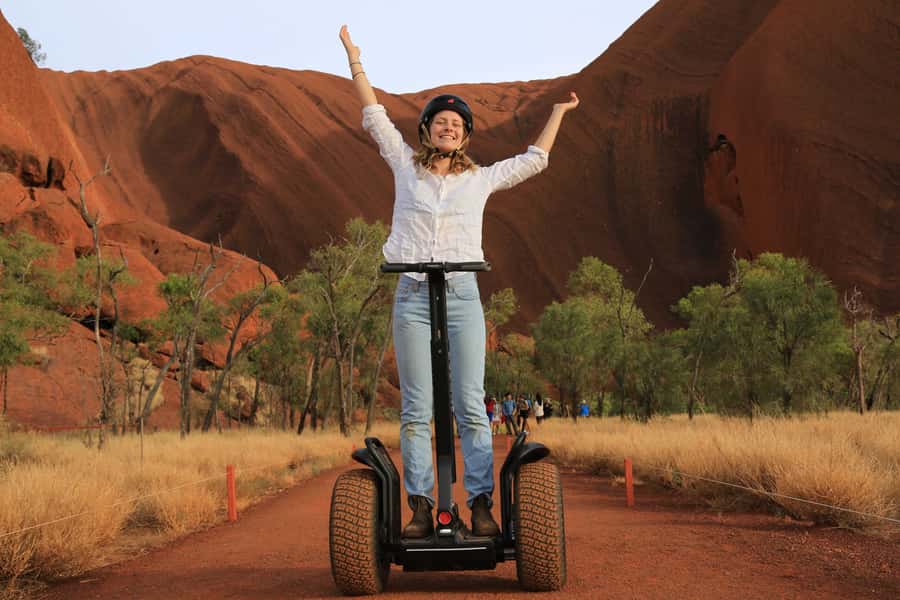
This tour is a strong fit if you want:
- A fun first-time Segway experience with training included
- A full view of Uluru’s base without committing to a long, hot walk
- A guide-led lesson on Anangu culture, plants and animals, geology, and regional history
- A small group setting where the guide can manage the ride and the questions
People also note that it’s a good way to experience Uluru in the heat, because you’re not exerting yourself the whole time. On wet or showery days, conditions can shift quickly. One account mentioned the chance to see waterfalls and get soaked, so expect weather can affect what you see and how comfortable you feel.
If you’re older than 70, have recent surgery, have back problems, or you’re not comfortable with the idea of riding a two-wheeled device, this is likely not the right activity. The suitability limits are clear for a reason.
Should you book this Uluru Base Segway Tour?
Book it if you want the full Uluru base experience with training built in, a live guide, and minimal physical hassle. The combination of Segway time plus story stops is exactly what makes this kind of tour worth doing, especially if you’re time-limited or traveling with family and different walking abilities.
Skip or look for an alternative if getting to Kuniya carpark is a hassle for you, or if you know the rider limits, shoe rules, or medical restrictions will be a problem. Also double-check your park entry plan ahead of time so there are no surprises when you arrive.
If you’re a first-time Segway rider, you’re in the target group. And if you care about culture and geology, arrive with questions, because the best tour moments tend to happen when you ask.
FAQ
How long is the Uluru Base Segway Tour?
The tour duration is 150 minutes.
What is included in the ticket price?
Your ticket includes Segway training, the Segway tour around Uluru, and all protective and safety gear.
What is not included?
Uluru-Kata Tjuta National Park entry ticket and transfers from Ayers Rock Resort are not included.
Do I need an Uluru-Kata Tjuta National Park entry ticket?
Yes. All guests need an Uluru-Kata Tjuta National Park Entry Ticket, or they can bring $25 cash per person to pay for a National Park entry ticket.
Where is the meeting point?
The meeting point is Kuniya Carpark, Uluru, Mutitjulu NT 0872, Australia. It is at the back of the carpark and described as easy to find once you park.
What should I bring?
Bring water, and wear closed-toe shoes. The guidance also recommends a cap, sunglasses, and a shirt with sleeves, plus at least 1 liter of water per person.
Are closed-toe shoes required?
Yes. Flip-flops are not permitted.
What are the Segway rider weight limits?
Segway riders must be between 45 and 117 kilograms.
Is this tour suitable for children?
Children under 12 are not suitable, and unaccompanied minors are not allowed. Riders under 18 must be accompanied by a parent or guardian.
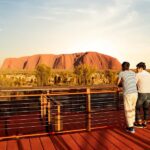
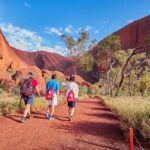
Sunrise, Sunset and the Base Walk

Added lately from Yulara
- King’s Canyon: 15-minute Scenic Helicopter Tour
★ 4.9 · 78 reviews - Uluru: Small Group Sunset Tour with Sparkling Wine
★ 4.5 · 82 reviews - From Yulara: 3-Hour Small Group Kata Tjuta Afternoon Tour
★ 4.7 · 101 reviews - Uluru: Uluru Base Segway Tour
★ 4.6 · 112 reviews - Kata Tjuta: Small Group Sunrise Tour with Picnic Breakfast
★ 4.7 · 113 reviews - Yulara: Uluru and Kata Tjuta Sunset Helicopter Tour
★ 4.9 · 148 reviews
Uluru & Ayers Rock Tours, compared.
 ★ 4.6From Alice Springs: Day Trip to Uluru with BBQ DinnerFrom $254761 reviews
 ★ 4.5Ayers Rock Day Trip from Alice Springs Including BBQ DinnerFrom $262639 reviews
 ★ 4.6Uluru: Field of Light Sunrise Tour with Hot DrinksFrom $91572 reviews
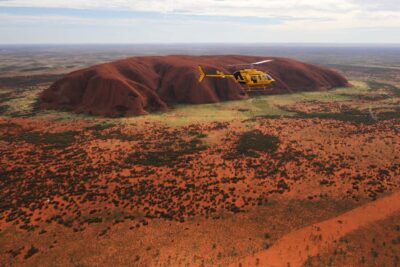 ★ 4.9Uluru 15-Minute Helicopter ExperienceFrom $145548 reviews
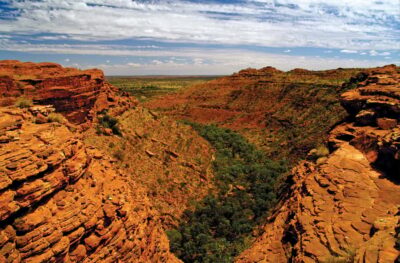 ★ 4.6Kings Canyon: Full-Day Tour from Ayers Rock ResortFrom $244541 reviews
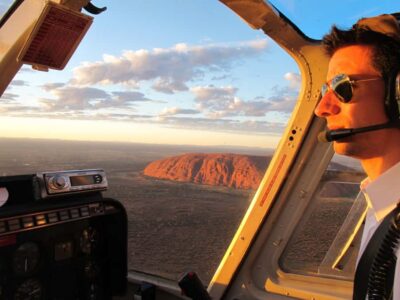 ★ 4.8Yulara: Uluru & Kata Tjuta 25-Minute Helicopter ExperienceFrom $237536 reviews
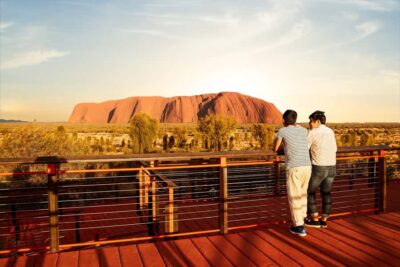 ★ 4.5Yulara: Uluru Sunrise and Kata Tjuta Day Trip by BusFrom $140469 reviews
 ★ 4.5Uluru: Sacred Sites & Sunset Tour with Wine & CheeseboardFrom $140450 reviews
Browse the lists this tour appears in