
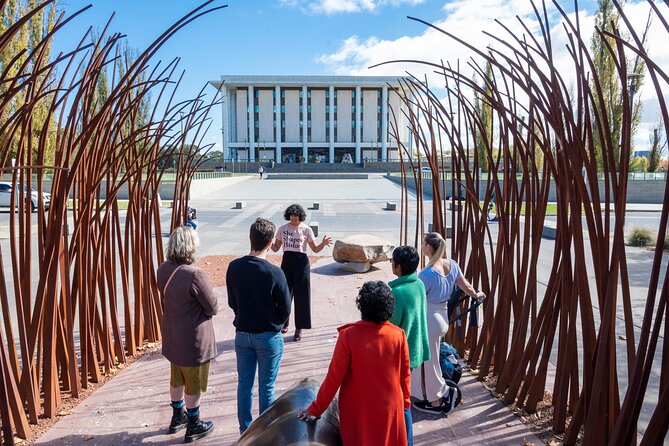
REVIEW · CANBERRA & THE NATIONAL CAPITAL
Badass Women of Canberra: Meet the Women Who Shaped the Nation
Canberra gets a smarter makeover on foot. This women’s history walk connects famous capital landmarks with the stories history books often sideline, so you leave with a clearer picture of how the nation took shape. You’ll cover big public institutions like the Museum of Australian Democracy and the High Court precinct, and you’ll also get time for smaller, more personal stops like the Ladies Rose Garden. Women’s history is the through-line, not an afterthought.
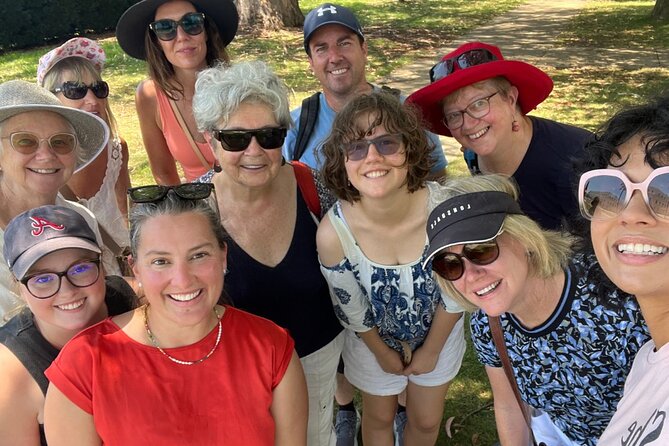
What I like most is the way the tour keeps its focus while still moving efficiently, about two hours at a walking pace that works for first-timers and return visitors. I also love the quality control, the group is capped at 14 people, which makes it feel like a guided conversation rather than a crowded shuffle. Guides such as Eliza, Jane, and Sita bring real enthusiasm and authority to the stories.
The only real drawback to plan around is that it depends on good weather, so bring a jacket and expect a few minutes outdoors even on cooler days.
In This Review
- Key points at a glance
- Entering Canberra Through Women’s Stories
- Starting at the King George V Memorial (and why that matters)
- Museum of Australian Democracy: insider access focused on women
- Aboriginal Tent Embassy: respectful context at a living site
- National Portrait Gallery: the history you do not expect
- High Court stories outside the courtroom
- Reconciliation Place: what the space is trying to say
- National Library of Australia and the Bookplate Cafe coffee break
- Lake Burley Griffin: the lake’s secret history moment
- Price and value: why $46.62 can work for a short visit
- Who should book this walking tour
- A balanced watch-out list before you go
- Should you book Badass Women of Canberra?
- FAQ
- How long is the Badass Women of Canberra walking tour?
- Where does the tour start and where does it end?
- Is this tour a walking tour?
- What is the group size limit?
- What is included during the tour?
- What is the cancellation and weather policy?
Key points at a glance
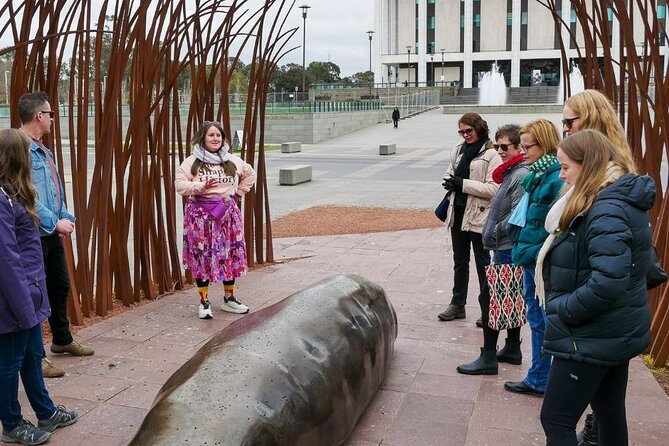
- A compact, about-two-hour walking route that helps you learn Canberra fast
- Major institutions plus lesser-known stops, including sites tied to women’s roles in democracy
- Small group size (max 14) for a more personal guide experience
- Mostly free admission stops, so your money goes to the storytelling and guide time
- Bookplate Cafe coffee break included during the National Library stop
- Guides you can meet on the day include Eliza, Jane, and Sita
Entering Canberra Through Women’s Stories
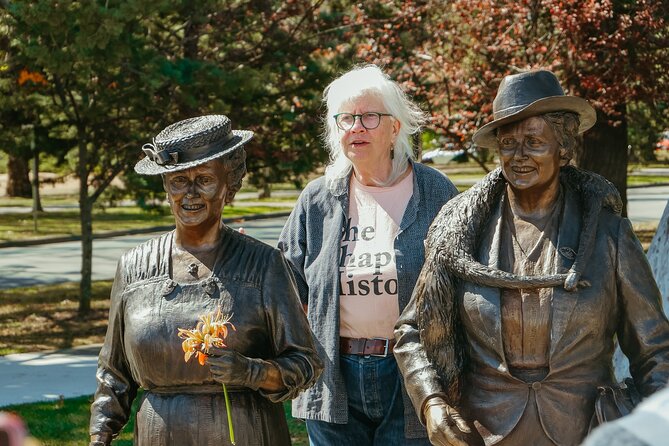
A standard Canberra visit can feel a little like looking at a set: polished buildings, big monuments, lots of power. This tour changes the angle. Instead of treating the capital like a finished product, you get the people behind the decisions and the debates, especially the women whose work and influence didn’t get equal space in the usual narratives.
The pace is practical. It is a walking tour, and it’s set up for mobile travelers who want context without spending your whole day commuting between distant stops. If you’re the type who likes to understand what you’re looking at, you’ll appreciate how the guide ties each location back to real social and political life, not just dates.
You also get a helpful contrast: the tour includes famous Canberra sites, but it intentionally makes room for overlooked stories. That mix is what makes the experience feel like a genuine upgrade, not just another sightseeing loop.
Capital institutions and the tours that get you inside
- Highlights of Canberra Full Day Tour★ 5.0 · 406 reviews
- Canberra: City Highlights Day Tour with Entrance Fees★ 4.8 · 114 reviews
- Badass Women of Canberra: Meet the Women Who Shaped the Nation★ 5.0 · 112 reviews
- Canberra Day Trip from Sydney★ 4.5 · 98 reviews
Starting at the King George V Memorial (and why that matters)
You’ll meet at the King George V Memorial at 18 King George Terrace in Parkes. It’s a good starting point because it keeps you anchored near the core government and cultural district, where many of Canberra’s public landmarks cluster.
The tour starts at 10:00 am and runs for about two hours. That timing is smart if you want to get learning done early, then use the rest of the day for parks, museums, or an easy second round through town.
It ends at Old Parliament House at the same street address area. That matters for planning: you’re finishing right near one of Canberra’s most central political landmarks, so you can keep exploring in the same neighborhood without scrambling for transport across the city.
Museum of Australian Democracy: insider access focused on women
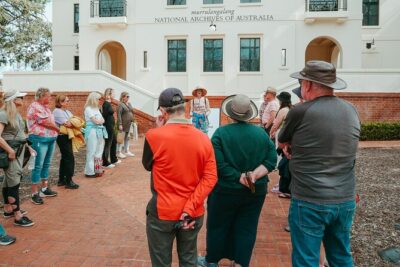
Your first stop is the Museum of Australian Democracy. You get free admission, and the guide focuses on parts of the museum that connect directly to women’s history.
Even if you’ve been inside museums before, this kind of targeted approach saves you time. You are not wandering for two hours and hoping you notice the right exhibit. Instead, the guide points you toward the areas that matter for the theme of the day and explains what you’re seeing in plain language.
This is also a strong “set the stage” moment. You’ll get a better sense of how democracy in Australia has been shaped, and why women’s contributions belong in the same story as the institutions. If you’ve ever felt like the museum world can be split between broad overviews and very specific topics, this gives you a middle path.
Aboriginal Tent Embassy: respectful context at a living site
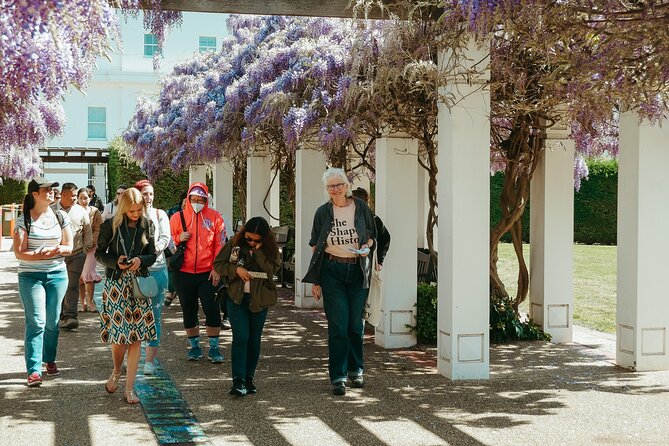
Next you’ll visit the Aboriginal Tent Embassy. The tour includes an acknowledgement and respect for the traditional country of the Ngunnawal and Ngambri people, with attention to their continuing culture and contributions.
This is not a casual photo-stop. The setting carries meaning, and the guide’s job is to frame it properly so you understand why it exists and what it represents in the broader national conversation.
One practical note: because this stop is part of an active public space, it’s worth dressing for quick outdoor shifts and keeping your attention on the guide’s context. If you’re the type who likes to ask questions, this is often where the discussion style can feel most human and direct.


National Portrait Gallery: the history you do not expect
After that, you’ll spend time at the National Portrait Gallery. It’s a shorter stop, about 10 minutes, with free admission, and the guide focuses on the unexpected history of the gallery.
A portrait gallery can sound like a simple show of faces and costumes, but the theme here is about how the institution came to exist and why certain kinds of representation matter. You’ll get enough context to understand what you’re looking at when you glance around, and you’ll leave with a clearer idea of how museums shape public memory.
If you’re visiting Canberra for the first time, this stop can also act like a shortcut. It helps you understand the cultural machinery behind why certain figures are highlighted, and why others get overlooked.
High Court stories outside the courtroom
The next stop is the High Court of Australia, where you’ll sit outside while the guide tells stories of women who have shaped Australia. This is about 15 minutes, free admission, and it’s designed to keep you connected to the theme even when you are not going inside.
This is where the tour stays grounded. You are not just learning about politics in theory. You’re learning how decisions and civic structures connect to people, including women whose influence shows up in public life.
There is also a practical benefit to this format. Sitting outside means you can absorb the explanation without the added friction of checking in, lining up, or rushing through galleries. It makes the experience feel efficient while still thoughtful.
Reconciliation Place: what the space is trying to say
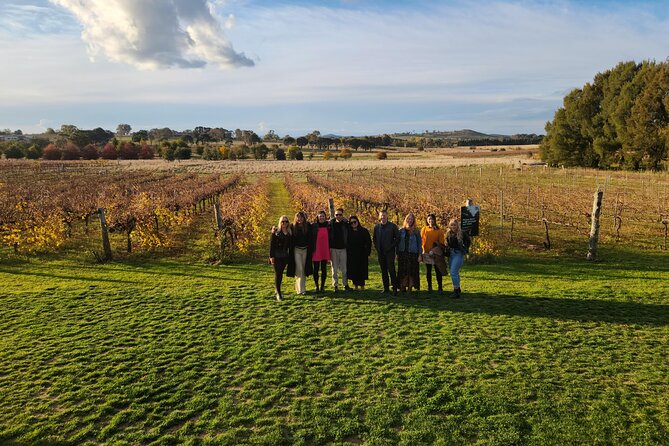
You’ll then visit Reconciliation Place for about 10 minutes. The guide shares the stories behind the place, keeping the connection to the wider theme of national identity and lived history.
Spaces like this often look straightforward until someone explains the intent and the context. That’s what makes the stop worth your time on a short tour. You get a guided reading of the site, which helps you notice details you might otherwise miss.
If you like travel experiences that teach you how to see, this is a good moment to slow down mentally. Even if you are not standing in the middle of a long exhibit, the guide’s storytelling helps you understand why the site exists and how it fits into Australia’s evolving national conversation.
National Library of Australia and the Bookplate Cafe coffee break
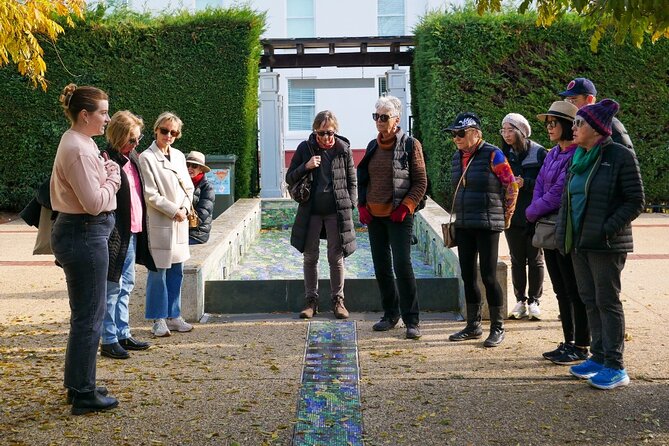
Next comes the National Library of Australia. You get free admission and “insider access,” with the guide showing you relevant areas that tie into women’s history. This stop lasts about 20 minutes, and it includes a break at the Bookplate Cafe for coffee, with the coffee included.
This is one of the more practical parts of the tour. Two hours of walking and focused listening can wear you out. The cafe break lets you reset without leaving the tour loop, and it gives you a chance to take notes or just sit for a minute with your thoughts.
The National Library angle also matters. Libraries and archives are where memory lives, and on a tour like this, that connection is everything. It’s a reminder that history is not just what happened, it is also what got collected, cataloged, preserved, and taught.
If you drink coffee, you’ll like that it is included. If you do not, you might still find it a useful pause, though the specifics of what else is available are not listed in the tour details you provided.
Lake Burley Griffin: the lake’s secret history moment
To wrap things up, you’ll head toward Lake Burley Griffin for about 10 minutes. The guide shares a passionate local perspective and a “secret history” behind the lake.
Short scenic stops can feel like filler, but on this tour, every piece is tied to the idea that Canberra’s look and planning reflect choices made by people. Even if the lake is a postcard-level landmark, the guide’s job is to give you a reason to pay attention beyond the view.
This is a good final note because it helps you shift from indoor and institutional learning to outdoor context. You’ll end with a stronger sense of how Canberra functions as a designed capital, not just a collection of buildings.
Price and value: why $46.62 can work for a short visit
At $46.62 per person, this is not a bargain tour, but it also isn’t trying to be expensive theatre. The value comes from three things you can feel in your planning.
First, the tour is about two hours, so it fits into a busy day without stealing half your trip. Second, many stops have free entry listed for the experience, which lowers your out-of-pocket museum costs while you are still getting guided access and explanations. Third, the Bookplate Cafe coffee is included, so you’re getting a small but real perk built into the schedule.
There’s also the quality signal: the tour has a 5 star average rating with 112 past participants, and it is recommended by 99%. That suggests the format works, and the guide-led approach lands with people.
One practical tip: it’s typically booked about 18 days in advance, so if you have fixed dates, don’t wait until the last minute. Popular times in Canberra can fill up, even for relatively short tours.
Who should book this walking tour
This tour is a great fit if you want a smart orientation to Canberra that focuses on people and power, not just architecture. It is especially useful if it is your first time in town, because the major institutions are included, and you get context fast.
It is also worthwhile if you’ve been to Canberra before. The tour includes lesser-known stories and smaller sites, so it can feel like a fresh layer rather than repeating what you already saw.
If you are traveling with someone who thinks history is boring, bring them anyway. The theme and storytelling style tend to make political structures feel human. When the guide uses names and real-world motivations, democracy stops being a textbook concept.
A balanced watch-out list before you go
A walking tour always means you’ll be outdoors for parts of the experience. You should also know it requires good weather. If the day is rainy or miserable, plans may change and you’ll be offered a different date or a full refund, but you still need to have some flexibility.
Another consideration is that the stop sequence is short at each location. That’s great for learning, but it does mean you are not touring every interior room at deep length. If you want lots of self-guided time, treat this as your “get the story straight” tour, then go back on your own to the places that hook you.
Finally, the tour caps at 14 travelers. That is a plus for intimacy, but it also means if your ideal day sells out, you’ll need to pick another date.
Should you book Badass Women of Canberra?
If you want Canberra to make sense beyond monuments, I think this is an easy yes. The blend of familiar landmarks with overlooked women’s stories gives you a better mental map of the capital. The format is efficient, the theme is focused, and the guide-led approach helps you learn without feeling rushed.
Book it if you like walking tours, want context on major institutions, and appreciate a women-centered lens on how a nation is shaped. Skip or reconsider if you want a long, slow museum crawl or you know you cannot do outdoor time.
If your trip has room for one short, meaningful experience, this is the kind of tour that helps everything you do afterward feel more grounded.
FAQ
How long is the Badass Women of Canberra walking tour?
It runs for about two hours.
Where does the tour start and where does it end?
It starts at the King George V Memorial, 18 King George Terrace, Parkes ACT 2600, and it ends at Old Parliament House.
Is this tour a walking tour?
Yes. It is best suited to mobile travelers and involves walking between stops.
What is the group size limit?
The tour has a maximum of 14 travelers.
What is included during the tour?
Most stops list free admission, and there is a break at the Bookplate Cafe for a coffee included during the National Library of Australia stop.
What is the cancellation and weather policy?
You can cancel for a full refund up to 24 hours before the experience’s start time. The tour requires good weather, and if it is canceled due to poor weather, you’ll be offered a different date or a full refund.
Inside the Capital



Added lately from Canberra
- Half-Day Canberra Winery Tour to Murrumbateman /w lunch
★ 5.0 · 25 reviews - Canberra: Kangaroos and Koala Experience Tour
★ 4.6 · 35 reviews - Full-Day Canberra Winery Tour to Murrumbateman /w lunch
★ 5.0 · 36 reviews - Personalised Sightseeing in Canberra, with John
★ 5.0 · 40 reviews - Kangaroos and Koala Experience Tour
★ 4.5 · 41 reviews - Australian Institute of Sport: The AIS Tour
★ 4.5 · 54 reviews
Canberra & the National Capital, compared.
 ★ 5.0Highlights of Canberra Full Day TourFrom $135406 reviews
 ★ 4.5From Sydney: Canberra Day TourFrom $131182 reviews
 ★ 4.8Canberra: City Highlights Day Tour with Entrance FeesFrom $133114 reviews
 ★ 4.5Canberra Day Trip from SydneyFrom $14298 reviews
 ★ 4.3From Sydney: Canberra Floriade Festival Includes LunchFrom $12596 reviews
 ★ 5.0Private Canberra Winery Tour with lunchFrom $23368 reviews
 ★ 4.5Australian Institute of Sport: The AIS TourFrom $1454 reviews
 ★ 5.0Personalised Sightseeing in Canberra, with JohnFrom $4340 reviews
Browse the lists this tour appears in