
REVIEW · BYRON BAY & THE NSW NORTH COAST
Byron Bay: 2-Hour Small Group Surf Lesson
First waves in Byron Bay hits different. This 2-hour beginner surf lesson keeps it practical, fast to learn, and focused on getting you from paddling to standing right in the heart of Byron. I also like the small-group coaching style, where instructors can actually watch what you’re doing and fix the details in real time. One thing to consider up front: it’s age 12+ only, and pregnant women aren’t suitable.
You’ll spend about 2 hours on the beach and in the water during a longer 3-hour block, which is a good ratio for building skill without turning it into a full day. The school is fully licensed to operate in Byron Bay, and you get a safety lesson too, covering beach hazards and core surf rules. That balance matters, especially if you’re nervous, because it gives you a plan before you catch your first wave.
If you want a surf lesson that feels local, not like a long shuttle to somewhere else, this one is built for you. The course is set up for absolute beginners through refresher surfers, with soft boards, warm wetsuits, and an instructor-to-surfers setup designed for consistent time in the water.
In This Review
- Key reasons this surf lesson works in Byron Bay
- Why this Byron Bay surf lesson stays close to the action
- Meeting at Fletcher Street, then getting suited up fast
- What happens before you paddle out: safety that you can actually use
- The real lesson timeline: warm-up to first stand-ups
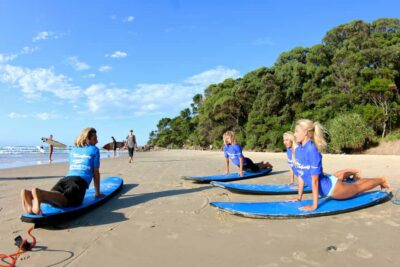
- Warm-up and beach basics
- Paddling and positioning
- Catching waves and standing
- Feedback in the water
- Surf conditions and equipment: why comfort drives learning
- Instructors and group size: how you get personal attention
- What you learn beyond standing: surf rules and beach awareness
- Price and value: is $60 a fair deal for a first lesson?
- Who this surf lesson suits best (and who should skip it)
- Practical tips so you get more out of your first 2 hours
- Should you book this Byron Bay beginner surf lesson?
- FAQ
- Where do I meet the instructor for this Byron Bay surf lesson?
- How long is the surf lesson, and how much time is actually in the water?
- What is included in the lesson?
- What should I bring with me?
- Is the lesson suitable for complete beginners?
- What is the minimum age to join?
- What group size should I expect?
- What language are the instructors?
- Are pregnant women allowed to join?
- What are the rules about intoxication?
Key reasons this surf lesson works in Byron Bay
- Max 6 surfers per instructor means more hands-on help when you’re actually on the board
- Fully licensed to surf in Byron so you stay in the area, not bused far out
- Safety briefing built into the session, including beach rules and surf basics before you paddle
- Gear that removes friction (softboard, wetsuit, rash vest, sunscreen and zinc)
- You’ll usually stand early, with instructors like Tim, Guido, Luke, Maria, and Anton known for patient, encouraging coaching
Why this Byron Bay surf lesson stays close to the action
Byron Bay is famous for surf culture, but not every lesson feels truly “in” Byron. What I like here is that you’re surfing in the heart of Byron itself, which means less time in transit and more time doing the thing you booked for. That matters when you’re a first-timer, because the less time you spend waiting, the more your nerves have less chance to freeze you.
This is also beginner-focused in a way that feels respectful of your comfort level. You’re not thrown into chaos. Instead, the session starts with basics and builds step-by-step: warm-up, paddling technique, how to catch waves, and how to get standing. Even if you start worried about falling, the flow is designed to get you moving quickly, safely, and with feedback.
The other “why it works” factor is that it’s a small group. You’re not lost in a crowd. With up to 6 surfers per instructor, you get coaching that’s specific to what you’re doing, not generic advice yelled from the beach.
Other north coast days, from the lighthouse down
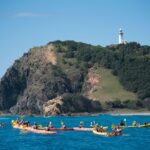
- Byron Bay: The Byron Bay Sea Kayak Tour★ 4.6 · 1,207 reviews
- Byron Bay: 2-Hour Small Group Surf Lesson★ 4.8 · 657 reviews
- Byron Bay: Glowworms, Waterfalls & Rainforest Experience★ 4.8 · 497 reviews
- Byron Bay: Behind The Bay Waterfalls & Hidden Gems Day Tour★ 4.9 · 432 reviews
Meeting at Fletcher Street, then getting suited up fast
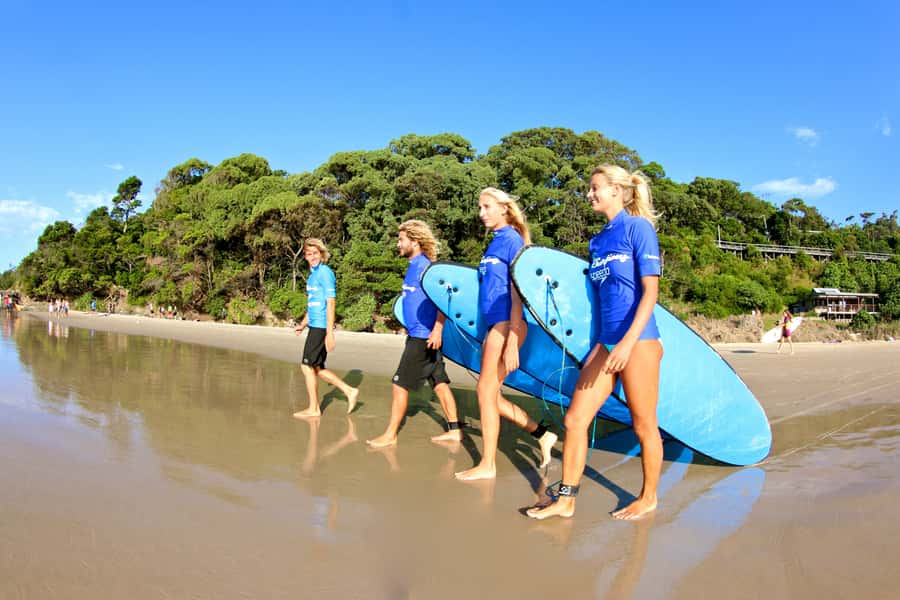
Your day starts at the Let’s Go Surfing desk at 5/11 Fletcher Street, Byron Bay. From there, you’re set up with what you need to stay comfortable and protected. You’ll get a warm wetsuit, a UV rash vest, and a soft surfboard. The soft board choice is huge for beginners, because it’s easier to paddle and more forgiving when you’re learning balance.
There are changing rooms to get you sorted without rushing. You’ll also have access to an outdoor shower afterward, which is the kind of small practical detail that makes the whole experience feel easier. If you’re thinking about where you’ll park your stuff, you also get security for personal belongings, so you’re not mentally juggling your wallet while you’re on the beach.
What you should bring is straightforward: swimwear, a towel, water, and sandals or flip-flops. That sounds basic, but it avoids the common problem where people show up unprepared and end up spending the session improvising instead of learning.
What happens before you paddle out: safety that you can actually use
A surf lesson is not just about waves. It’s about figuring out how the ocean works around you. This course includes safety information about the beach and the key surf rules, and that briefing is part of the reason beginners tend to do better than they expect.
You learn how to handle the ocean conditions you’ll encounter and what to watch for when you’re in the water. That includes basics like when and how to paddle out, plus rules that help you stay out of trouble with other surfers. You’re also taught important safety considerations before anyone tries to stand up and catch a wave.
This is where the small-group format helps. When you hear the safety info and then immediately see how it applies to your own paddling and positioning, it clicks faster. And if you’re nervous, instructors who are patient and motivating make a bigger difference than people expect.
The real lesson timeline: warm-up to first stand-ups
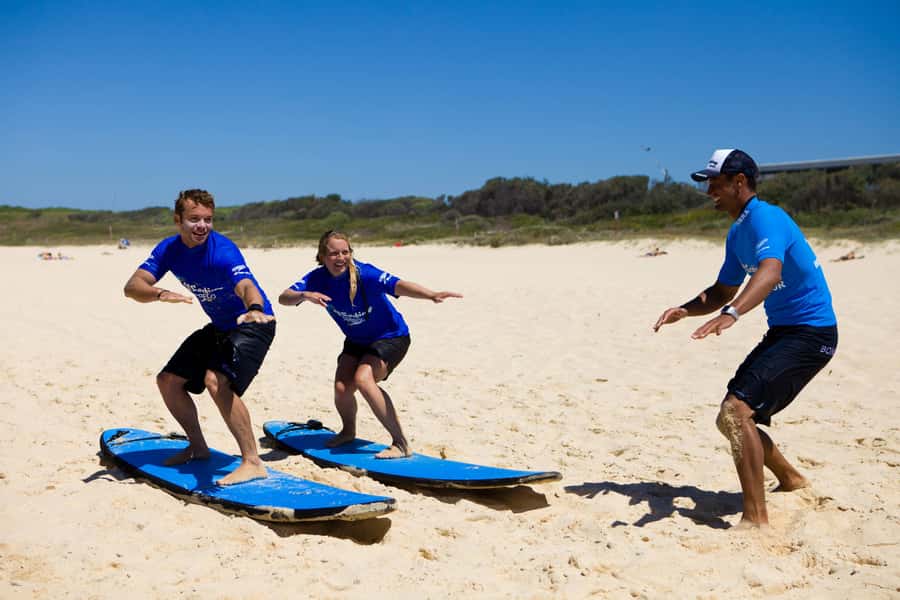
Even though the overall experience is about 3 hours, you’re getting 2 hours on the beach and in the water. That’s a strong structure for first-time surfers, because you’re not stuck on the sand for most of the day. You’ll be working on skills in a sequence that makes sense: first get comfortable moving on the board, then learn paddling, then work wave timing, and finally practice standing.
Here’s how the lesson flow typically feels from a participant point of view:
Beginner breaks and the schools that work them


Warm-up and beach basics
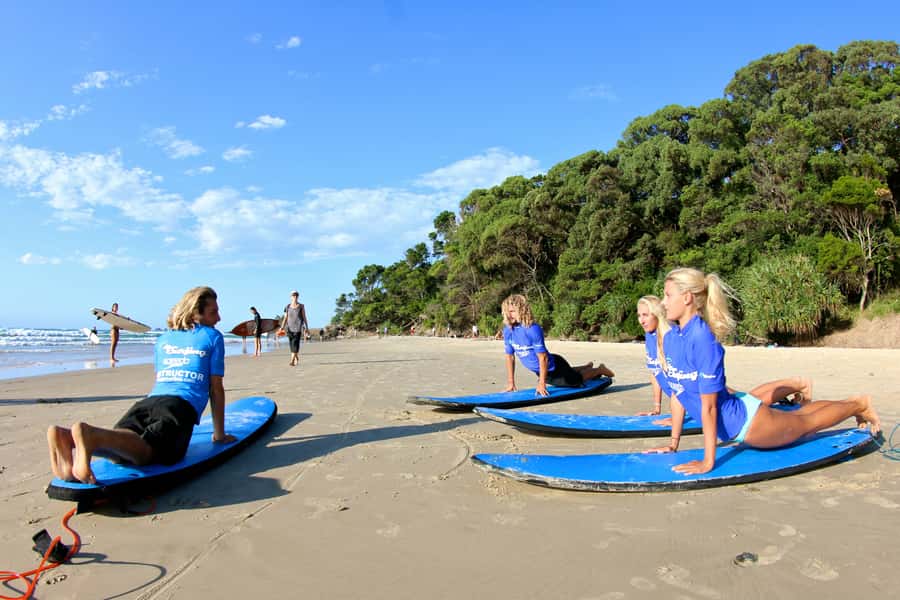
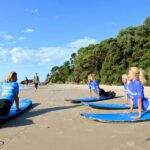
You start with a warm-up and the core briefing. The goal is to get your body ready and your brain ready. You’ll cover the basics of what to do once you’re in the water, and how to follow surf and beach rules so you stay safe.
If you’ve seen yourself overthinking, this section is also where you get your grounding. You learn what success looks like and what not to worry about yet, like standing the whole ride before you even nail the take-off.
Paddling and positioning
Next comes the work of paddling and finding the right position. For many absolute beginners, the hardest part is not the wave. It’s getting used to how the board sits in the water and how you move it without losing control.
Soft boards help here. You’ll get instruction on how to paddle, how to manage your speed and direction, and what to do when it’s time to aim for the wave.
Catching waves and standing
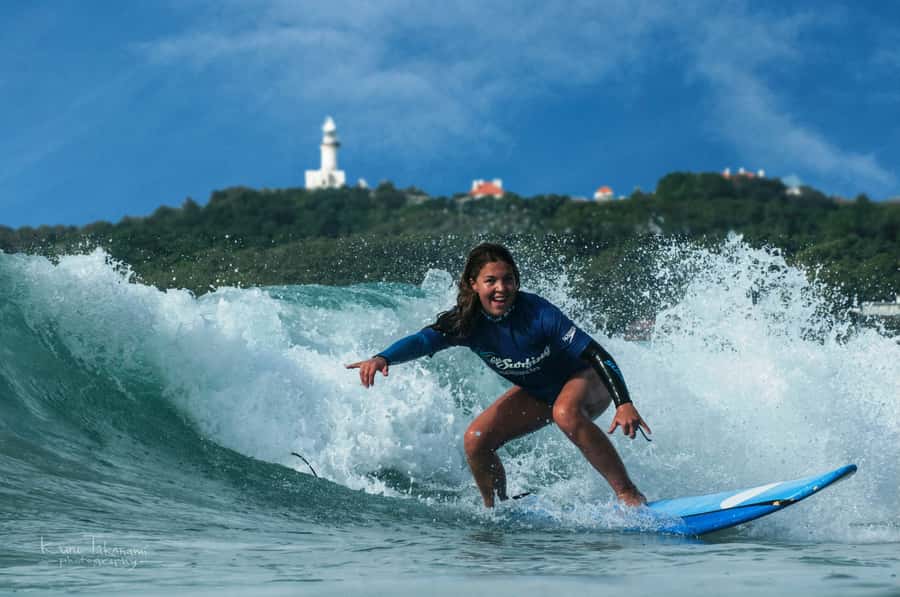
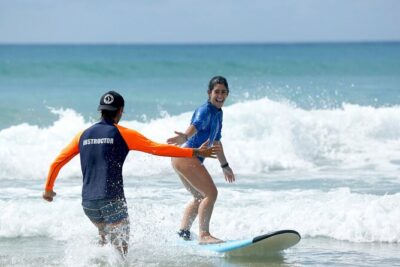
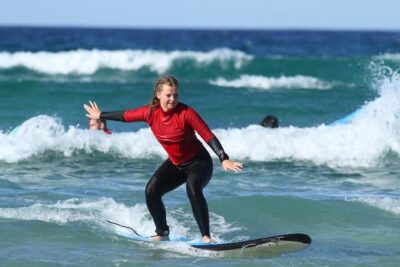
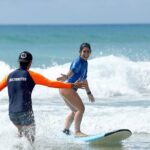
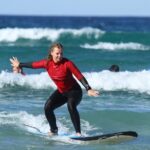
Then you practice catching waves and transitioning into a stand. This is the part that people remember, because it’s where the nervous energy turns into actual progress.
Instructors like Tim, Guido, Anton, Luke, and Maria have been praised for exactly this step: they keep the instructions clear, encourage you when you’re close, and guide you so you stand more often than you think you will on lesson one. Many participants report standing during the session, even when they arrive unsure.
Feedback in the water
A big difference between good lessons and “just go surfing” is feedback. With the instructor close enough to watch, you get corrections you can use immediately. That’s why the max group size matters so much. Your coach can spot what you’re doing wrong and adjust your technique on the next attempt.
Surf conditions and equipment: why comfort drives learning
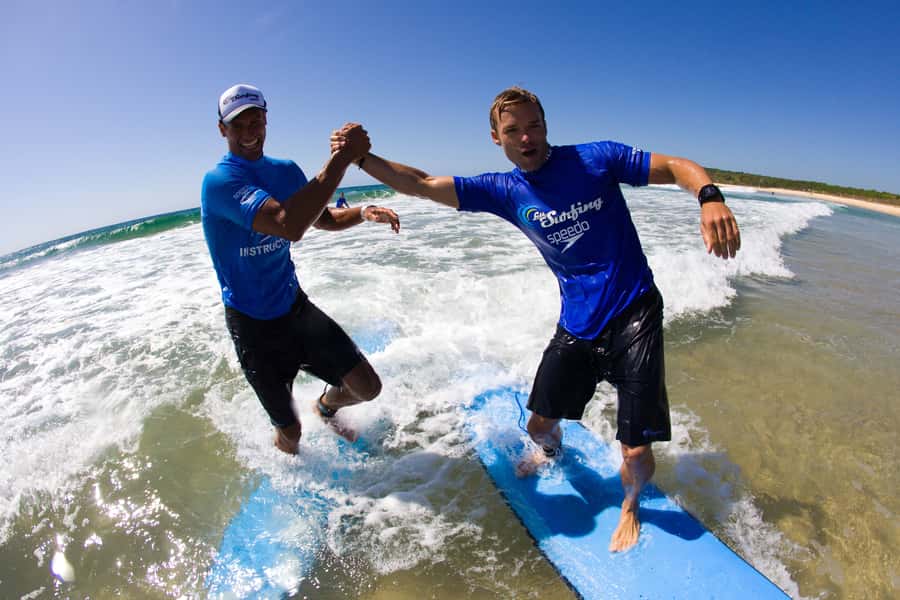
You’re surfing in warm water year-round, and the equipment is built for beginner learning. A soft surfboard reduces the learning curve. A wetsuit helps you stay warm enough that you can focus on technique, not shivering. The UV rash vest and sunscreen and zinc are also part of the setup, which means you don’t have to guess what to bring for sun protection.
This is one of those value points that sounds minor until you’re out there. If you get cold or burned, your attention drops. Comfort keeps you practicing instead of withdrawing.
If you’re wondering about “what about towels and swimwear,” the lesson does not include those. It’s on you to pack a towel. Swimwear too, because you’ll be suiting up for the water.
Instructors and group size: how you get personal attention
This course runs with qualified instructors, including both local and international coaching talent. What you feel in the water is the coaching style. Many first-time surfers don’t need more waves. They need clearer cues and patient correction.
The lesson limits group size tightly, with maximum 6 surfers per instructor (and a maximum group size noted as 10 participants). That ratio is what allows instructors to do the kind of hands-on guidance that helps beginners get standing without guessing.
You may meet instructors who have been praised for specific teaching strengths. For example, some sessions include coaching by people like Tim or Guido for encouragement and patience, Luke or Maria for calm, clear feedback, and Anton or other guides for putting first-timers at ease. Even if your instructor is different, the consistent theme is supportive instruction that helps you progress within the 2-hour session.
What you learn beyond standing: surf rules and beach awareness
One reason this kind of beginner lesson is worth it in Byron Bay is that you leave with more than a photo-worthy ride. You learn the basics that keep you from feeling clueless on your own later.
The course includes safety information about the beach and important surf and safety rules, so you get a framework for thinking about currents, spacing, and safe behavior. One of the best outcomes is when you realize you now understand how the surf zone works, not just how to stand.
That’s also why it’s offered as a refresher for people with prior experience. If you’ve surfed once or twice and felt unsure, this kind of structure can clean up your habits fast.
Price and value: is $60 a fair deal for a first lesson?
At $60 per person for 2 hours in the water, the pricing feels geared toward real skill practice, not sightseeing. You’re paying for instruction plus equipment plus safety coaching. And because it’s small group and built for beginners, you’re more likely to get multiple wave attempts and useful feedback during the session.
A lot of surf experiences end up being expensive because you spend time waiting, watching, or traveling. This one is designed to keep you close to the water in Byron Bay, so your money translates into actual practice time.
If you’re comparing options, think about what you’d pay if you had to rent a full kit and hire instruction. Here, the lesson includes the soft board, wetsuit, rash vest, sunscreen, and changing facilities. That’s part of the value equation.
Who this surf lesson suits best (and who should skip it)
This lesson is built for beginners and people who want a refresher, from first-timers through return surfers who want structure. It’s great if you want a guided way to learn in Byron Bay without long logistics.
It’s not suitable for children under 12, and pregnant women aren’t included in the suitable participant list. If you fall into either category, you’ll need another activity that matches your needs.
If you’re traveling solo, with a partner, or as a family group, the small group setting can be a plus because it’s easier to get individual attention. Just know that you should show up ready to get active. One practical note from the experience vibe: you’ll likely be tired afterward, because paddling and balance work adds up quickly.
Practical tips so you get more out of your first 2 hours
If you want to maximize your odds of standing and catching waves, do the basics well.
- Bring your swimwear and towel, plus sandals or flip-flops for moving around comfortably.
- Wear or pack a simple routine for sun protection, since sunscreen and zinc are provided, but you’ll still want to manage your own comfort.
- Drink water before you go. You’re in warm conditions and you’ll work harder than you expect.
- Don’t overthink the first attempt. The lesson is structured to help you learn in small steps.
Also, if you’re worried about safety, good. That concern is normal. Pay attention during the safety briefing. Then let the instructor guide you on each attempt. When you treat the lesson like a skill class, you’ll progress faster.
Should you book this Byron Bay beginner surf lesson?
I’d book this if you want a beginner-friendly surfing start with small-group coaching, safety rules that actually make sense, and equipment that removes friction. It’s also a good choice if you’re short on time in Byron Bay and don’t want a long travel detour.
You might skip it if you’re outside the age 12+ range or if you’re pregnant. And if you hate water activities or you know you won’t show up ready to work, you’ll likely feel frustrated.
If your goal is simple, learn to surf in Byron Bay with real instruction and a high chance of getting into the action, this hits the mark.
FAQ
Where do I meet the instructor for this Byron Bay surf lesson?
Meet your instructor at the Let’s Go Surfing desk located at 5/11 Fletcher Street, Byron Bay, NSW, Australia.
How long is the surf lesson, and how much time is actually in the water?
The lesson duration is 2 hours. The experience is described as 3 hours total, with 2 hours on the beach and in the water.
What is included in the lesson?
Included items are a soft surfboard, warm wetsuit, UV rash vests, sunscreen and zinc, changing rooms, security for personal belongings, and an outdoor shower.
What should I bring with me?
Bring swimwear, a towel, sandals, water, and flip-flops.
Is the lesson suitable for complete beginners?
Yes. It’s designed for absolute beginners and also works for people who want a refresher.
What is the minimum age to join?
The minimum age is 12 years old.
What group size should I expect?
The small-group format is limited to a maximum of 10 participants, and there is maximum 6 surfers per instructor.
What language are the instructors?
Instructors speak English.
Are pregnant women allowed to join?
No, it’s listed as not suitable for pregnant women.
What are the rules about intoxication?
Intoxication is listed as not allowed.
Beginner Breaks


North Coast, Beyond the Lighthouse




Added lately from Byron Bay
- Byron Bay: Sunrise Hot Air Balloon Flight with Breakfast
★ 4.5 · 53 reviews - Style Surfing Byron Bay
★ 5.0 · 66 reviews - 2-Night Byron Bay Surf Camp
★ 5.0 · 68 reviews - Private Surf Lessons Kool Katz 1 Day
★ 4.5 · 70 reviews - Byron Bay: Nguthungulli Julian Rocks Snorkeling Tour
★ 4.7 · 80 reviews - Byron Bay Wildlife Safari
★ 5.0 · 81 reviews
Byron Bay & the NSW North Coast, compared.
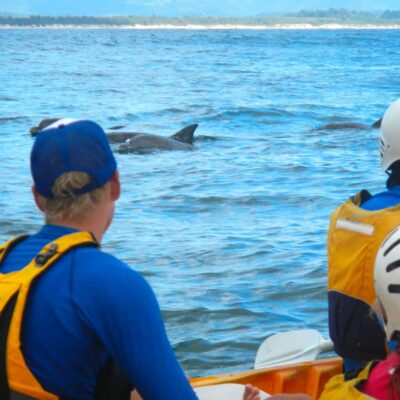 ★ 4.6Byron Bay: The Byron Bay Sea Kayak TourFrom $631,207 reviews
 ★ 4.8Byron Bay: Glowworms, Waterfalls & Rainforest ExperienceFrom $91497 reviews
 ★ 4.9Byron Bay: Behind The Bay Waterfalls & Hidden Gems Day TourFrom $91432 reviews
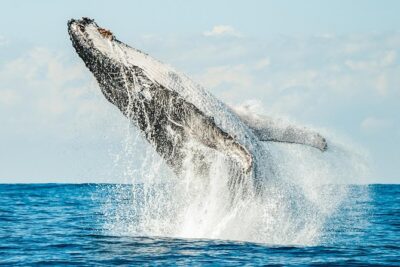 ★ 5.0Premier Whale Watching Byron BayFrom $92413 reviews
 ★ 4.5Kayaking with Dolphins in Byron Bay Guided TourFrom $63384 reviews
 ★ 4.5Byron Bay: Snorkelling Tour of Julian Rocks “Nuthungulli”From $91357 reviews
 ★ 5.0Behind The Bay – Explore Like a Local: Waterfalls/paddleboardingFrom $92275 reviews
 ★ 4.8Byron Bay: Whale Watching Cruise with a Marine BiologistFrom $91261 reviews
Browse the lists this tour appears in