
REVIEW · SURF LESSONS & SURF CAMPS
Miami: Group Surf Lesson
First wave jitters can be a good thing. This group surf lesson on the Gold Coast pairs small group coaching with hands-on beginner technique, so you are not just watching from the shore. I also love that you get photos of your highlights, which makes the whole day feel like more than a quick try. One thing to plan for, you get yourself to the meeting point, and the exact beach can change based on surf conditions.
The session runs 150 minutes and is led by fully accredited, qualified instructors in English, Spanish, or French. If you were hoping for a confidence boost, the vibe here is patient coaching and practical feedback, with instructors like Luke, Ted, Alex, and Gabriel getting mentioned often for encouraging first-timers. And yes, the promise is a 100% stand-up rate, though real waves still follow real weather.
In This Review
- Key points that matter before you go
- Gold Coast surf starts at Tallebudgera Surf Club
- Packing list, beach rules, and what the lesson actually provides
- How the 150 minutes work for true beginners
- Beginner waves and the day-to-day beach choice
- Coaching that gets you standing: patience and practical feedback
- Photos, sunscreen, and dolphin or whale spotting add real value
- Value check: is $46 a smart deal?
- Who should book this Gold Coast surf lesson
- Should you book this Gold Coast group surf lesson?
- FAQ
- Where is the meeting point for the surf lesson?
- How long is the surfing experience?
- What should I bring with me?
- What is included, and what is not included?
- What languages do the instructors speak?
- Is there a minimum number of participants?
- What are the cancellation and pay-later options?
Key points that matter before you go
- Small group surf coaching keeps the feedback coming, not the waiting.
- Beginner-focused conditions help you get moving fast.
- You get photos afterward, so you can actually remember the wave details.
- All gear is included, plus sunscreen.
- The experience also includes dolphin and whale spotting time.
- The exact beach may change day to day depending on conditions.
Gold Coast surf starts at Tallebudgera Surf Club
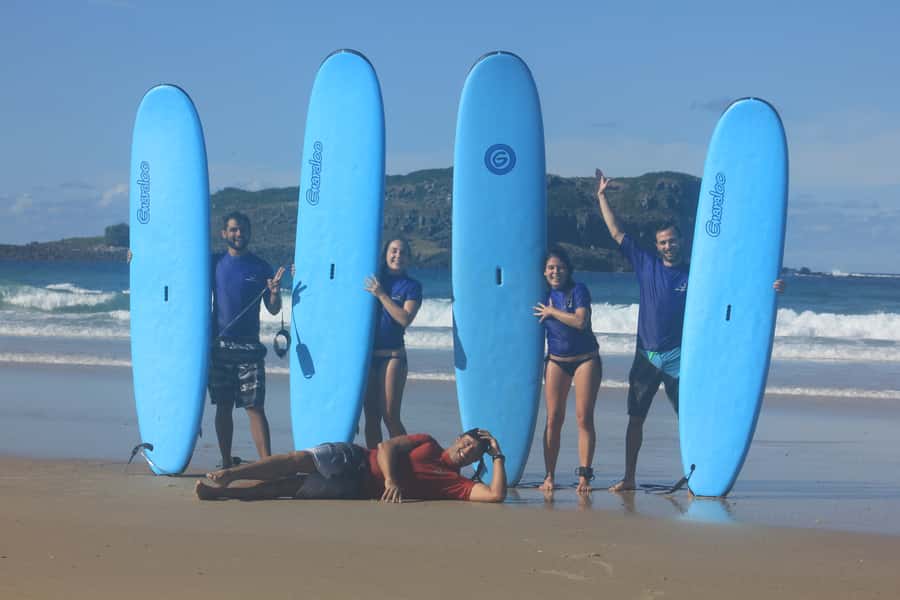
You meet your group at the surf van parked outside the Tallebudgera Surf Club entrance. That detail matters because this is not a hotel pickup kind of day. If you are staying in the area, cool. If you are coming from farther out, build in extra buffer time for the drive and parking.
One practical tip from the way people talk about their day: show up early enough to find parking without stress. People who had a smooth start tended to arrive with time to spare, not sprint in at the last second.
If you are new to the Gold Coast surf scene, Tallebudgera is a solid starting point because it is close to the type of shoreline where beginners can learn without feeling like they are thrown into the deep end. Still, remember the surf world is weather-dependent. The instructors will choose the exact beach based on the day’s conditions, so you are going with the flow.
Bottom line for logistics: be ready to handle your own arrival, and treat the beach location as a flexible variable, not a fixed destination.
Beginner breaks and the schools that work them
- Miami: Group Surf Lesson★ 4.8 · 146 reviews
- Surf Lesson on the Gold Coasts locals Favourite beach (Ages 14+)★ 5.0 · 99 reviews
- 2 Hour Surf Lesson At The Spit, Main Beach (Ages 14+)★ 5.0 · 83 reviews
- Learn to Surf at Coolangatta on the Gold Coast★ 5.0 · 74 reviews
Packing list, beach rules, and what the lesson actually provides
This lesson is built around simple prep. Bring swimwear, a towel, and comfortable clothes for before and after your water time. You do not need to bring a board or wetsuit since all equipment is included.
A couple of rules keep things safe and fair for the group. Alcohol and drugs are not allowed. That is a good sign if you are learning, because it keeps the energy focused and the instruction clear.
Since sunscreen is included, you can skip the last-minute scramble for SPF. Still, if you burn easily, you might want to top up with your own skin comfort products when you arrive. The lesson will take care of sunscreen, but your skin is personal.
Also note the group structure. The lesson requires a minimum of 4 participants. If you book and turn out to be one of only a few, the activity may not run. It is rare in peak surf seasons, but it is worth checking your confirmation details for what happens in your specific booking situation.
How the 150 minutes work for true beginners
This is a 2-hour surf lesson in the water plan, and the total duration is listed as 150 minutes. That means you are looking at a tight, action-focused flow with minimal downtime.
Here is what the day tends to feel like, step by step:
1) Meet, gear up, and get set with the right basics
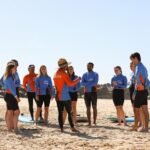
You start at the surf van, where you connect with the instructor and get your equipment. Instructors are English, Spanish, or French speakers depending on the group. Expect a warm-up that focuses on what to do before you even paddle out.
2) Technique and positioning coaching
For first-timers, the biggest wins usually come from two things: where you place yourself and how you paddle. The instruction style here is built for beginners, with tips that help you get to the beach and then translate that into catching a wave.
3) Time in the water with direct feedback
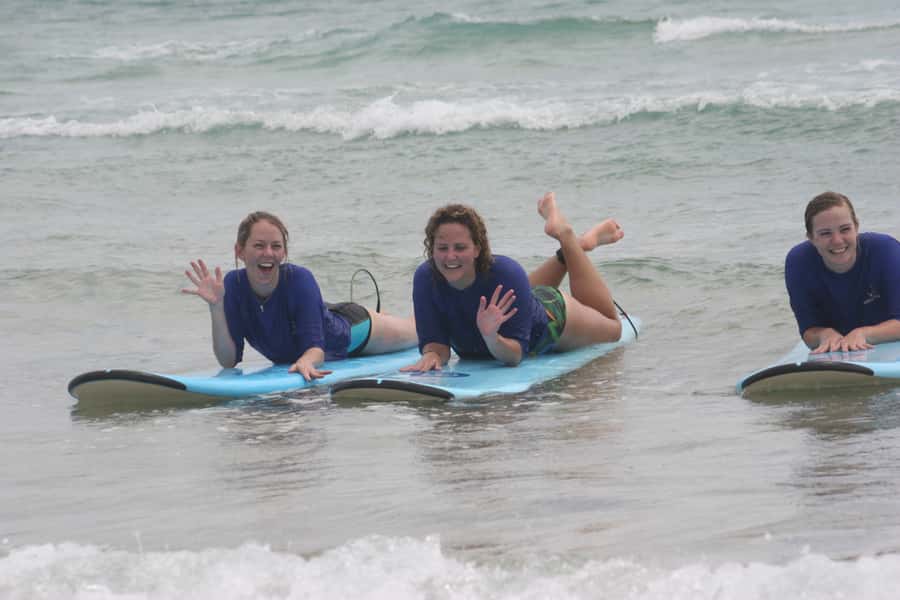
You are not stuck behind a lecture. You are in the ocean, practicing. One of the most praised elements is that instructors stay patient and give real, specific feedback. People mention that everyone in the group got chances to stand up, and some sessions had two instructors, which means more individual attention and faster corrections.
4) Wrap-up, stand-up success, and your photo moment
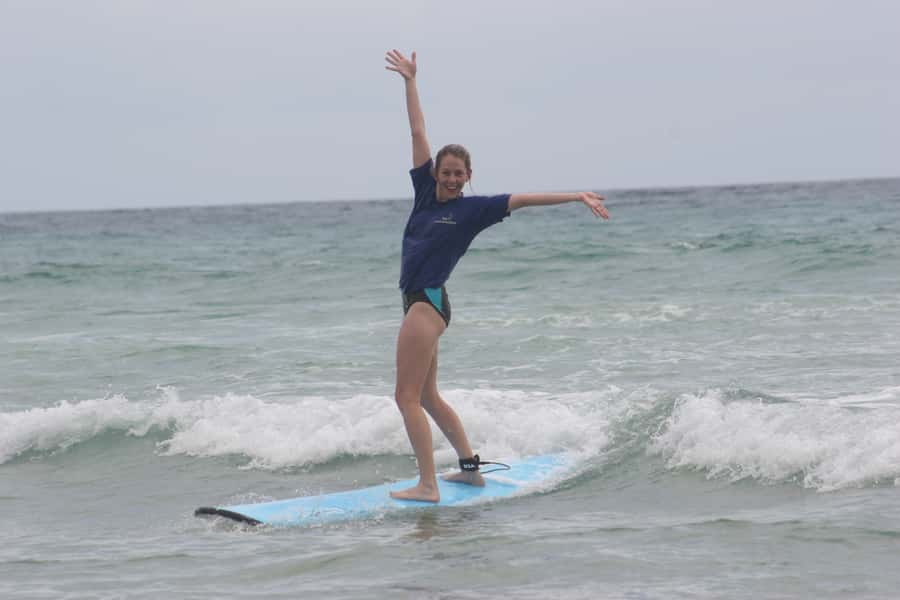
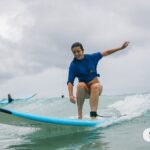
The provider emphasizes a 100% stand-up rate. Even with waves varying day to day, the coaching and safety approach are clearly designed to push beginners toward success. After the water time, you get your photos, which is a smart touch because your brain is busy during the session. Having images later helps you remember what you did right.
5) Extra wildlife time
This lesson also includes dolphin and whale spotting. The format is not spelled out minute by minute, but it is built in as part of the experience, so you get more than just surf.
Beginner waves and the day-to-day beach choice
The exact beach is decided based on conditions on the day. That sounds vague, but it is actually how good beginner instruction stays safe. If the swell, wind, or currents are not right for learning, the team adapts.
In practice, this is what you should expect:
- You are going to the Gold Coast with beginner-friendly goals.
- The instructor chooses the shoreline option that makes wave-catching more realistic.
- If conditions are less ideal, you may spend more time practicing the fundamentals rather than forcing wild attempts.
People mention a bit of a pot-luck vibe in wave conditions, and that is normal. The ocean does not do schedules. Still, the lesson format is geared toward catching waves and standing up, not just walking the board in the shallows for two hours.
One more thing to keep in mind: you are learning technique, not chasing a perfect postcard wave. When your day is built around skill, not hype, you usually leave happier even if the ocean is moody.




Coaching that gets you standing: patience and practical feedback
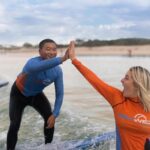
This is where the praise is concentrated. The overall pattern in the positive feedback is consistent: instructors are professional, friendly, and patient. They focus on making the lesson fun while still keeping you safe in the surf.
You will also get more than one kind of help. Good beginner coaching usually combines:
- Safety cues (so you know what to do when waves move fast)
- Clear instructions (so you know exactly what to adjust)
- Encouragement (so you do not freeze when something does not work immediately)
Names that show up in past lessons include Luke, Ted, Alex, Gide Luke, and Gabriel. People specifically call out instructors who explain things well before you go in, and who stay in the water long enough to help you catch a wave.
If you are wondering what kind of learner you are, this lesson tends to suit a wide range. If you want confidence, the supportive tone helps. If you want structure, the instruction style is straightforward and focused on technique.
The provider also states that the instructor is fully accredited and qualified. That matters because surf coaching is equal parts athletic skill and risk management. You want someone who can read the ocean and manage a group without turning the lesson into chaos.
Photos, sunscreen, and dolphin or whale spotting add real value
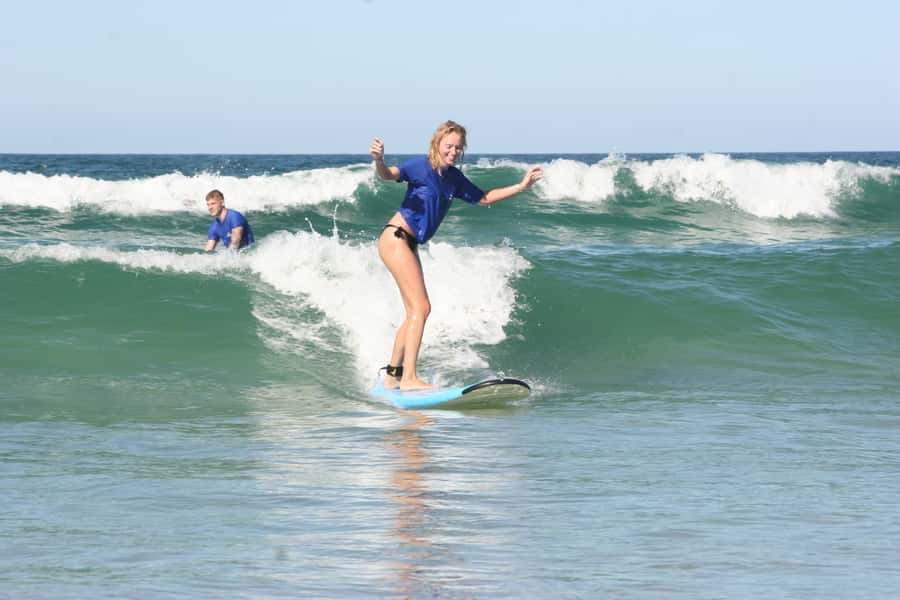
At $46 per person, the price can look low compared to “surf tours” that mostly feel like transportation with a quick dip. Here, the extra inclusions make the lesson feel more complete.
What you get:
- Photos of your surfing highlights
- All equipment
- Sunscreen
- Dolphin and whale spotting
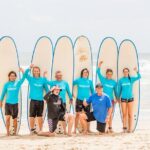
The photo part is especially worth calling out. Several people mention receiving lots of cool photos after the session, which helps if you are one of those people who forgets every wave detail the moment you stand up. Photos also justify the effort of a surf lesson. If you capture that first success on camera, you are more likely to want to return and keep improving.
Sunscreen being included is also practical. Surf days burn fast, and it is annoying to realize too late you forgot SPF. With sunscreen provided, you start protected and can focus on learning.
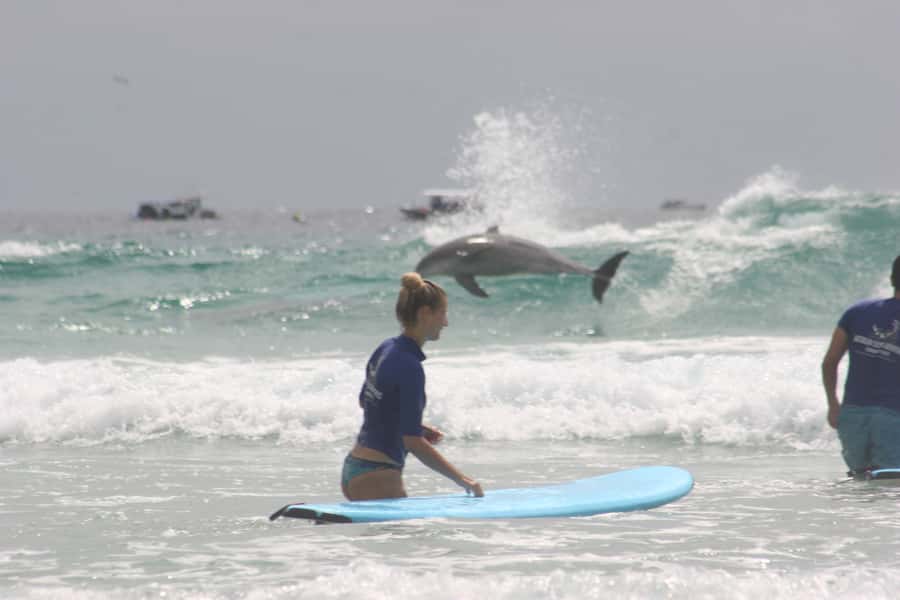
The dolphin and whale spotting adds variety without pretending it is guaranteed. Wildlife shows up when it wants to, but the fact that the experience includes dedicated spotting time is a nice bonus for anyone who loves the coast beyond the surf break.
Value check: is $46 a smart deal?
Let’s talk value in plain terms. $46 for a beginner surf lesson is strong because you are paying for instruction time, equipment, and the full learning setup. You are not paying just to stand on a beach and watch someone else.
Here is why it feels like a good deal for many first-timers:
- You get a true skill start, not a casual photo shoot.
- All equipment is included, so you avoid rental costs.
- You leave with photos, which raises the payoff for the day.
- The group format supports learning, especially if your group is small and you get feedback quickly.
The main tradeoff is that you have to get yourself there, since hotel pickup and drop-off are not included. If you need transportation, factor that into your real total cost.
Food and drinks are also not included. Plan snacks or a meal around the lesson time. Don’t assume you will be able to grab something conveniently on site without checking first.
If you want a clean, beginner-friendly way to test the surf without overspending, this hits the sweet spot.
Who should book this Gold Coast surf lesson

Book it if:
- You are a first-timer who wants patient coaching and direct feedback.
- You want a group lesson that still gives you individual attention.
- You care about leaving with photos, not just sore legs.
Consider another option if:
- You cannot handle making your own way to the meeting point.
- You are looking for a luxury day with food and drinks included, since those are not part of the package.
- You hate the idea that the exact beach may change with conditions, even though that is there for safety and beginner success.
The lesson is offered with instructors speaking English, Spanish, and French, so language support is built in. That helps a lot when you want to understand technique cues the first time.
Should you book this Gold Coast group surf lesson?
If you want a beginner surf day that actually teaches you something, this is an easy “yes.” The best part is the combination of beginner-focused coaching, small-group attention, and the practical extras like photos and wildlife spotting.
I would book this if you are comfortable showing up at Tallebudgera Surf Club on your own, bring swimwear and a towel, and want that first standing moment. You will likely remember it more clearly when you get the photos later.
FAQ
Where is the meeting point for the surf lesson?
Meet your tour at the surf van parked outside the Tallebudgera Surf Club entrance.
How long is the surfing experience?
The lesson is listed as 150 minutes total duration, with a 2-hour surf lesson included.
What should I bring with me?
Bring swimwear, a towel, and comfortable clothes.
What is included, and what is not included?
Included are the 2-hour surf lesson, photos, all equipment, sunscreen, and dolphin and whale spotting. Not included are hotel pickup and drop-off, and food and drinks.
What languages do the instructors speak?
The instructor languages listed are English, Spanish, and French.
Is there a minimum number of participants?
Yes. Surf lessons require a minimum of 4 participants.
What are the cancellation and pay-later options?
You can cancel up to 24 hours in advance for a full refund. You can also reserve now and pay later, so you can book your spot and pay nothing today.
Beginner Breaks
Added lately from Gold Coast
- Gold Coast: Sea World Cruise & Entry Combo Ticket
★ 4.5 · 20 reviews - TreeTop Challenge Currumbin Wildlife Park
★ 5.0 · 21 reviews - Hot Air Balloon Flight Brisbane with Vineyard Breakfast
★ 5.0 · 21 reviews - Wave Break Island Snorkel Tour on the Gold Coast
★ 4.0 · 23 reviews - Gold Coast: 30 min Jet Ski Hire – No Slow Zones
★ 4.0 · 23 reviews - Gold Coast: Hot Air Balloon Flight and Vineyard Breakfast
★ 5.0 · 24 reviews
Surf Lessons & Surf Camps, compared.
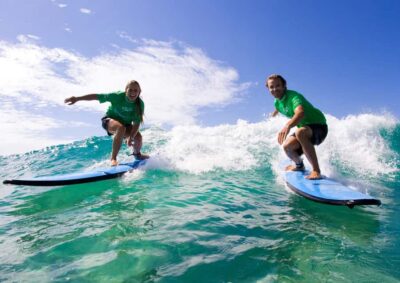 ★ 4.9Bondi Beach: 2-Hour Surf Lesson Experience for Any LevelFrom $70935 reviews
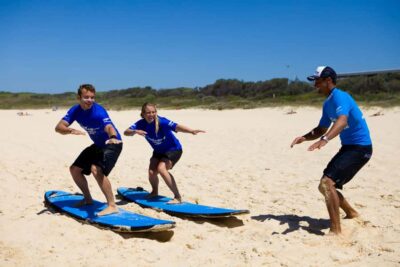 ★ 4.8Byron Bay: 2-Hour Small Group Surf LessonFrom $60657 reviews
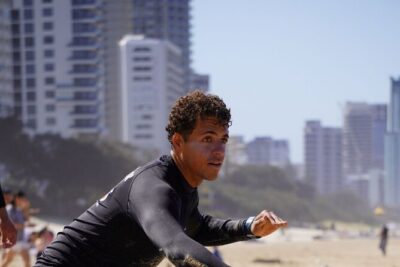 ★ 5.0Learn to Surf at Surfers Paradise on the Gold CoastFrom $60491 reviews
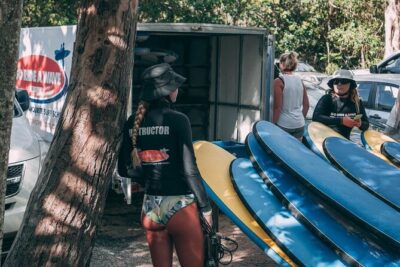 ★ 5.0Learn to Surf at Noosa on the Sunshine CoastFrom $60277 reviews
 ★ 5.02 Hour Ultimate Learn to Surf AdventureFrom $46235 reviews
 ★ 4.5Half Day Surf LessonFrom $56234 reviews
 ★ 5.0Merrick’s Noosa Learn to Surf: 2 Hour group surfing lessonFrom $60222 reviews
 ★ 4.7Sydney: Maroubra Surf LessonFrom $60188 reviews
Browse the lists this tour appears in