
REVIEW · PORT ARTHUR HISTORIC SITE
Port Arthur: Cape Raoul Wilderness Cruise
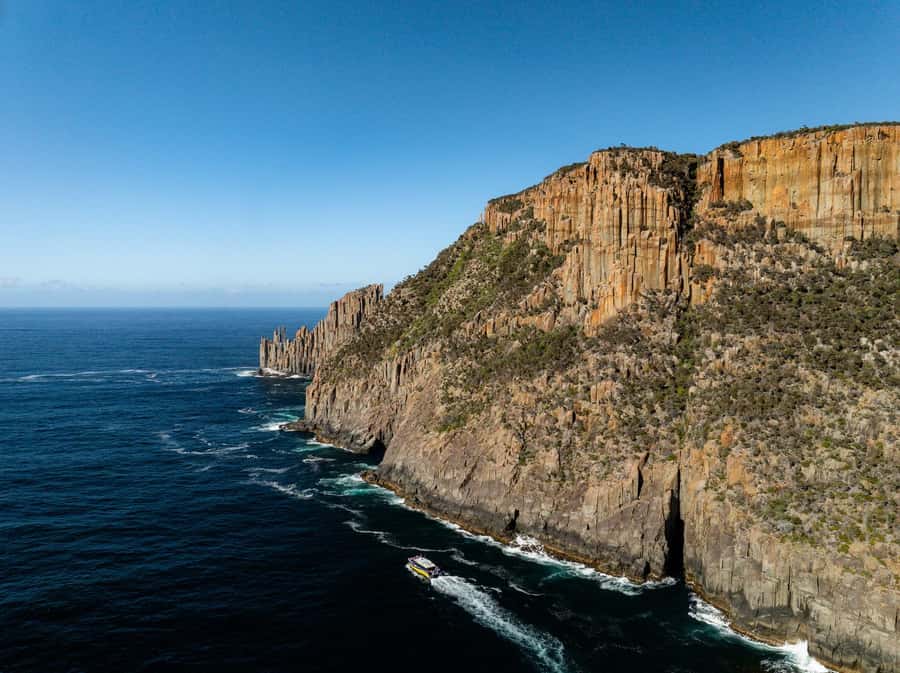
Cliffs that rise like they mean it. This 90-minute Port Arthur cruise takes you along the Tasman Peninsula for dramatic cliffs, sea caves, and the towering dolerite columns of Cape Raoul, with wildlife spotting built into the ride. I especially like how the guide helps you read the coastline, not just stare at it, and I love that you get both geology and wildlife without needing a long hike.
The one thing to plan for is boat movement. If the swell is up, expect a choppier ride, and the cruise includes guidance that motion sickness medication is recommended for anyone prone to seasickness.
In This Review
- Key takeaways before you go
- Cape Raoul dolerite columns: the main reason to pick this cruise
- Port Arthur Jetty start: timing, the ride length, and what to pack
- Cliffs, caves, arches, and the Tasman Peninsula sweep
- Point Puer and Isle of the Dead: history you can see from the water
- Safety Cove and Crescent Bay: the white-sand contrast
- Wildlife spotting that’s built into the route
- How the local guide changes the experience
- Value for $92: is it worth it for your Tasmania plan?
- Should you book the Port Arthur, Cape Raoul Wilderness Cruise?
- FAQ
- How long is the Port Arthur: Cape Raoul Wilderness Cruise?
- Where does the cruise depart from?
- Do I need entry to Port Arthur to join the cruise?
- What wildlife might I see on the cruise?
- What should I bring?
- Are food and drinks included?
- Is smoking allowed?
Key takeaways before you go
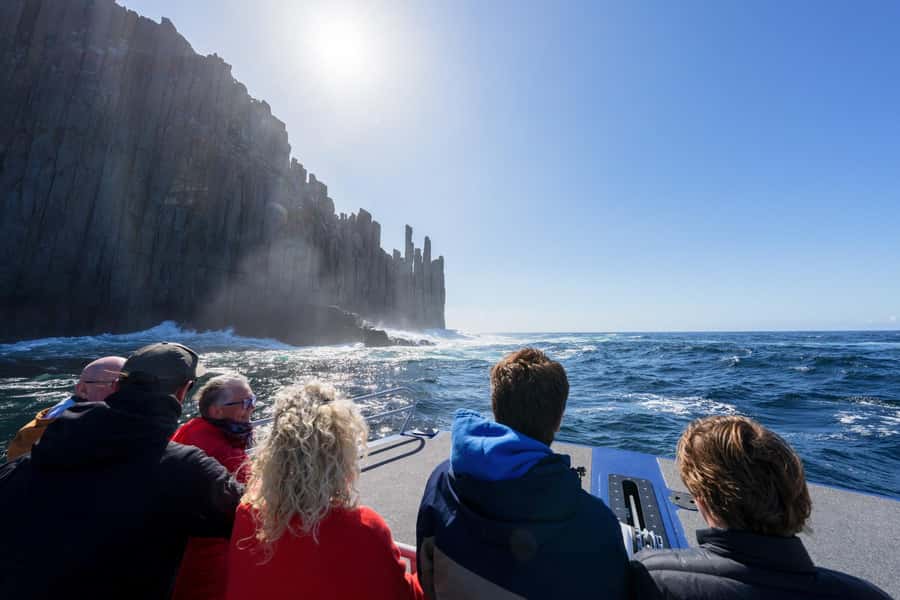
- Cape Raoul’s columnar dolerite: sheer cliffs rising over 250 meters and said to be around 170 million years old.
- A fast, focused 90 minutes: you see cliffs, caves, arches, and beaches in a short window.
- Wildlife is not just a bonus: fur seals at the base of the cliffs, plus chances for dolphins, seabirds, and migrating whales.
- You cruise past Port Arthur’s history: Point Puer and Isle of the Dead are on the route.
- Two beach moments: Safety Cove’s white sand and Crescent Bay’s tall dunes.
- Bring layers: weather can change quickly, and you’ll want warm clothing on the water.
Cape Raoul dolerite columns: the main reason to pick this cruise
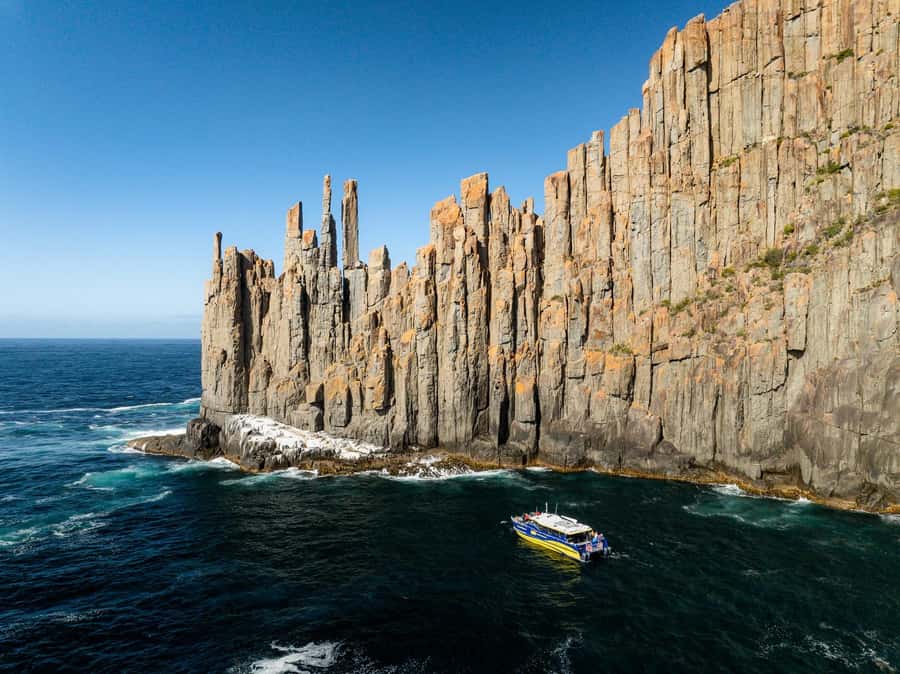
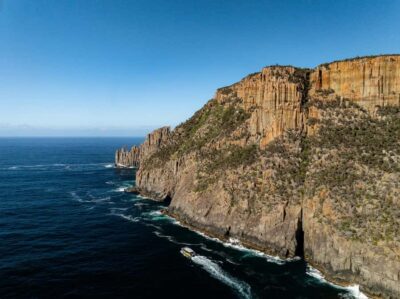
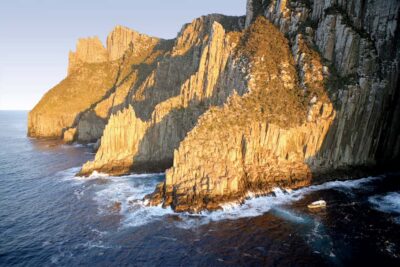
The heart of this trip is Cape Raoul, and it hits you in a very physical way. You’re not looking at a gentle coastline from a flat viewpoint. You’re cruising close enough to appreciate how sheer those cliffs are, with columnar dolerite rising from the ocean edge and stretching upward over 250 meters.
What makes this more than just pretty scenery is the scale and the age. The cliffs are described as being around 170 million years old, and when you see the vertical rock columns stacked in patterns, it’s easier to understand why geologists get excited about this part of Tasmania. The guide’s job is to help you spot what you’re seeing from the boat, so you come away with a mental map, not just photos.
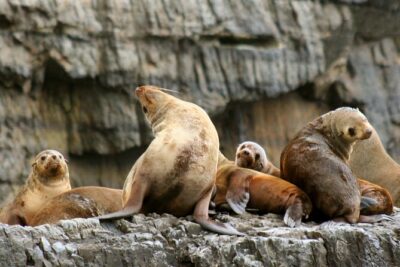
This is also where you’ll likely spot the most fun wildlife. The base of the cliffs is a hangout zone for cheeky Australian fur seals, often lounging where the water laps right below them. It’s the kind of sight that makes you automatically look up from the phone and pay attention, because the animals seem completely unbothered by your presence.
If you’re the type who loves “real nature” over staged viewpoints, Cape Raoul is exactly that. You’re seeing a working coastline, shaped by wind, waves, and time.
Convict ruins on the peninsula, other visits
- From Port Arthur: Tasman Island Wilderness Cruise★ 4.9 · 704 reviews
- Port Arthur Historic Site Admission and Tour Options★ 4.8 · 509 reviews
- Port Arthur Historic Site [official]★ 4.5 · 288 reviews
- Tasman Peninsula Wilderness Cruise from Port Arthur★ 5.0 · 285 reviews
Port Arthur Jetty start: timing, the ride length, and what to pack
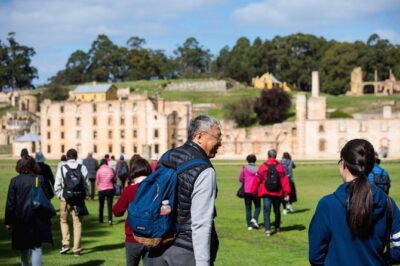
This cruise departs from the Port Arthur Jetty, located inside the Port Arthur Historic Site. One important practical point: you need entry to Port Arthur to do this activity. If you’re planning to combine things, it works well, because you can spend time at the historic site and then walk over for your cruise.
The duration is 90 minutes. That’s a sweet spot. It’s long enough for a proper circuit past the main coastal highlights, but short enough that you’re not stuck on the water all day. It also helps if you’re traveling with kids or anyone who doesn’t love long tours.
Start time matters because weather matters here. The advice is to check conditions and wear layers, since the breeze on the water can feel much colder than you expect. Bring a hat, sunscreen, and comfortable clothes. I’d also pack a camera because the coastline has too many angles to “save for later.”
If you’re sensitive to motion, plan ahead. The cruise specifically notes that motion sickness medication is recommended for those prone to seasickness. That’s not a suggestion you ignore. Even when the scenery is great, discomfort can steal the experience.
Also note that food and drinks are not included, and there’s no hotel pickup or drop-off. So treat this as a ticketed ride that you’ll build into your Port Arthur day, not a full-service excursion with meals.
Cliffs, caves, arches, and the Tasman Peninsula sweep
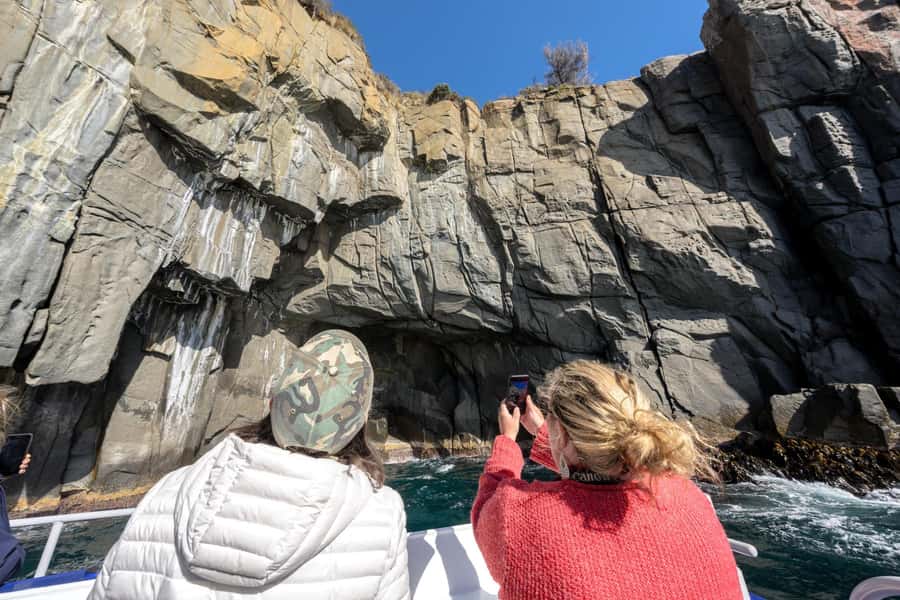
Once you’re underway, the scenery becomes a moving gallery. You’ll cruise past cliffs, caves, and arches of the Tasman Peninsula, and the “wilderness” part is real. This is rugged coastline, built for wind and spray, with rock formations that look different depending on the angle of the boat.
Caves and arches matter for two reasons. First, they give the coastline variety, so you’re not staring at the same wall of rock for the whole cruise. Second, they create natural features you can actually understand from the deck. From shore, it’s hard to judge depth and shape. From the water, it’s easier to see how the ocean has cut and carved openings into the rock.
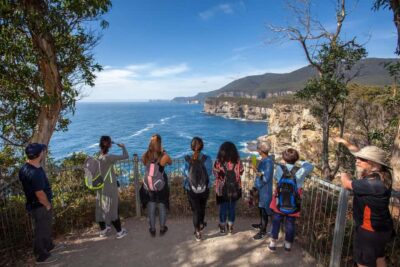
You’ll also get panoramic views across toward Cape Pillar and Tasman Island. Those wider looks are important because they break up the close-in geology. They help you orient yourself and realize you’re not just in a sheltered cove. You’re along a big, open stretch of Southern Ocean coastline.
One practical thought: if you’re prone to getting seasick, your best bet is to choose good timing with the day’s conditions. The ride is designed to show the coastline, but rougher seas can make even short cruises feel longer.
If you’re feeling adventurous, keep an eye on the waterline and the way waves hit the cliffs. That’s often where seals pop up for a quick swim, and it’s also where you’ll spot seabirds working the updrafts near the rocks.
Point Puer and Isle of the Dead: history you can see from the water
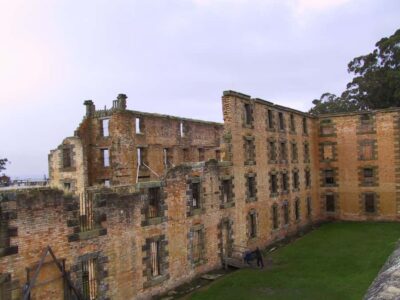
A big reason this cruise is more satisfying than a generic coastal boat trip is that it layers history into the route. You cruise past Point Puer and Isle of the Dead, both tied to Port Arthur’s past.
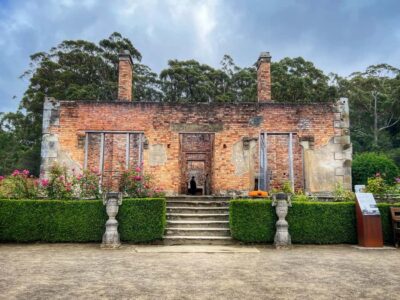
Even without getting lost in details, you can feel why these sites matter. They’re part of the same coastal geography that shaped lives and survival. From the boat, you get a clear sense of how isolated certain areas were and how the coastline influenced movement, boundaries, and daily reality.
For me, this is where the cruise earns its place as a companion to the Port Arthur Historic Site visit. If you’ve walked around on land, the names will feel more grounded. And if you haven’t, the cruise still gives you context by literally showing you the water and the views those places were connected to.
The history also adds rhythm. You go from rock formations and wildlife to human landmarks, then back to coastline. That mix keeps the 90 minutes from feeling like nonstop “look at this, look at that.”

Safety Cove and Crescent Bay: the white-sand contrast
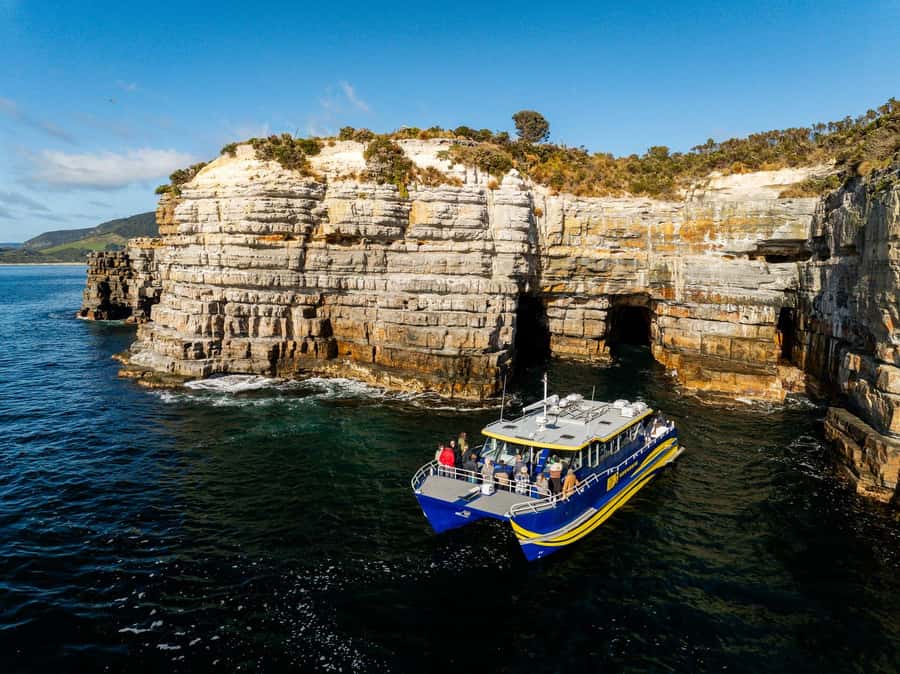
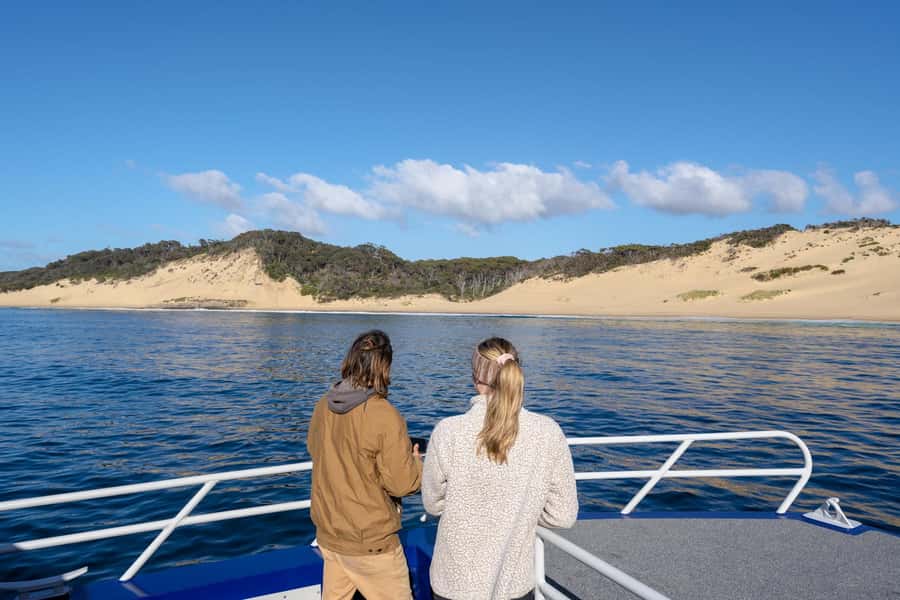
For a moment, the cruise shifts from sheer rock to beach. You’ll see Safety Cove, described with white sand, and you’ll also pass by Crescent Bay, known for its tall dunes tucked into the rugged coast.
These beach moments are more than just pretty. They provide scale. When you see sand and dunes beside massive cliff structures, it becomes obvious how dynamic this coast is. The coastline isn’t a single flat feature. It’s a system, where rock, water, and sand keep rewriting the shoreline.
Safety Cove’s white sand also makes a great photo break because it reflects light differently than the darker rock. If the weather is decent, you’ll often get clearer contrast and better color in your pictures.
Then Crescent Bay’s dunes add another texture. Tall dunes against the cliff backdrop give you that “Tasmania is rugged and different” feeling without needing to hike anywhere. You’re seeing it from the water, and that can be a big advantage if your time is limited.
If your trip aligns with good visibility, you’ll also appreciate the layered views across to other coastal points. The scenery doesn’t just sit in front of you. It stretches and repeats, with headlands and islands adding depth.
Wildlife spotting that’s built into the route
Wildlife is one of the strongest reasons to do this cruise. The good news is that the cruise isn’t vague about what you’re watching for. You’re specifically encouraged to look for seals, dolphins, seabirds, and whales.
Australian fur seals are the most likely show. They’re described as being cheeky and often lounging at the base of the cliffs of Cape Raoul. That means the best time to spot them is often when the boat is closest to the cliff face. Watch the waterline and the rock edges, not just the open sea.
Dolphins are another highlight. You may see them play in the bow wave. If you’re trying to get a photo, focus on the movement first. Dolphins can appear and vanish quickly when they decide to change direction.
Then look upward for birds. The cruise notes you may see albatrosses, white-bellied sea eagles, and other seabirds soaring above the coastline. This matters because it tells you where to aim your eyes. The action isn’t always at deck height. A lot of bird spotting here is sky watching.
Whales are a possibility too. The route includes the idea that whales can cruise the southeastern coastline during the Southern Hemisphere migration. That doesn’t mean you’ll guarantee a whale sighting, but it does mean the cruise is timed and positioned with that chance in mind.
One extra fun detail: in at least some recent departures, people have mentioned spotting climbers on vertical rock faces. You might see something like that when the conditions line up and you get a clear look at the cliffs. Even if you never do, the coastline itself gives you plenty to watch.
How the local guide changes the experience
This is a live guided cruise with an English-speaking local guide. And the guide role is key here. If you go in expecting to just sit back and stare, you might still enjoy it. But you’ll likely get more out of it if you let the guide “teach your eyes.”
The feedback on past departures points to guides who are active about pointing out geological features and wildlife as they appear. That’s exactly what you want on a short, 90-minute format. You don’t have time to wander. You need help spotting what matters and understanding what you’re looking at.
There’s also a social factor. People talk about the crew being relaxed and fun, with humor that helps break the intensity of the ocean and the seriousness of the cliffs. On rougher days, that kind of tone helps keep the experience from turning into pure discomfort.
If you’re the type who loves practical story-telling, you should be happy here. The guide can turn names like Cape Raoul, Safety Cove, and Point Puer into something you can actually picture while you cruise by.
Even if you’re not a geology nerd, you’ll likely appreciate how the crew brings the coastline into focus. That’s the difference between “a boat trip” and “I learned something and I got the photos.”
Value for $92: is it worth it for your Tasmania plan?
At $92 per person for 90 minutes, this cruise is priced like a focused, guided experience rather than a long day excursion. The value comes from three things that all align:
First, you get access to coastline features that are hard to see up close from land. Cliffs, caves, arches, and the dolerite columns are literally built for viewing from the water.
Second, wildlife spotting is integrated into the ride. Seals at the cliff base and dolphins in the bow wave are exactly the kind of “right there” encounters that make boat tours feel real.
Third, you’re pairing it with Port Arthur itself. Since you need Port Arthur entry to join, the cruise fits neatly into a day that already includes the historic site. If you’re visiting Port Arthur anyway, the boat ride becomes a strong add-on rather than an extra standalone commitment.
When it may not be the best fit: if you strongly dislike boats or you tend to get seasick even in calm conditions, you’ll need to take that seriously. The cruise’s own guidance about motion sickness is a hint. The scenery is the reward, but the ocean motion is the condition.
Who it suits best:
- You want dramatic Tasman Peninsula views without a long hike.
- You like wildlife, especially seals and seabirds.
- You’re visiting Port Arthur and want to see the coast from a different angle.
- You appreciate a short tour that packs in multiple highlights.
Should you book the Port Arthur, Cape Raoul Wilderness Cruise?
I think you should book if Cape Raoul is on your list and you want to see it the way it was meant to be seen, from the water, with a guide calling out the details and wildlife chances along the way. The combination of Cape Raoul’s towering dolerite columns, white-sand beaches, and historical stops like Point Puer gives you more variety than many single-theme tours.
Before you book, ask yourself two practical questions. One, how do you handle boat movement? If you get seasick, plan for that early, including medication as recommended. Two, are you already doing Port Arthur? If yes, this cruise fits naturally and gives you a memorable “coast view” counterpart to the land-based experience.
If you’re looking for a calm, shore-hugging sightseeing cruise only, this might be less aligned, since it’s a wilderness-style coastal ride where conditions can affect how much you see. But if you want real cliffs, real wildlife, and strong views in a compact 90 minutes, this is a smart call.
FAQ
How long is the Port Arthur: Cape Raoul Wilderness Cruise?
The cruise duration is 90 minutes.
Where does the cruise depart from?
The cruise departs from the Port Arthur Jetty, which is located within the Port Arthur Historic Site.
Do I need entry to Port Arthur to join the cruise?
Yes. Entry is required for the Port Arthur Historic Site to participate in this activity.
What wildlife might I see on the cruise?
You might see Australian fur seals at the base of the cliffs, dolphins, migrating whales, and seabirds such as albatrosses and white-bellied sea eagles.
What should I bring?
Bring warm clothing, a hat, a camera, and sunscreen, plus comfortable clothes.
Are food and drinks included?
No. Food and drinks are not included.
Is smoking allowed?
No. Smoking is not allowed.
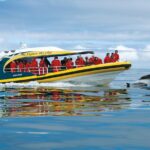
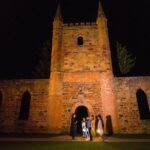
The Convict Peninsula

Added lately from Port Arthur
- Tasman Peninsula full day kayaking tour
★ 5.0 · 46 reviews - Port Arthur: Cape Raoul Wilderness Cruise
★ 4.8 · 80 reviews - Hobart: Port Arthur, Harbor Cruise and Isle of the Dead Tour
★ 4.8 · 157 reviews - Port Arthur Historic Site Ghost Tour
★ 4.2 · 173 reviews - Port Arthur Ghost Tour
★ 4.0 · 214 reviews - Tasman Peninsula Wilderness Cruise from Port Arthur
★ 5.0 · 285 reviews
Port Arthur Historic Site, compared.
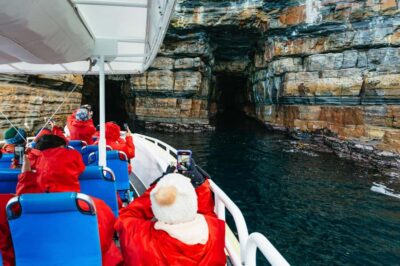 ★ 4.9From Port Arthur: Tasman Island Wilderness CruiseFrom $127704 reviews
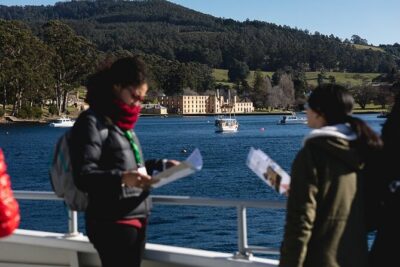 ★ 4.5Port Arthur Full-day Guided Tour with Harbour Cruise and Tasman National ParkFrom $121585 reviews
 ★ 4.8Port Arthur Historic Site Admission and Tour OptionsFrom $37509 reviews
 ★ 5.0Tasman Island Cruises and Port Arthur Historic Site Day Tour from HobartFrom $236477 reviews
 ★ 4.6Hobart: Port Arthur & Tasman Park Full-Day Trip with CruiseFrom $120442 reviews
 ★ 5.0Port Arthur and Tasman Sights with Harbour CruiseFrom $35352 reviews
 ★ 4.8Hobart: Port Arthur, Richmond & Tassie Devil – Active TourFrom $138351 reviews
 ★ 4.9Tasman Peninsula Tour, Cruise & Port Arthur Historic SiteFrom $233339 reviews
Browse the lists this tour appears in