

REVIEW · PORT ARTHUR HISTORIC SITE
Port Arthur Historic Site [official]
Port Arthur demands a full couple of days. I love the self-guided audio that helps you get your bearings fast across the grounds, and I love the 20-minute MV Marana harbor cruise with narration over the same stretches of coast that shaped convict life. The only real drawback is that you’ll be doing real walking on uneven paths, and some steps can feel slippery, so plan for solid footwear and expect weather changes.
This 2-day pass lets you move at your pace through more than 30 buildings and ruins on the Tasman Peninsula UNESCO site. You start with the audio to understand the penal colony, then you layer in the Dockyards, the convict water route, and the museum and study centre to connect the scenes you see with the people who lived there.
In This Review
- Key things to know before you go
- Port Arthur Historic Site on the Tasman Peninsula: why this place sticks with you
- Price and time: is a 2-day UNESCO pass good value at $38.01?
- Start with the self-guided audio tour: your fast track to context
- The MV Marana harbor cruise: Dockyards, Point Puer, and Isle of the Dead
- Dockyards and the soundscape: seeing 1830s shipbuilding in your head
- Convict Water Supply Trail: flour production and the real mechanics of control
- Museum and Convict Study Centre plus the Asylum and officers’ quarters
- Practical tips for a smooth day: shoes, pacing, and small comfort wins
- Should you book the Port Arthur 2-day UNESCO pass?
- FAQ
- What is included with the 2-day Port Arthur Historic Site pass?
- Does the ticket include a harbor cruise?
- Are the tickets valid for one day or two days?
- What does the self-guided audio tour cover?
- Are the site talks included, and when do they happen?
- What can I see at the Dockyards?
- Is the Museum and Convict Study Centre part of the experience?
- Can I search for family names in the records?
- Does it operate in all weather conditions?
- Are children and service animals allowed?
Key things to know before you go
![Port Arthur Historic Site [official] - Key things to know before you go](https://static2.australiatourreviews.com/wp-content/uploads/port-arthur-historic-site-official-1.jpg)
- A 2-day pass on a UNESCO World Heritage site means you can slow down and still cover the essentials
- Self-guided audio + free site talks give you background without forcing you into a rigid group rhythm
- MV Marana harbor cruise (20 minutes) adds a new viewpoint on Dockyards, Point Puer, and Isle of the Dead Cemetery
- Dockyards with a soundscape help you picture 1830s shipbuilding, not just read about it
- Convict Water Supply Trail ties water, flour production, and everyday survival together
- Museum and Convict Study Centre can help you search the prisoner database and make the story personal
Port Arthur Historic Site on the Tasman Peninsula: why this place sticks with you
![Port Arthur Historic Site [official] - Port Arthur Historic Site on the Tasman Peninsula: why this place sticks with you](https://static2.australiatourreviews.com/wp-content/uploads/port-arthur-historic-site-official-2.jpg)
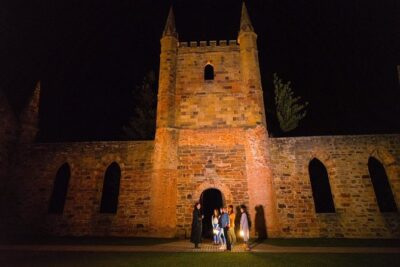
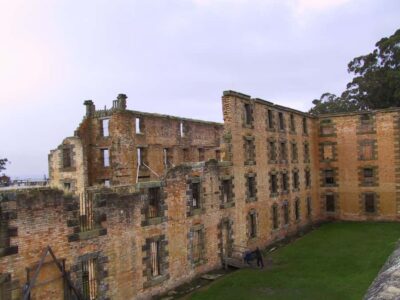
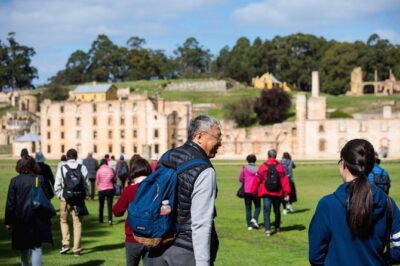
Port Arthur Historic Site sits on the Tasman Peninsula, about 90 minutes southeast of Hobart. It is one of Australia’s best-preserved convict sites, spread over 100 acres of gardens and grounds. That scale matters, because you get both the view and the context, not just a few isolated buildings.
What makes the site special is how many pieces you can connect. You can stand in ruin and then understand the system behind it, from how prisoners were housed to how labor was organized. Even if you are not a history nerd, you’ll likely feel the weight of it, and you’ll also appreciate how carefully the site is presented.
There is also a practical side. You are not locked into one guided route. The ticket format is designed so you can choose the order, which helps if you want photos first, quiet moments later, or time to really read the boards.
Convict ruins on the peninsula, other visits
- From Port Arthur: Tasman Island Wilderness Cruise★ 4.9 · 704 reviews
- Port Arthur Historic Site Admission and Tour Options★ 4.8 · 509 reviews
- Port Arthur Historic Site [official]★ 4.5 · 288 reviews
- Tasman Peninsula Wilderness Cruise from Port Arthur★ 5.0 · 285 reviews
Price and time: is a 2-day UNESCO pass good value at $38.01?
At $38.01 per person, the value is mostly about what you get across two days. You are not just buying entry to a museum room. The pass includes a self-guided audio experience, complimentary site talks during the day, access to 30-plus historic buildings and ruins, and a harbor cruise on MV Marana.
If you only have one morning, you can rush the “must sees,” but you’ll end up skimming. The site covers a lot of ground, and the audio and the trail-based areas reward time. With two consecutive days, you can do a first pass that orients you, then return to fill in whatever you found most compelling.
My advice: treat it like a half-day to three-quarter-day minimum for the core scenes. Then use day two to slow down at the buildings that grabbed you. That approach turns the pass from a ticket into a plan.
Start with the self-guided audio tour: your fast track to context
![Port Arthur Historic Site [official] - Start with the self-guided audio tour: your fast track to context](https://static2.australiatourreviews.com/wp-content/uploads/port-arthur-historic-site-official-4.jpg)
I like that the ticket encourages you to begin with the self-guided audio to orient yourself. Port Arthur can look like many separate stops at first. The audio is what stitches them into a single story, so when you arrive at a ruin or a room, you are not guessing what you are looking at.
The audio tour also sets the tone for what you’ll see later, including the penal colony background and details about prisoners’ lives. Since it is self-guided, you can pause, walk forward, and linger where you want. That flexibility is a big deal on a site where some areas involve more steps and some stretches are exposed.
If you’re the type who likes to learn while you move, the audio is your foundation. If you prefer a quiet visit, it still helps you understand why a place is arranged the way it is.
The MV Marana harbor cruise: Dockyards, Point Puer, and Isle of the Dead
![Port Arthur Historic Site [official] - The MV Marana harbor cruise: Dockyards, Point Puer, and Isle of the Dead](https://static2.australiatourreviews.com/wp-content/uploads/port-arthur-historic-site-official-5.jpg)
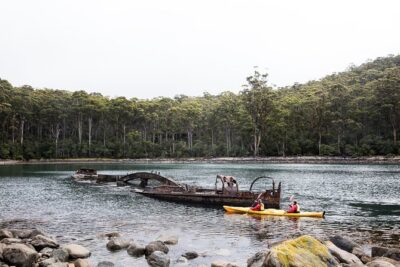
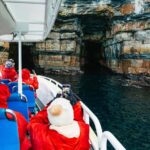
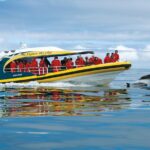
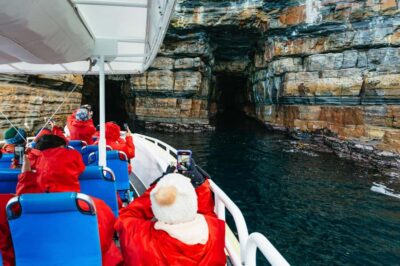
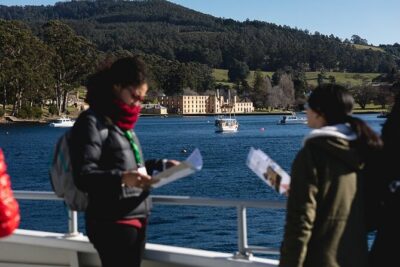
After you get oriented on land, the harbor cruise is a smart next move because it changes how you read the peninsula. Your pass includes a cruise on the MV Marana for about 20 minutes, with onboard narration.
From the water, you can view the Dockyards, Point Puer Boys Prison, Isle of the Dead Cemetery, and Tasman National Park. That last one is a reminder that this is not only a built environment. It is coastal terrain, and the setting shaped how the colony operated and how people moved.
The harbor cruise also helps you pace your day. It gives you a break from walking and gives you a “big picture” look at where the key parts sit relative to each other. If you like taking photos, this is often where the best angles happen, since the narration points out what to watch for beyond the shoreline.

Dockyards and the soundscape: seeing 1830s shipbuilding in your head
![Port Arthur Historic Site [official] - Dockyards and the soundscape: seeing 1830s shipbuilding in your head](https://static2.australiatourreviews.com/wp-content/uploads/port-arthur-historic-site-official-6.jpg)
The Dockyards are one of the most memorable sections because you get more than static ruins. Prisoners built ships here in the 1830s, and the experience is designed to bring that activity to life.
You’ll visit the Dockyards, and you can listen to a soundscape that helps recreate sounds and voices from an active yard. Even if you only catch parts of it, the effect is that you stop imagining and start picturing. You can walk the space and connect what you see with what you hear, which makes the place feel less like a collection of leftovers.
One tip for the Dockyards: don’t rush straight through. Take a few minutes to let the soundscape do its job, then go back and scan the structures as if you were watching work happen in motion. It makes the shipbuilding story land.
Convict Water Supply Trail: flour production and the real mechanics of control
![Port Arthur Historic Site [official] - Convict Water Supply Trail: flour production and the real mechanics of control](https://static2.australiatourreviews.com/wp-content/uploads/port-arthur-historic-site-official-7.jpg)
I like that the Convict Water Supply Trail turns “water” into something more than scenery. The trail connects the colony’s infrastructure, showing how water and production worked together in daily life.
As you follow the route, you learn about the flour-production operation. That matters because it shows how convict labor wasn’t only about confinement or punishment. It was also about running a working system. The “supply” part of the trail helps you understand how resources moved and why maintenance and engineering mattered to keep the colony functioning.
If you enjoy practical details, this is a great area to slow down. It also helps you absorb the site without feeling like you’re only reading dates and names. The trail format makes you walk, think, and connect.
Museum and Convict Study Centre plus the Asylum and officers’ quarters
![Port Arthur Historic Site [official] - Museum and Convict Study Centre plus the Asylum and officers’ quarters](https://static2.australiatourreviews.com/wp-content/uploads/port-arthur-historic-site-official-8.jpg)
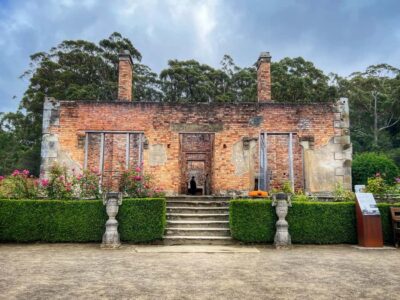
This is where Port Arthur shifts from scenes to evidence. The museum and Convict Study Centre are part of your pass, and they are key if you want the story to click from the inside.
You’ll be able to visit both spaces, including the chance to see if any ancestors appear in the prisoner database. Even if you don’t find a name, the database focus is powerful because it shows the site used to have records, and those records still exist.
From there, you can move into buildings that reveal different roles in the colony. In the old Asylum building, you learn more details about life as a convict. Then you can check out the Commandants House and the Junior Medical Officers House to see how officers lived.
That contrast is the point. The site is not only about what prisoners endured. It is also about how authority worked, where staff lived, and how power showed up in architecture and daily routines. You’ll likely feel a different kind of emotion in these rooms, because you’re looking at the physical separation of roles.
If you have limited time, don’t choose only one angle. Pick at least one convict-focused stop and one officer-focused stop. That mix gives you the clearest picture.
Practical tips for a smooth day: shoes, pacing, and small comfort wins
![Port Arthur Historic Site [official] - Practical tips for a smooth day: shoes, pacing, and small comfort wins](https://static2.australiatourreviews.com/wp-content/uploads/port-arthur-historic-site-official-9.jpg)
Port Arthur is well organized, and the visitor guide with a map helps you navigate. Still, it is a large site across gardens and grounds, and you should assume you’ll be outside more than you’d like if the weather turns.
A few practical things that make the experience better:
- Wear walking shoes with grip. Some steps can be slippery.
- Expect limited cover in bad weather. Dress appropriately and plan layers if the day swings cooler.
- Use the flexibility of a 2-day pass. Do the audio on day one for orientation, then return on day two for deeper reading.
- Plan your breaks. There’s a café on site mentioned as good for coffee and a sandwich, so you can refuel without losing your place on the route.
Group size is capped at 500 travelers for the experience, which helps with crowd control. You can still have busy moments, but it usually won’t feel like a theme park stampede.
One small note from real-world feedback: there may be times when cash is not accepted, so it’s smart to have a card ready.
Should you book the Port Arthur 2-day UNESCO pass?
I’d book it if you want more than a quick stop and you like sites where you can connect buildings, stories, and views. The pass is a good deal because it bundles together land access, a self-guided audio orientation, daily site talks, and a harbor cruise that shows parts of the story you cannot fully see from walking paths.
I would think twice if you are trying to squeeze this into a rushed layover day. With a place this spread out, you’ll get more value when you give yourself time for the audio, the trail areas, and at least one deeper block of indoor space at the museum and study centre.
If you can, aim for one day to get oriented and one day to follow your strongest interests. Port Arthur rewards that approach more than any checklist.
FAQ
What is included with the 2-day Port Arthur Historic Site pass?
Your pass includes a self-guided audio experience, complimentary site talks, access to more than 30 historic buildings and ruins, a visitor guide with a map, and a harbor cruise.
Does the ticket include a harbor cruise?
Yes. The pass includes a cruise on the MV Marana for about 20 minutes, with narration on what you see from the water.
Are the tickets valid for one day or two days?
The pass is valid for two consecutive days, so you can return the next day to see more at your pace.
What does the self-guided audio tour cover?
The self-guided audio tour helps orient you to the penal colony background and tells you about life in the convict settlement as you explore the site.
Are the site talks included, and when do they happen?
Yes. Complimentary site talks are included throughout the day.
What can I see at the Dockyards?
You can visit the Dockyards, where prisoners built ships in the 1830s, and you can listen to a soundscape related to the active yard.
Is the Museum and Convict Study Centre part of the experience?
Yes. Your pass includes access to the Museum and Convict Study Centre.
Can I search for family names in the records?
The Museum and Convict Study Centre includes a prisoner database where you can check if any ancestors are listed.
Does it operate in all weather conditions?
Yes. The experience operates in all weather conditions, so you should dress appropriately.
Are children and service animals allowed?
Children must be accompanied by an adult, and service animals are allowed.
The Convict Peninsula


Added lately from Port Arthur
- Tasman Peninsula full day kayaking tour
★ 5.0 · 46 reviews - Port Arthur: Cape Raoul Wilderness Cruise
★ 4.8 · 80 reviews - Hobart: Port Arthur, Harbor Cruise and Isle of the Dead Tour
★ 4.8 · 157 reviews - Port Arthur Historic Site Ghost Tour
★ 4.2 · 173 reviews - Port Arthur Ghost Tour
★ 4.0 · 214 reviews - Tasman Peninsula Wilderness Cruise from Port Arthur
★ 5.0 · 285 reviews
Port Arthur Historic Site, compared.
 ★ 4.9From Port Arthur: Tasman Island Wilderness CruiseFrom $127704 reviews
 ★ 4.5Port Arthur Full-day Guided Tour with Harbour Cruise and Tasman National ParkFrom $121585 reviews
 ★ 4.8Port Arthur Historic Site Admission and Tour OptionsFrom $37509 reviews
 ★ 5.0Tasman Island Cruises and Port Arthur Historic Site Day Tour from HobartFrom $236477 reviews
 ★ 4.6Hobart: Port Arthur & Tasman Park Full-Day Trip with CruiseFrom $120442 reviews
 ★ 5.0Port Arthur and Tasman Sights with Harbour CruiseFrom $35352 reviews
 ★ 4.8Hobart: Port Arthur, Richmond & Tassie Devil – Active TourFrom $138351 reviews
 ★ 4.9Tasman Peninsula Tour, Cruise & Port Arthur Historic SiteFrom $233339 reviews
Browse the lists this tour appears in