
REVIEW · ULURU & AYERS ROCK TOURS
Uluru: Guided Trek of Uluru’s Base in a Small Group
Uluru at first light feels like it is breathing. This guided sunrise trek turns the famous monolith into a real place you can understand, with storytelling and a walk around the entire base before the heat shows up. I particularly like that the day is paced for connection, not rushing through photo stops, and that you keep learning as the rock changes color with the dawn.
What I like even more is the combination of the full base walk (about 10.5 km) plus stops that matter, like rock art areas, the Mutitjulu Waterhole, and Kantju Gorge. One drawback to keep in mind is the early start and the long morning walking, so you’ll want solid shoes and a calm pace mindset rather than thinking this is a quick stroll.
In This Review
- Quick take: why this Uluru sunrise base walk is worth it
- Sunrise logistics, pickup timing, and why the start matters
- The full Uluru base walk, about 10.5 km, and how the pacing works
- Tjukurpa storytelling along the walk, and how to listen without zoning out
- Mutitjulu Waterhole and rock art stops: what you’re really looking for
- Kantju Gorge on the Mala Walk: seeing color, form, and meaning together
- Breakfast in a carry pack: fuel without killing the morning
- Audio guide in your language, and how to use it well
- What to pack for a 10.5 km sunrise trek
- Value and cost: is $169 a good deal for Uluru at sunrise?
- Who this sunrise base walk suits, and who should skip it
- Should you book this Uluru guided base trek?
- FAQ
- How long is the Uluru base walk tour?
- How much walking is involved?
- Is hotel pickup included, and where does it pick up from?
- Is breakfast included?
- Do I need to buy Uluru Kata Tjuta National Park entry?
- What group size is this tour?
- What language options are available for the audio guide?
- What should I bring?
Quick take: why this Uluru sunrise base walk is worth it
- Full base coverage, about 10.5 km: you do the whole perimeter walk instead of picking just a few viewpoints.
- Mutitjulu Waterhole and Kantju Gorge included: these stops connect the geology to lived Aboriginal culture through guiding stories.
- Small group limited to 11: it feels personal, and you get more time to ask questions or pause for photos.
- Breakfast on the trail: outback-style picnic breakfast in a carry pack, plus tea and coffee to keep the morning comfortable.
- Native-language audio options: English live guiding, plus an iPod audio guide included in Spanish, Chinese, French, German, Italian, Russian.
Sunrise logistics, pickup timing, and why the start matters
This tour is built around timing, not just walking. Pickup happens from your Ayers Rock Resort accommodation about one hour before sunrise, in a comfortable vehicle that fits a maximum of 11 participants. That early departure matters because you’re starting your main walk before the sun is fully up, when Uluru looks different and the air is easier on your body.
On the ride in, you’re heading into Uluru Kata Tjuta National Park toward the base-walk start. When you first see Uluru in the dawn light, it’s the kind of moment that makes the rest of the morning make sense. The guide then anchors what you’re seeing with practical context, from how the rock formed to how the Anangu (traditional owners) understand it through cultural stories.
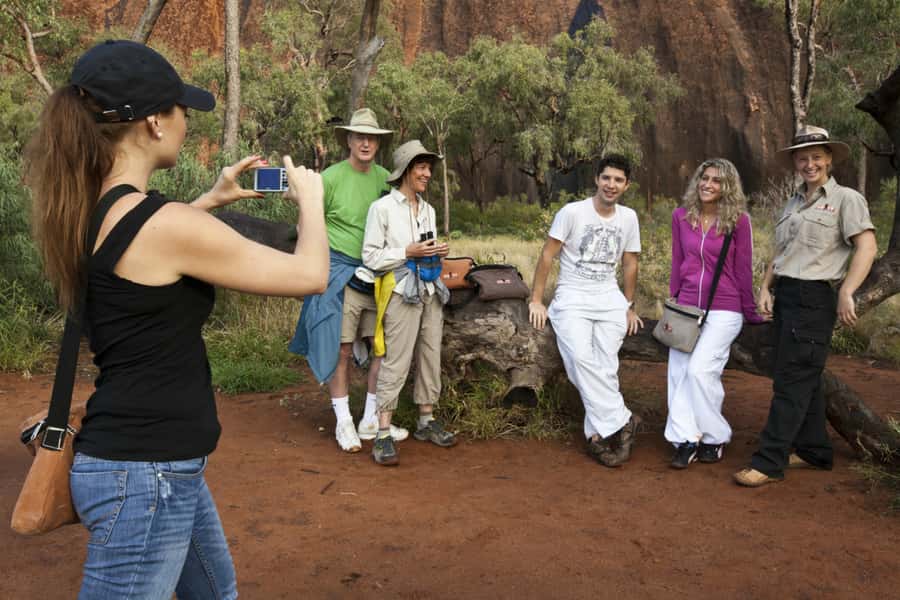
A small-group setting also changes how the day feels. With fewer people, you can hear the guide clearly at stops, and you get less of that “everyone line up, everyone move” pressure. I find that matters most on a place like Uluru, where the point is to slow your thinking down while you’re still moving.
Sunrise and sunset slots at the rock, reviewed
- Uluru: Field of Light Sunrise Tour with Hot Drinks★ 4.6 · 572 reviews
- Uluru 15-Minute Helicopter Experience★ 4.9 · 548 reviews
- Yulara: Uluru & Kata Tjuta 25-Minute Helicopter Experience★ 4.8 · 536 reviews
- Yulara: Uluru Sunrise and Kata Tjuta Day Trip by Bus★ 4.5 · 469 reviews
The full Uluru base walk, about 10.5 km, and how the pacing works
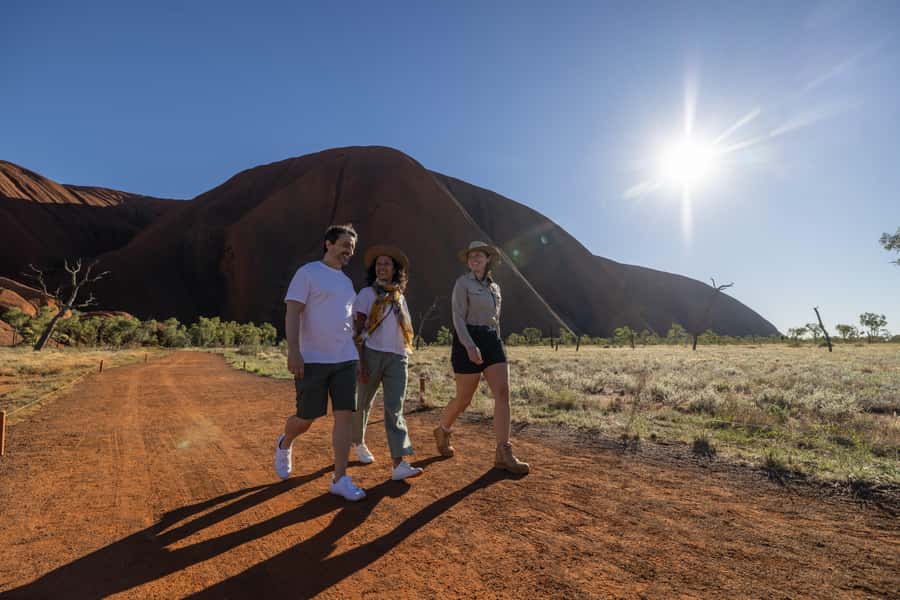
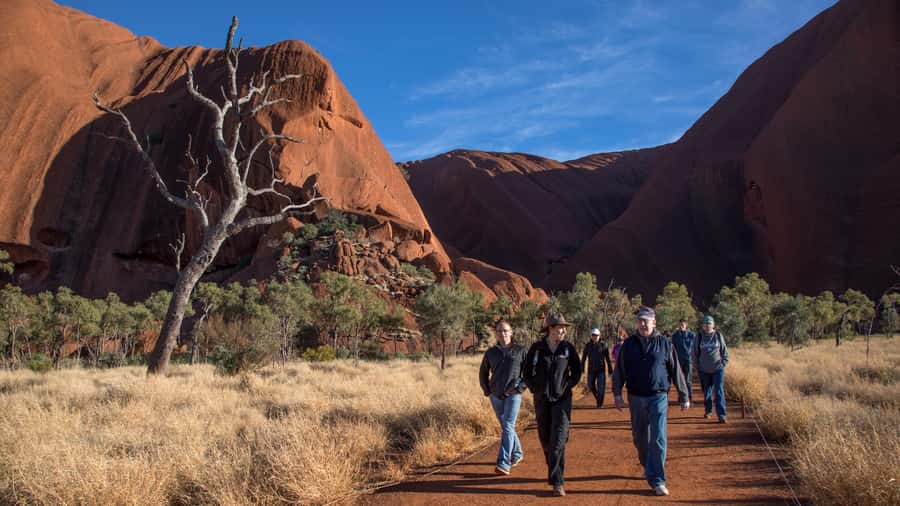
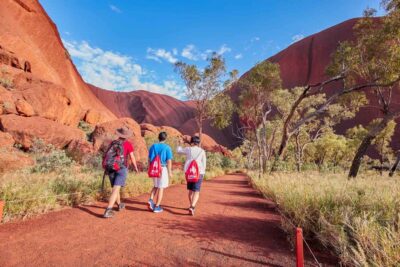
The centerpiece is walking the full base perimeter of Uluru, roughly 10.5 km total. That sounds like a lot until you realize how the tour is managed. The tracks are generally described as gravel and fairly flat, and the route is built with stops along the way, not just continuous walking.
In real-world terms, you should plan on a steady morning hike rather than a sprint. You’ll pause for viewpoint moments, for learning stops, and for hydration breaks. People who successfully complete this tend to treat it like a long walk with good rest timing, not a workout you race to finish.
There’s also a noticeable benefit to doing this at sunrise. In many months, the morning stays cool enough that you can actually enjoy the walk, not just endure it. In the later part of the morning, some groups find they get more shade than they expected because of the way the route is handled. If you get heat easily, it’s worth mentioning it to your guide at the start so they can keep an eye on your comfort.
Rest breaks are part of the rhythm, too. You can expect restroom opportunities at two points along the route, which helps a lot when you’re committing to the full perimeter.
Tjukurpa storytelling along the walk, and how to listen without zoning out
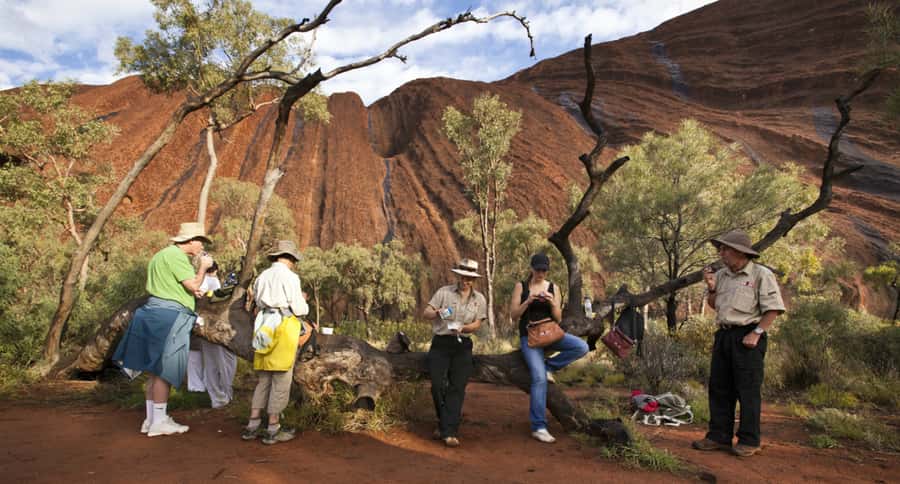
Uluru is not just a rock you walk around. It’s a place where stories connect the physical features to cultural meaning, and the guide is the bridge between those two worlds. A trained guide walks with you and shares explanations you can track while you’re walking, including geology, flora and fauna, and cultural history through Tjukurpa (creation stories).
What makes this tour really click is the way the stories are tied to specific places on the route, so you’re not hearing a lecture while moving. For example, you’ll hear related stories as you walk the Kuniya section, and then you’ll move toward the Mutitjulu Waterhole area. Another guided section follows the Mala Walk toward Kantju Gorge, with stories associated with the Mala people.
Guides named Lucia, Dimitri, Lara or Laura, Michael, Andy, Tim, Rachel, and Lilly come up repeatedly in how people describe the quality of the morning. The common thread is that these guides do more than recite facts. They help you notice what you might otherwise walk past, and they explain how survival, land knowledge, and cultural practices are connected to the rock and water features.
Practical tip: keep your phone for photos, but your full attention for the guide when you stop. The stories land best when you’re not already thinking about the next selfie spot.
Mutitjulu Waterhole and rock art stops: what you’re really looking for
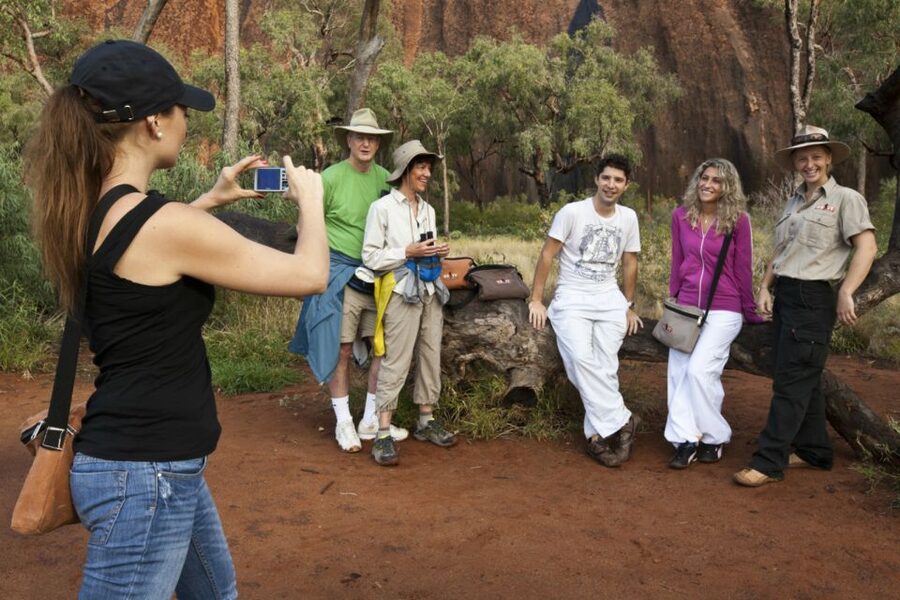
You’re not just passing famous locations. The Mutitjulu Waterhole stop is a core reason to do the full-base walk, because it connects the idea of water in an arid environment to the land’s cultural importance. Your guide brings these meanings to life while you’re walking, so the waterhole becomes more than a photo moment.
On the way, you’ll also visit rock art sites. The value here is that you hear how these markings fit into cultural storytelling and why that matters. Instead of treating the art like an outdoor museum display, you’re learning how it’s part of the living connection between the Anangu and the land.
From a comfort point of view, the stops also give you mini resets. You get a chance to step out of the forward-walking mode, stretch your legs, and take a breath. If you start the day stiff, those breaks are a gift.
One more thing: if you’re sensitive to sun or wind, you’ll likely feel it more around midday than at the dawn start. Bring what you need early so you are not adjusting gear for the first time mid-walk.

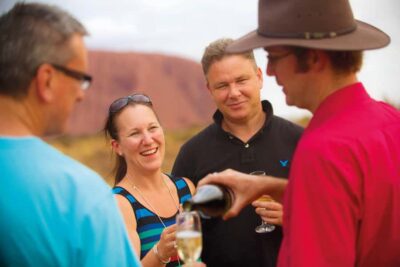
Kantju Gorge on the Mala Walk: seeing color, form, and meaning together
As you shift toward Kantju Gorge, the tour keeps linking the physical features you’re walking past to the story elements the guide shares. The Mala Walk section is specifically part of the storytelling arc, with explanations tied to creation stories associated with the Mala people.
Why this works for most people is that Kantju Gorge feels visually dramatic, and the story gives you a way to interpret what you are seeing. When you only look, you might just register height, shadows, and rock textures. When you hear the cultural meaning attached to that terrain, you start to notice how the land is organized and why certain features would matter for people living there over generations.
This is also where your sense of scale improves. Walking the entire base makes Uluru less like a distant landmark and more like a real system of water, rock forms, and sheltered areas. Even if you already had photos in your head, the guided route helps reframe them.
If you’re traveling with a partner or family member, this segment is often the easiest to enjoy together because it combines the best of both worlds, moving along a scenic route and hearing stories that give you something to talk about.
Breakfast in a carry pack: fuel without killing the morning
You’ll have outback picnic breakfast supplied in a carry pack, plus tea and coffee. It’s positioned partway through the walk so you’re not eating right at pickup and you’re not running on empty halfway through.
Most people find this setup works because breakfast becomes a recovery point. You sit, eat, drink something warm, and reset your legs and attention. If you expected a huge brunch, you might be slightly underwhelmed. On the other hand, a lighter breakfast makes sense here, because you’re still going to walk the full perimeter after.
A small comfort bonus in some departures is that guides may also bring extra touches like frozen lemon grass towels and bottled water for the group. If that happens on your day, consider it more than a nice detail, it can genuinely help you feel less overheated while you’re still mid-walk.
What to do: treat the picnic breakfast as fuel, but keep your main water strategy in your own hands too.
Audio guide in your language, and how to use it well
This tour includes an audio guide option on top of the live English guide. If you speak French, German, Spanish, Italian, Russian, or Mandarin, you can use the included iPod audio guide while you walk.
My suggestion is to use it as a support track, not as a replacement for listening. The live guide is the one coordinating the story flow to the terrain in front of you. Audio in your language can help you catch key points, but it’s still best to face the guide when you pause so you keep the meaning tied to what you’re currently seeing.
For independent listeners, the language option is a big value add. It reduces the frustration of being surrounded by awe but missing the details. That matters on Uluru, where the explanations are part of what makes the walk feel meaningful.
What to pack for a 10.5 km sunrise trek
You’re walking about 10.5 km, and the tour starts before sunrise, so you need layers and traction.
Plan on bringing:
- sensible walking shoes
- water bottle
- hat and sunscreen
- warmer clothing in cooler months
You should also consider covering your shoulders. Some guides and walkers emphasize this because morning can feel chilly, and later sun exposure can become intense.
Water planning matters. There are water taps along the way where you can refill using filtered rain water. The taste may come across as earthy and slightly metallic, and it may not be very cold. That is normal for this kind of setup, so I recommend carrying your own bottle too and topping up when you can.
Extra comfort tips that have helped people include bringing a light pullover for the morning chill, and for some, a fly net for the face. If you’re sensitive to bugs, it costs little weight and can save your attention from getting chewed up mid-walk.
Value and cost: is $169 a good deal for Uluru at sunrise?
At $169 per person for a 6-hour small-group tour, the question isn’t just whether it’s affordable. It’s whether the day saves you effort and buys you real access to meaning.
Here’s what you get for that price:
- professional driver and guide for the full morning
- hotel pickup from Ayers Rock Resort locations
- a comfortable ride limited to 11 participants
- breakfast in a carry pack, plus tea and coffee
- audio guide options in several languages
- a guided walk around the full base, including Mutitjulu Waterhole and Kantju Gorge
What you should budget separately is Uluru Kata Tjuta National Park entry. That ticket is not included in the tour price, and you purchase it directly at the entry station. Tickets are valid for three consecutive days from the date of issue, so it’s smart to coordinate your other plans in that same window.
When this feels like a good value is when you care about the learning, not just the photos. If you want an efficient route with interpretation, the guide service is what you’re paying for. If you’re happy wandering on your own and just catching sunrise from a road pull-off, you might decide to spend less. But if you want the place explained while you walk, this price makes sense.
Small group also protects value. A big group can turn stops into traffic. Here, the cap of 11 helps you stay human during the morning.
Who this sunrise base walk suits, and who should skip it
This is a strong fit if you:
- want to walk the full perimeter of Uluru rather than just short lookouts
- like cultural stories tied to real places, especially Anangu Tjukurpa explanations
- prefer small groups and clearer interaction with a guide
- enjoy early mornings for a calmer start
It may not be ideal if you:
- do not handle long walking or early pickup well
- want a slow, mostly seated experience
- are looking for a full-day itinerary packed with many separate drives and attractions beyond Uluru
Solo travelers often do well here because the guide keeps you oriented, and the group size stays manageable. Families can also find it works, as long as everyone is comfortable with the distance and early start.
Should you book this Uluru guided base trek?
Book this if sunrise and understanding are your priorities. The best reason to choose it is the combination of the full base walk with cultural storytelling at walking speed, plus breakfast and an audio option in multiple languages. It’s also a smart pick if you want to avoid feeling like a passenger in a crowd.
Skip it if you want a short outing, or if 10.5 km before the day gets warm sounds stressful. In that case, you might prefer a gentler option or a later start.
If you do book, show up ready to walk and listen. Get your layers right, bring water, and give the guide your attention at each stop. That’s when Uluru stops being a famous sight and becomes a place you actually understand.
FAQ
How long is the Uluru base walk tour?
The tour runs for 6 hours.
How much walking is involved?
You will walk about 10.5 km as part of the full base perimeter trek.
Is hotel pickup included, and where does it pick up from?
Yes. Pickup is included from out the front of hotel reception within Ayers Rock Resort. If you are staying at Emu Walk Apartments, pickup is at Desert Gardens Hotel next door. If you are staying at The Lost Camel, pickup is at Sails in the Desert next door.
Is breakfast included?
Yes. Outback picnic breakfast is included in a carry pack, along with tea and coffee.
Do I need to buy Uluru Kata Tjuta National Park entry?
Yes. Park entry tickets are not included and can be purchased at the entry station. Tickets are valid for three consecutive days from the date of issue.
What group size is this tour?
It is a small group limited to a maximum of 11 participants.
What language options are available for the audio guide?
The audio guide included covers Spanish, Chinese, French, German, Italian, Russian, and the live tour guide speaks English.
What should I bring?
Bring a water bottle and wear appropriate walking gear, including sensible walking shoes. It also helps to pack a hat and sunscreen, and warmer clothing in cooler months.
Sunrise, Sunset and the Base Walk

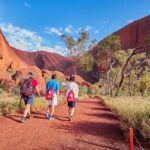
Added lately from Yulara
- King’s Canyon: 15-minute Scenic Helicopter Tour
★ 4.9 · 78 reviews - Uluru: Small Group Sunset Tour with Sparkling Wine
★ 4.5 · 82 reviews - From Yulara: 3-Hour Small Group Kata Tjuta Afternoon Tour
★ 4.7 · 101 reviews - Uluru: Uluru Base Segway Tour
★ 4.6 · 112 reviews - Kata Tjuta: Small Group Sunrise Tour with Picnic Breakfast
★ 4.7 · 113 reviews - Yulara: Uluru and Kata Tjuta Sunset Helicopter Tour
★ 4.9 · 148 reviews
Uluru & Ayers Rock Tours, compared.
 ★ 4.6From Alice Springs: Day Trip to Uluru with BBQ DinnerFrom $254761 reviews
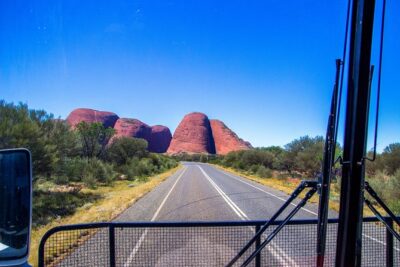 ★ 4.5Ayers Rock Day Trip from Alice Springs Including BBQ DinnerFrom $262639 reviews
 ★ 4.6Uluru: Field of Light Sunrise Tour with Hot DrinksFrom $91572 reviews
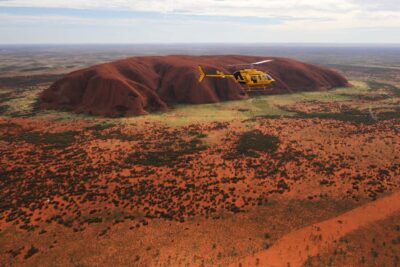 ★ 4.9Uluru 15-Minute Helicopter ExperienceFrom $145548 reviews
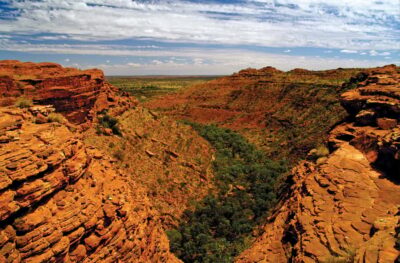 ★ 4.6Kings Canyon: Full-Day Tour from Ayers Rock ResortFrom $244541 reviews
 ★ 4.8Yulara: Uluru & Kata Tjuta 25-Minute Helicopter ExperienceFrom $237536 reviews
 ★ 4.5Yulara: Uluru Sunrise and Kata Tjuta Day Trip by BusFrom $140469 reviews
 ★ 4.5Uluru: Sacred Sites & Sunset Tour with Wine & CheeseboardFrom $140450 reviews
Browse the lists this tour appears in