
REVIEW · ULURU & AYERS ROCK TOURS
Uluru (Ayers Rock) Field of Light Sunrise Tour
Four a.m. makes sense here, if you like magic. This Uluru sunrise tour pairs Bruce Munro’s Field of Light walk with a proper dawn viewing over Ayers Rock, plus warm drinks and guide commentary as the desert wakes up. It is one of those rare tours where art and nature hit the same moment.
I especially like the way you get to wander through rows of light in the dark, then watch those colors change as daylight arrives. The warm-up stops, tea and coffee or hot chocolate, also make the early start feel worth it instead of just painful. My only real heads-up is that the sunrise view is amazing, but it is not a next-to-the-rock situation, and weather can shift how spectacular the whole experience feels.
In This Review
- Key points before you go
- Why Uluru sunrise plus Field of Light works so well
- The early hotel pickup: how to prepare for the 4:00 a.m. life
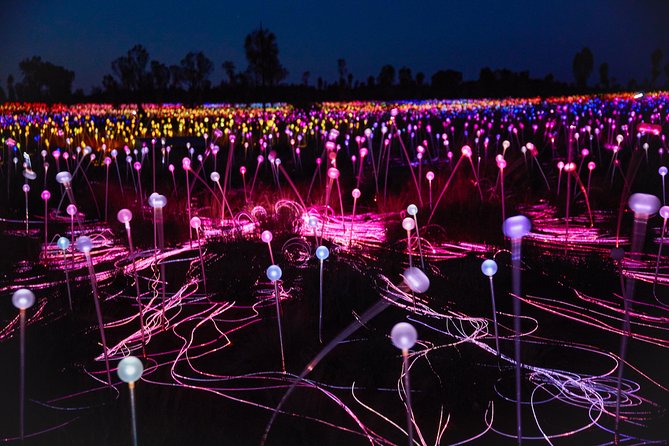
- Field of Light at night: rows of light on a private dune-top
- Sunrise over Uluru, plus Kata Tjuta in the same frame
- The guide and the warm drinks: small touches that change the mood
- Walk time, terrain, and what to expect physically
- Weather can make or break the feel
- Price and value: what $92.52 buys you in the real world
- Who should book this tour, and who might prefer a different option
- Booking confidence: what to check before you commit
- Should you book the Uluru Field of Light Sunrise Tour?
Key points before you go
- A sunrise schedule built around early hotel pickup means you are out before most people even think about Uluru.
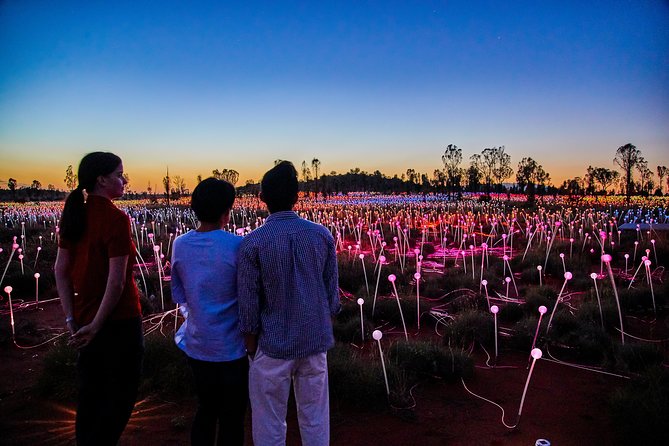
- A Field of Light walk through 50,000 hand-crafted glass spheres turns color as the sky changes.
- You get an observation deck moment for sunrise over Uluru, with Kata Tjuta behind you.
- Tea, coffee, and hot chocolate are served to help you stay warm while you wait for dawn.
- Small-group feel (max 65 travelers) compared with some big tours in the area.
- No prams or strollers at the Field of Light site, so plan accordingly if you need one.
Why Uluru sunrise plus Field of Light works so well
Uluru at sunrise is already a wow, even if you have seen photos a hundred times. What makes this tour different is that you start in darkness, moving through an illuminated installation that uses color to mirror the desert sky. Then, right as your eyes get used to the glow, the real light arrives and the installation slowly fades into daytime.
That switch is the whole point. At night, the Field of Light looks like a sea of stars. At dawn, Uluru starts showing its texture and scale, and you get that holy-silence feeling the outback is so good at.
I also like that the tour is built for first-timers. You do not need a guidebook brain to enjoy it. Your guide gives context about the art and the setting, and you still have free moments to soak in the views and take photos.
Sunrise and sunset slots at the rock, reviewed
- Segway the FULL base of Uluru★ 5.0 · 449 reviews
- Uluru (Ayers Rock) Sunset + Outback Barbecue Dinner & Star Talk★ 4.0 · 426 reviews
- Full Uluru Base Walk at Sunrise Including breakfast★ 5.0 · 408 reviews
- Kings Canyon Day Trip from Ayers Rock (Uluru)★ 4.5 · 380 reviews
The early hotel pickup: how to prepare for the 4:00 a.m. life
Your day starts with pickup from your Uluru hotel in the early morning, timed to sunrise. The drive to the Field of Light is short, but you will still be moving while it is fully dark. That means you should dress like it is cold, because it often is at that hour in the Red Centre.
Bring layers, and if you run hot or cold easily, keep one extra layer in your bag. One review tip that I found especially practical: use a flashlight on your phone, and consider a hat with a fly net if you are bothered by insects when daylight arrives.
The tour is designed to finish in time for breakfast and any other plans after. It is also capped at a maximum group size of 65, which matters when you are trying to hear your guide and not get stuck in a crush for photos.
Field of Light at night: rows of light on a private dune-top
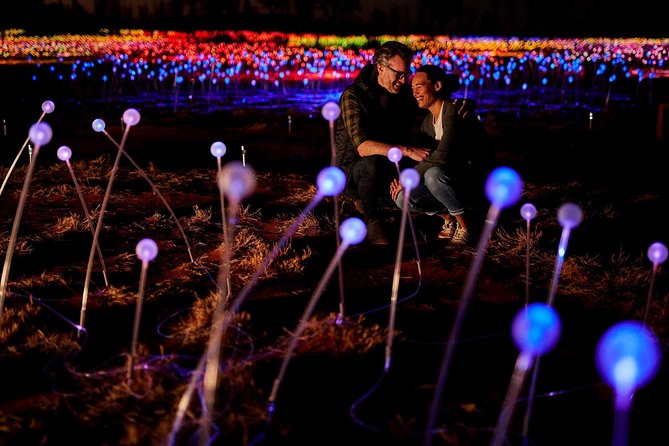
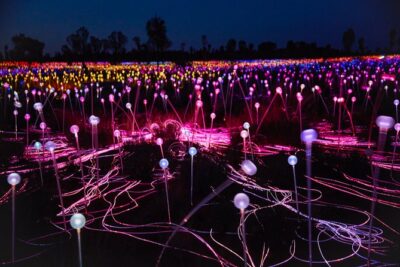
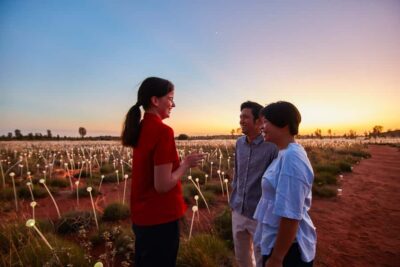
The main event starts with Field of Light. You arrive in darkness, and the experience begins from a dune-top viewpoint. From there, you stroll along the paths around the installation, made up of more than 50,000 hand-crafted frosted-glass spheres.
The colors are not random. They shift with the sky’s changing hues, including tones like ochre, deep violet, blue, and gentle white. In other words, you are not just looking at a fixed art show. You are watching color respond to nature in real time.
A big reason people love the morning version is that it can feel quieter. The early start often means fewer crowds on-site, so you can find calmer corners for photos or simply sit and watch the lights and stars at the same time.
One more practical note: there are no prams or strollers allowed at the exhibition site. If you are traveling with a pushchair, plan an alternative for the walk portion. The itinerary also includes blankets mentioned as a quiet place to take it all in, which helps if it is chilly.
Sunrise over Uluru, plus Kata Tjuta in the same frame
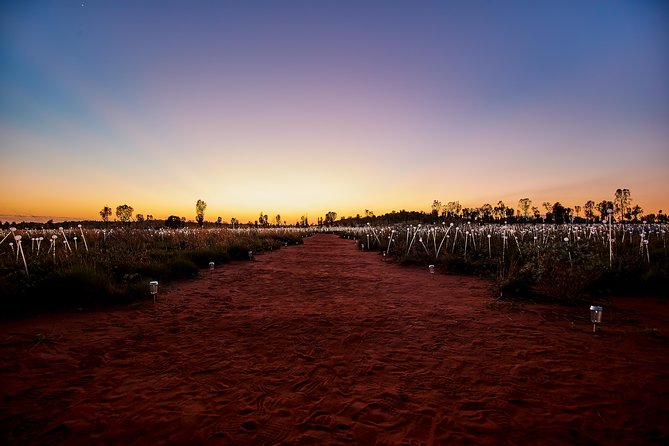
After your stroll, you shift back to the observation area for dawn. This is where the tour does its best magic trick: you watch the sunrise come up over Uluru, while the Field of Light dims in natural daylight.
That timing is why I think this is a smart choice even if you are tempted to do the evening version instead. Sunrise is a different vibe. Daylight changes how everything looks, and here you get to witness that transition rather than just arriving to a single lighting moment.
Also, pay attention to direction. As dawn approaches, Kata Tjuta should appear behind you. If you remember just one tip for photos, make it this: turn around during the sunrise moment. People fixate on Uluru and miss that second composition.


The guide and the warm drinks: small touches that change the mood
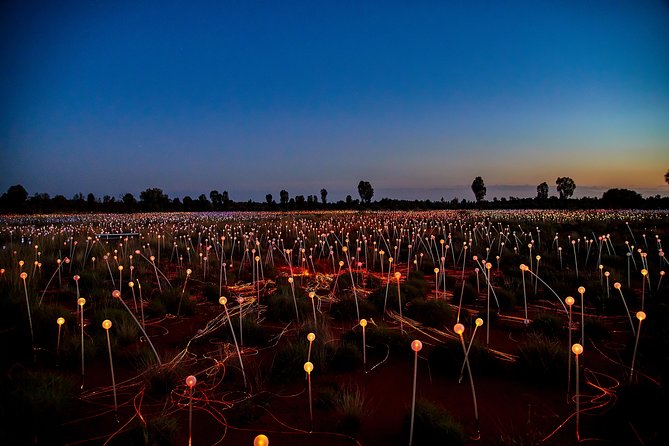
Your guide provides commentary as you walk and wait, including details about the artist Bruce Munro and how the installation channels the energy he felt during time in the Red Desert. Even if you do not care about art history, having someone explain what you are looking at can help your brain stop scanning for what it should feel.
This is also where the tour earns points for comfort. You are served warming tea, coffee, or hot chocolate at the dune-top as the dawn creeps across the desert plain. Some people also mention biscuits or cookies with the hot drinks, which is a nice real-world touch when you are up before your usual breakfast alarm.
From the reviews included in the information, you can also see a pattern: guide and driver professionalism matters here. Names like Carolyn and Tush came up as being friendly, helpful with photos, and genuinely enthusiastic about the experience.
Walk time, terrain, and what to expect physically
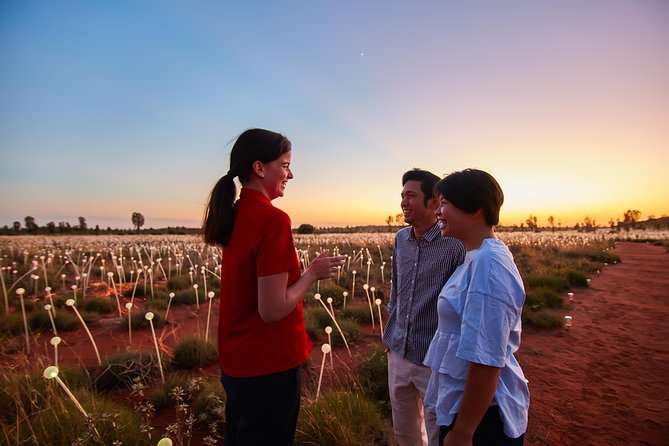
This tour is short, about two hours in total. But it still includes a walk through the installation area. The paths are described as easy in at least some situations, and one review specifically mentioned it worked well for someone with a knee injury, as long as you take it at your pace.
If you are mobility-limited, do not assume it will be perfectly effortless. You will be walking in a desert environment and likely in low light at first. Wear shoes with grip. If you need breaks, take them. The whole point of sunrise is to not rush it.
If you are traveling with strollers, this is a hard limit rather than a comfort preference, since prams and strollers are not permitted at the Field of Light site. Plan for that before you go.
Weather can make or break the feel
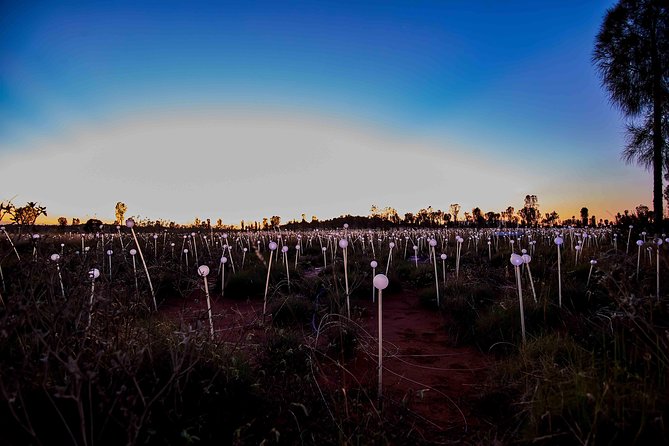
Even the best tours are at the mercy of the sky. Rain is the big factor. One review noted that rain dampened the experience, which makes sense because you lose some of that crisp night clarity and sunrise magic.
Also, some people reported that a portion of lights were not working during their visit. That can happen for all kinds of reasons, and it affects how close the experience feels to the photos you saw online. If you are the type who is very photo-driven, you might feel the impact more than someone focused on atmosphere.
Still, even with imperfect conditions, the structure of the tour gives you two chances at wonder: the art walk and the sunrise itself.
Price and value: what $92.52 buys you in the real world
At $92.52 per person, you are paying for four things: early transport (including hotel pickup and drop-off), admission to Field of Light, the guided context, and the reserved time window for sunrise.
Is it cheap? No. But for this part of Australia, it is also not out of line with how priced experiences work around major icons. The key value question is not the number. It is what you personally want most.
If your priority is a once-in-a-lifetime Uluru sunrise with a structured, low-stress plan and hot drinks waiting for you, this is a strong fit. If your priority is maximum closeness to the rock for sunrise, you might wonder if the time spent at Field of Light feels like more art installation than prime rock viewing.
One complaint in the information was that the experience felt like it could be better value, given the short transfer and the time split. That does not mean the tour is bad. It just means you should be honest with yourself about what you are buying: art plus dawn, not a long, do-it-all Uluru morning by foot.
Who should book this tour, and who might prefer a different option
This tour is ideal if:
- You are a first-time Uluru visitor and want a safe, guided introduction.
- You love photography but also want help from a guide for the right moments.
- You like the idea of seeing the installation in darkness and then watching it fade into daytime.
- You do not want to figure out timing on your own while dealing with early-morning logistics.
It might not be the best match if:
- You expect a long, hands-on sunrise experience right beside Uluru with minimal setup time.
- You are very sensitive to cold early mornings, unless you pack layers seriously.
- You travel with a stroller or pram and need this to be fully stroller-friendly at the Field of Light site.
If you can only do one Field of Light session, sunrise is often the one that people describe as peaceful and photo-friendly because the sky and shadows are just starting to wake up.
Booking confidence: what to check before you commit
I like booking tours like this when the plan is clear and short. Here, you get a roughly two-hour experience and a defined start and finish window, with pickup and drop-off included.
Before you lock it in, I would check these practical points:
- You can handle a very early pickup time. Some departures are around 4:15 to 4:30 in the morning, based on what people shared.
- You are okay with a walk through the Field of Light paths in low light.
- You know the stroller rule at the Field of Light site.
- You dress for cold. Reviews repeatedly mention it being chilly and advise jackets.
Also, do not underestimate the value of small-group energy. A max of 65 travelers sounds big, but it still helps compared to huge buses that turn every stop into a cattle line.
Should you book the Uluru Field of Light Sunrise Tour?
Book it if you want a tight, well-timed plan that turns Uluru into more than just a photo backdrop. The Field of Light walk in darkness plus the sunrise payoff is a clever combo, and the warm drinks and guide commentary make the early start feel civilized.
Skip it or consider another style of Uluru experience if you mainly care about being right next to the rock at sunrise for as long as possible, or if bad weather would ruin your day emotionally rather than just mildly reduce the wow factor.
For most first-time visitors, though, this tour hits the sweet spot: Field of Light at night, Uluru at dawn, and Kata Tjuta in the same morning view, all without you having to micromanage timing or transportation.
Sunrise, Sunset and the Base Walk



Added lately from Uluru
- Ayers Rock Scenic Plane Flight: Desert Explorer
★ 5.0 · 22 reviews - Kata Tjuta Valley of the Winds Circuit Hike
★ 5.0 · 24 reviews - 3-Day Uluru Kata Tjuta Kings Canyon Outback Safari ex. Ayers Rock
★ 5.0 · 27 reviews - Uluru Private Tour Aboriginal guided option
★ 5.0 · 35 reviews - Aboriginal Homelands Experience
★ 5.0 · 39 reviews - Palm Valley 4WD Tour from Alice Springs
★ 4.5 · 41 reviews
Uluru & Ayers Rock Tours, compared.
 ★ 4.6From Alice Springs: Day Trip to Uluru with BBQ DinnerFrom $254761 reviews
 ★ 4.5Ayers Rock Day Trip from Alice Springs Including BBQ DinnerFrom $262639 reviews
 ★ 4.6Uluru: Field of Light Sunrise Tour with Hot DrinksFrom $91572 reviews
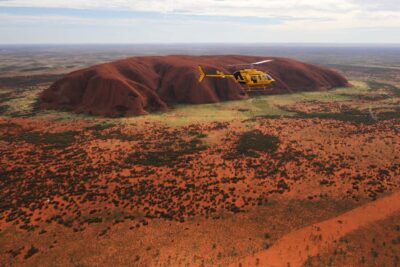 ★ 4.9Uluru 15-Minute Helicopter ExperienceFrom $145548 reviews
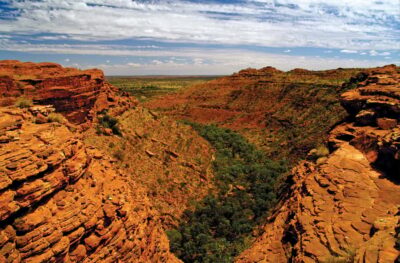 ★ 4.6Kings Canyon: Full-Day Tour from Ayers Rock ResortFrom $244541 reviews
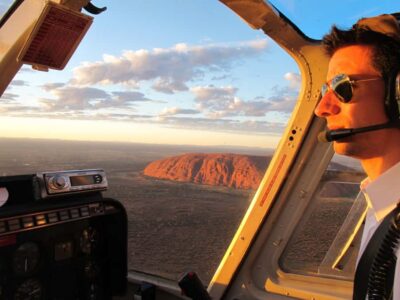 ★ 4.8Yulara: Uluru & Kata Tjuta 25-Minute Helicopter ExperienceFrom $237536 reviews
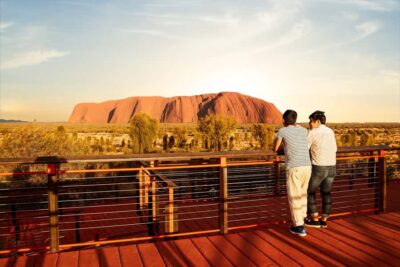 ★ 4.5Yulara: Uluru Sunrise and Kata Tjuta Day Trip by BusFrom $140469 reviews
 ★ 4.5Uluru: Sacred Sites & Sunset Tour with Wine & CheeseboardFrom $140450 reviews
Browse the lists this tour appears in